
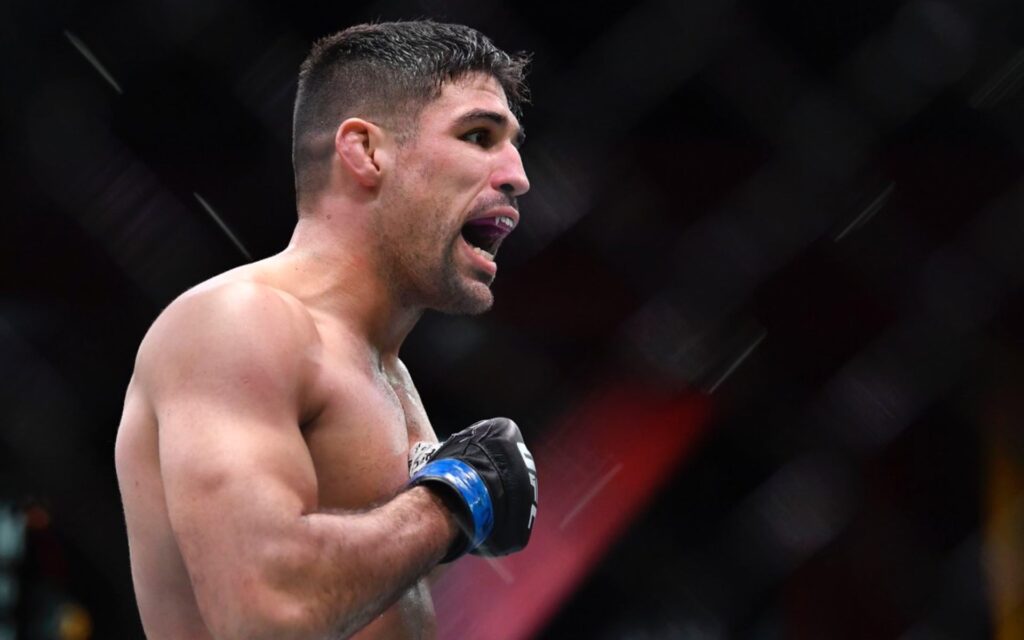
Have you ever watched a champion defend their belt and felt like something was… different? The fight might not have the same explosive chaos as their rise to the top, and you’re not imagining it. What can seem like a “boring” performance is often a masterclass in how to win when everything is on the line, built around one fundamental rule change.
The single biggest difference is simple: most professional fights are a three-round sprint, but title fights are a five-round marathon. These extra ten minutes, known officially as the “championship rounds,” are a brutal test of a fighter’s gas tank. This is where pacing, not just power, determines who leaves with the belt. It completely changes a fighter’s strategy from the opening bell.
For a perfect example, look at the first war between Kamaru Usman and Colby Covington. Both men set a punishing pace early on, but Usman’s champion-level energy management allowed him to take over late. He weathered the initial storm and found the finish in the fifth round, demonstrating classic championship rounds fighting tactics as his opponent’s incredible output finally faded.
This strategic shift is the key to appreciating how fighters handle championship pressure. It explains why a challenger can look unstoppable for ten minutes yet still lose the war, and it will forever change how you make sports predictions for the next big title fight.
The Champion’s Pace: Playing the Long Game vs. Burning Out Early
With two extra “championship rounds” on the clock, a five-round fight becomes a marathon, not a sprint. A contender might have earned their title shot with explosive, all-out aggression, but a champion knows that same approach can leave them exhausted by the fourth round. Because of this, experienced champions often fight with a deliberate, almost surprisingly calm, pace. They understand that the fighter with more fuel in the tank for the final stretch usually gets their hand raised. Their goal isn’t just to win rounds, but to manage their energy reserves better than their opponent.
One of the most visible ways they do this is by controlling the center of the ring or cage. Watch closely in the next title fight: you’ll often see the champion plant themselves in the middle, forcing the challenger to circle on the outside. This is a subtle but brilliant tactic often called ring generalship and fight control. By owning this prime real estate, the champion dictates the engagement and makes the challenger travel a longer distance, burning precious energy with every step.
For the challenger, this is physically and mentally exhausting. Every movement feels inefficient as they are constantly being herded and cut off. While basic combat sports performance metrics like punch count might seem close, the champion is winning a hidden battle of efficiency. It’s a disciplined style that’s a world away from the spectacular risks many fighters take on their own path to becoming a champion. The champion forces their opponent to work twice as hard for half the reward.
This careful, strategic pacing is about more than just avoiding fatigue. It’s a fundamental part of a larger defensive philosophy that separates the title holder from the hopeful. The champion isn’t just defending a physical attack; they’re defending an asset. This shifts their entire approach from one of pure aggression to one of calculated risk management.
The CEO vs. The Gambler: How Champions Manage Risk Differently
That shift in thinking—from attacker to protector—changes everything. Picture the champion as a CEO and the challenger as a high-stakes gambler. The challenger, with everything to gain, is willing to take huge risks for a massive payoff. They might throw a wild spinning kick or a risky power punch, hoping to land a single, life-changing shot. They are, in essence, going all-in.
The champion, however, is the CEO protecting a billion-dollar company: the belt. For them, winning is important, but not losing is paramount. This creates a fascinating contrast between defensive fighting vs aggressive styles. Instead of gambling on a knockout, the champion plays the odds. They’ll often rely on a simple, effective jab or disciplined footwork to score points, minimize exposure, and systematically break their opponent down. This calculated approach is a masterclass in analyzing fight IQ and decision making; it may not always be flashy, but it’s ruthlessly effective.
Ultimately, this difference in mindset is written in the very action of the fight. While champion vs challenger statistics can show us the raw data, you can see it just by watching their choices. The challenger is hunting for a moment, while the champion is managing the clock, the space, and the scorecards. By controlling the fight with a steady, low-risk strategy, the champion forces the challenger into a game they are often unequipped to play. This control isn’t just physical; it’s a direct appeal to the judges watching from cageside.
What Is “Ring Generalship”? A Simple Guide to What Judges Are Watching
The idea of a champion controlling the fight isn’t just a metaphor; it’s a key scoring criterion. Have you ever heard commentators say a fighter is “dictating the pace” or “owning the center”? This is what they mean. Think of the octagon like a patch of prime real estate. The fighter who plants themselves in the middle forces their opponent to constantly move and circle on the outside. The person in the center is the boss, making the other fighter react to them, burning more energy while their own back is safely away from the fence.
This control directly translates to points on the scorecard. Judges see the fighter who is consistently marching forward as the more effective aggressor, even if they aren’t landing the flashiest punches. It’s a fundamental part of analyzing fight IQ; the champion is imposing their will without taking unnecessary risks. For a challenger, being constantly pushed backward is physically and mentally draining. It’s hard to launch a good attack when you’re always retreating.
Mastering this single skill is a hallmark of dominant champions and a major factor in UFC title fight predictability. Next time you watch, try to ignore the punches for ten seconds and just watch their feet. Who is advancing, and who is giving ground? You’ll start to see a whole new layer of the battle. But what happens when a challenger refuses to be pushed back and the champion’s primary game plan of control is neutralized? This is where the truly great champions reveal their final, most important advantage.
When Plan A Fails: Why Champions Have a Better Plan B
A challenger who successfully neutralizes a champion’s main strategy often wins the first battle, but not the war. For a seasoned champion, this moment isn’t a crisis; it’s simply new information. The true test isn’t the perfection of their Plan A, but having a Plan B, C, and D, often developed in real-time. The ability to begin adjusting a game plan mid-fight is what separates the legends from the temporary titleholders.
This skill for pivoting is one of the core benefits of championship experience. Champions have simply spent more time in those grueling five-round fights, seeing a wider variety of problems and learning not to panic when a plan fails. While a contender might be facing a brand-new crisis, the champion is often thinking, “I’ve seen this before,” and drawing from a deep mental library of solutions learned in past wars.
Pay close attention to the corner between rounds. A champion’s team is often surgically precise, giving one or two key adjustments. They are constantly analyzing fight IQ and decision making on the fly. In contrast, a contender’s corner can grow frantic when their one big plan fails, because their fighter’s path to the title often relied on being a specialist, not a generalist. Greats like Georges St-Pierre were masters of this, famously using their corner’s advice to completely change tactics and dominate later rounds.
Ultimately, that specialization can be a contender’s undoing. They may have the perfect key for one lock, but a champion has many different doors. It’s one thing to have a backup plan, but it’s another thing entirely to execute it when fatigue is setting in and the pressure is mounting. And that leads to the final, invisible battlefield where many title dreams go to die.
The Heavy Crown: How the Pressure of the Moment Breaks Challengers
That invisible battlefield is often where a challenger faces their toughest opponent: the occasion itself. Imagine the most important job interview of your life, but it’s broadcast to millions and a trained expert is trying to physically dominate you. This is how fighters handle championship pressure, and for many, it’s overwhelming. They aren’t just fighting the person in front of them; they’re fighting the blinding lights, the roar of the crowd, and the crushing weight of a lifelong dream finally within reach.
You can often see the moment this pressure takes over. A challenger who was a creative, fluid wrecking ball on their way to the top suddenly becomes stiff and robotic. They abandon the very game plan that got them there, either freezing up or resorting to desperate, telegraphed haymakers. This is the dark side of the underdog mentality in combat sports; the years of hunger and desire can curdle into performance anxiety on the one night it matters most, causing a fighter to lose to their own nerves.
In these moments, the psychology of winning a title fight becomes brutally simple. The champion doesn’t have to be brilliant; they just have to be steady while their opponent mentally crumbles under the weight of it all. The pressure does the champion’s work for them. But the truly legendary champions don’t just survive in this high-stakes environment. They learn to master it, turning that intense atmosphere into a weapon and an aura that can break a challenger’s will before the first bell even rings.
The King’s Aura: How Champions Turn Experience Into a Weapon
This is where the psychology of winning a title fight becomes an offensive tool. While the challenger is battling their own nerves, the champion projects an aura of unshakable calm. They walk to the cage with a quiet confidence, their warm-up is loose, and they meet their opponent’s intense stare with an almost bored look. This isn’t just for show; it’s a form of psychological warfare. It sends a powerful message: “This is my world. For you, this is the biggest night of your life. For me, it’s just another day at the office.” That simple difference in perspective can plant a devastating seed of doubt in a challenger’s mind.
That supreme confidence isn’t an act; it’s forged in the fire of past championship battles. A true champion has survived the deep waters before. They have likely been hurt, exhausted, and on the brink of losing—and still found a way to win. This experience acts as mental armor. When chaos erupts and the challenger lands a big shot, the champion doesn’t panic. To them, crisis is a familiar feeling. Their ability to remain composed in moments that would break a lesser fighter is demoralizing, making the challenger feel like they have to do something superhuman just to get a reaction.
Ultimately, the champion’s experience creates a tactical advantage. Their unwavering self-belief forces the challenger to question their own game plan. “Was that my best punch? And he just walked through it?” This doubt often leads the contender to abandon their strategy and take wild, desperate risks—exactly the kinds of openings a veteran champion is looking for. They don’t have to chase the knockout; their presence coaxes the mistake out of their opponent.
How to Watch a Title Fight Like a True Insider
The next time the championship belts are polished under the bright lights, you won’t just see a brawl; you’ll see a story. Where you once saw a chaotic clash of power and will, you can now spot the subtle Title Fight Truths that give a champion their competitive edge. To sharpen your new skills for analyzing fight IQ and even making smarter sports predictions, use this simple checklist during the next main event.
- Who is controlling the center of the ring after the first minute?
- Is the champion throwing low-risk jabs and leg kicks, or high-risk power shots?
- Watch the fighters’ corners between rounds 3 and 4. Do you see a change in strategy?
- Who looks calmer and more composed when the pressure is on?
Each question you can now answer reveals a layer of strategy that most fans miss entirely. The CEO mindset, the five-round gas tank, and the immense psychological pressure are no longer abstract ideas but visible clues. You’ve traded the fan’s seat for the analyst’s chair. You’re not just watching the fight; you’re reading it. Enjoy the show.