
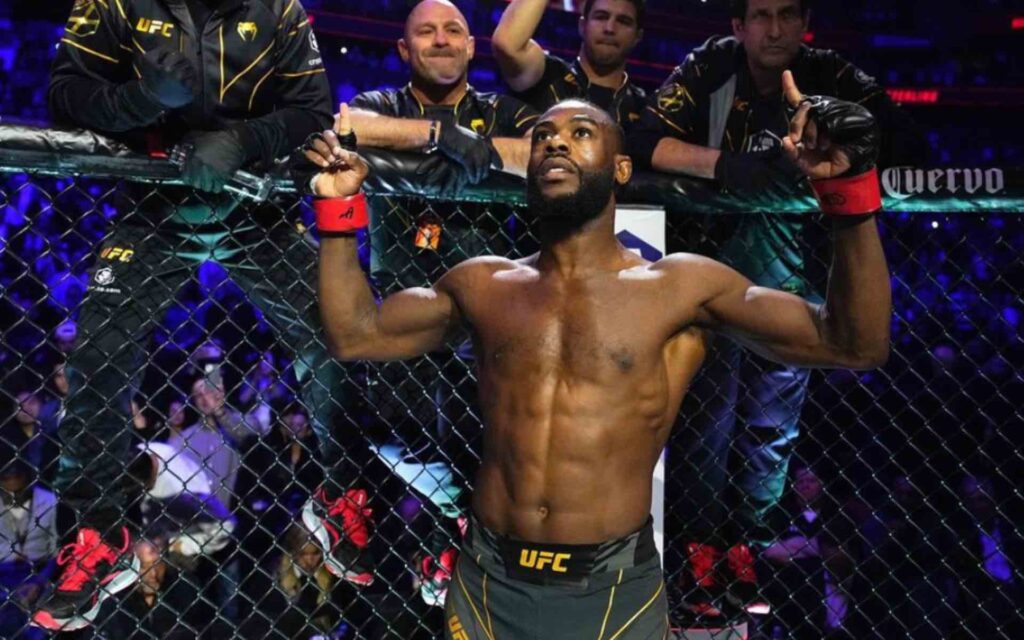
Who is the most dominant fighter of all time? We usually point to a perfect win-loss record, but that doesn’t tell the whole story. Imagine two undefeated champions: one scrapes by in nail-biting decisions, while the other is never in trouble for a single second. They both have a “W” next to their name, but common sense tells us they aren’t equally dominant. So, how can we truly measure a champion’s control?
To get a clearer picture, we need a better way to analyze fighter performance stats. Let’s introduce the “Round Dominance” score. Think of it like a report card for every title fight a champion has ever had, showing what percentage of the time they were the better person in the ring. The formula is simple: we take the total number of rounds a champion won and divide it by the total number of rounds they fought.
This simple metric reveals a fighter’s true consistency. For example, if a champion fought 20 total rounds and won 18 of them, their Round Dominance score is a staggering 90%. Unlike a final victory that might come after losing several early rounds, a high score proves who was consistently in control. This metric reveals the legends who didn’t just win—they ruled.
The Leaderboard: The 5 Most Controlling Champions in Modern History
Now for the moment of truth. We’ve established that a simple win-loss record doesn’t capture the full picture of dominance. To find the champions who controlled their fights most completely, we turn to the Round Dominance score—the percentage of total rounds a champion won during their title reigns. The results reveal a fascinating pattern: the kings of this list aren’t necessarily the explosive knockout artists. Instead, they are the methodical masters of control, the fighters who imposed their will so completely that they left their opponents with no path to victory, round after agonizing round.
After analyzing the round-by-round data from dozens of title fights across modern boxing and MMA, a clear top tier emerged. These five champions represent the absolute pinnacle of in-fight control.
The Round Dominance Leaderboard: 5. Demetrious Johnson (UFC) – 83.8% 4. Georges St-Pierre (UFC) – 84.1% 3. Roman Gonzalez (Boxing) – 86.5% 2. Floyd Mayweather Jr. (Boxing) – 87.2%
- Khabib Nurmagomedov (UFC) – 90.6%
Starting our list are two of the most celebrated champions in UFC history, who achieved their status through strategic genius. Demetrious “Mighty Mouse” Johnson (#5) was the ultimate jack-of-all-trades. He was so skilled in every area of mixed martial arts—striking, wrestling, submissions—that his opponents had no weak point to attack. He simply outclassed them everywhere, methodically winning rounds and breaking the UFC record for most consecutive title defenses (11) along the way. Similarly, Georges St-Pierre (#4) was a master strategist who treated each fight like a puzzle. He would identify his opponent’s greatest strength and systematically dismantle it, making elite fighters look utterly average. In a testament to his timeless dominance, he returned from a four-year retirement to win a title in a heavier weight class, proving his formula for control was undeniable.
The list’s two boxing representatives achieved their high scores through two very different, but equally suffocating, styles of pressure. Roman “Chocolatito” Gonzalez (#3), a champion in four different weight classes despite his small stature, was a whirlwind of offensive precision. He overwhelmed his opponents with a non-stop barrage of accurate punches, making it impossible for judges to score rounds against him. On the opposite end of the spectrum is Floyd Mayweather Jr. (#2), the defensive mastermind. His philosophy was simple: you can’t win a round if you can’t land a punch. Mayweather’s near-impenetrable defense frustrated a generation of the world’s best boxers, leading to one-sided fights where his opponents spent most of their time swinging at air. This is why many of his fights were labeled “boring”—his dominance was so absolute that it removed all drama.
That brings us to the undisputed #1. With a staggering Round Dominance score of 90.6%, Khabib Nurmagomedov stands in a league of his own. His method was no secret; in fact, it was brutally simple. He would walk his opponent down, grab them, and drag them to the mat. Once there, his suffocating top control was so complete that his opponents were rendered helpless, often unable to land a single meaningful strike for the remainder of the round. They didn’t just lose rounds to Khabib—they had them taken away. The most astonishing fact about his career isn’t his perfect 29-0 record, but that across all of his UFC fights, official judges scored a grand total of just two rounds against him. It is a level of round-by-round control that we may never see again.
Why Legends Like Ali and Tyson Don’t Make the Cut
The absence of fighters like Muhammad Ali and Mike Tyson from the top of this list might seem like a mistake. How can any discussion of dominance exclude the man who “floated like a butterfly” or the one who became the youngest heavyweight champion in history? Their exclusion isn’t a slight against their legendary status; rather, it highlights the crucial difference between a fighter who seeks to win every single round and a fighter who is willing to lose a battle to win the war.
Some of the most exciting and celebrated champions were risk-takers. Mike Tyson, for example, was the ultimate hunter of the early knockout. His entire strategy revolved around ending the fight in a terrifying burst of power. This “all-or-nothing” approach often worked, creating unforgettable highlights. However, if an opponent survived that initial storm, Tyson could find himself in later rounds where he was less prepared or effective, making him more likely to lose those rounds on the judges’ scorecards. His goal wasn’t to pile up points; it was to render the scorecards irrelevant.
Perhaps the best example of this is Muhammad Ali’s most famous strategy: the “rope-a-dope.” In his historic “Rumble in the Jungle” fight against the fearsome George Foreman, Ali spent the early rounds leaning against the ropes, covering up, and letting Foreman punch himself into exhaustion. On the scorecards, Ali was unquestionably losing those rounds. But it was a brilliant sacrifice. By giving up the early portion of the fight, he drained his opponent’s energy, allowing him to take over and score a dramatic knockout in the eighth round. It was a strategic masterpiece, but one that is fundamentally at odds with the round-by-round consistency our leaderboard measures.
Ultimately, this reveals that “dominance” and “finishing ability” are two different, though equally valuable, paths to greatness. The champions on our leaderboard, like Mayweather and Khabib, built their careers on minimizing risk and establishing a level of control so complete that their opponents had virtually no chance to win a single round. They were methodical perfectionists. Legends like Ali and Tyson, on the other hand, embraced risk and chaos, creating some of the most dramatic moments in sports history by being willing to walk through fire to achieve victory. They weren’t always trying to win the round—they were trying to win the fight.
How to Watch a Fight Like an Analyst: Spotting Dominance in Real Time
Understanding the concept of round-by-round dominance completely changes how you watch a fight. Instead of just waiting for a dramatic knockout, you can start to see the subtle chess match unfolding in real time. The good news is, you don’t need a judge’s certification to get a feel for who is winning a round. By focusing on a few key elements, you can create your own mental scorecard and gain a much deeper appreciation for the skill on display. This is about spotting who is imposing their will on the other.
To start analyzing the action, you can use a simple checklist based on what judges look for, boiled down to three core questions. The next time you watch a fight, ask yourself these things at the end of each round:
Your Mini-Judge Scorecard:
- 1. Who is controlling the pace and space? This is often the fighter moving forward, forcing the other to react. But it can also be the fighter who is dictating the distance, keeping the fight exactly where they want it.
- 2. Who is landing the cleaner, more noticeable shots? A dozen blocked punches don’t count for nearly as much as one clean, head-snapping jab. Look for the impacts that have a visible effect.
- 3. Who is defending better and making the other person miss? A fighter who dodges and weaves, making their opponent swing at empty air, is demonstrating a high level of control and skill. This is just as important as landing punches.
This checklist helps you avoid the most common trap for casual viewers: mistaking aggression for effectiveness. A perfect case study for this is analyzing the Mayweather vs. Pacquiao fight. Many viewers felt Manny Pacquiao was winning because he was constantly pressing forward (checking box #1). However, Floyd Mayweather was a master of the other two points. He masterfully controlled the distance, made Pacquiao miss over and over (checking box #3), and consistently landed the cleaner counter-punches (checking box #2). While one fighter looked busier, the other was clearly doing more effective work.
With this simple framework, you are no longer just a spectator; you’re an analyst. You can see why a crowd might roar for an aggressive but ineffective fighter while the commentators praise the methodical work of their opponent. This skill doesn’t just help you understand our “Round Dominance” leaderboard; it enriches every fight you watch from now on, turning a brawl into a fascinating tactical puzzle. You’ll start to spot the subtle signs of a fight turning, long before the final bell rings.
Beyond the Final Bell: A New Way to Appreciate Greatness
You no longer have to rely on a simple win-loss record to settle the “greatest of all time” debate. Where you once saw just a final result, you can now see the hidden story of control playing out minute by minute. You’ve moved beyond the surface-level arguments and are now equipped with a sharper lens for measuring dominance in combat sports, able to spot the subtle signs of a fighter who is truly in command.
A fighter’s record tells you who won the war, but their Round Dominance score tells you who won nearly every single battle along the way. It’s the reason a champion like Khabib Nurmagomedov sits atop the leaderboard; his style wasn’t just about winning, but about preventing his opponents from ever getting a foothold. Of course, this form of statistical analysis is just one piece of the puzzle. It doesn’t capture the sheer heart of a comeback artist or the jaw-dropping power of a knockout specialist, which are valid and thrilling measures of greatness in their own right.
The next time you hear the opening bell, don’t just wait for the final knockout blow. Watch for who is controlling the pace, winning the small exchanges, and imposing their will. As the rounds stack up, ask yourself who is truly winning the fight, not just the highlights. You might just discover a new appreciation for the quiet, undeniable dominance that truly defines a legend.