
The Power Struggle at Ferrari: How Internal Dynamics Are Impacting Their Performance
Ferrari remains, for the Formula 1 world, synonymous with success—a history spanning decades, carrying off concurrent world championships. But over the last few years, this has been an outfit working against huge challenges, on and off the racetrack. The 2024 season brought these problems firmly into the public eye, with the team’s internal power plays having a key role in shaping their on-track performance at crucial times. Internal follies among drivers, management, and technical personnel have been some of the major storylines for Ferrari, the embattled marque that seems unable to return to the top of the sport. This paper looks at the power dynamic at Ferrari during 2024 and reflects on how internal dynamics are determining the performance on the field. We will consider the interactions between the various principles, the strategic decisions that have raised eyebrows, and what this broader context means for Ferrari’s championship hopes. By understanding these dynamics inside, one could get a clearer picture of the challenges Ferrari faces and what it will take. The Situation: Ferrari’s Recent Issues and the Necessity for Team CohesionFerrari’s path for the last few seasons has been one of rebuilding and recalibration. From early on in the 2000s to now, the dominance hasn’t reflected in terms of consistency against Mercedes or Red Bull for the most part, being always in the challenger role rather than the leading position. The 2020s were the decade dominated by near misses, full of unrealized potential where flashes of brilliance were drowned by strategic missteps and issues with reliability. Ferrari have had ups and downs in these 2020-2023 seasons. While having a competitive car and talented drivers like Charles Leclerc and Carlos Sainz, the team falls short of achieving its goals because of internal strife and inconsistent performances. Strategic Blunders: This is one thing that has plagued them all the time: strategic blunders during races. Be it the wrong tire choice, getting the pit stops wrong in terms of timing, or being a bit too conservative with the race strategy, Ferrari just seems to fluff its lines right when it matters the most. Many of these blunders have cost both valuable points and, at times, race wins. Besides the strategic problems, Ferrari also suffered reliability issues with their power units. Mechanical failure and technical glitch both interrupted their campaigns, undermining progress made in car development and driver performance. Heading towards the 2024 season, Ferrari had made lots of changes to reinstate stability, changes for the better competitiveness they had; new team principal and revitalized technical team, placing a renewed importance on internal cohesion as part of a program more broadly creating a paper trail of core underpinning issues that had crippled the team in the first place.Changes in leadership: Ferrari brought in new leadership as a means to instill a new perspective and a more systematized approach to race operations. This change of the guard was designed to put some clarity and direction in order to help the team get around strategic mistakes that dogged them all of last season. Technical Upgrades: The 2024 Ferrari was referred to as the SF-24, which had been developed to take care of all the weak points pictured by its predecessors. Therefore, the SF-24 boasted improved aero efficiencies and a much more reliable power unit in its folds to potentially be able to challenge for podiums and maybe even the championship title. Internal Dynamics: Who’s Who and Who Holds the Power Despite all these efforts of improvement, the Ferrari 2024 season has been so internal in dynamics and power struggles that have bled into its on-track performance. To come to an understanding of how all these dynamics come to work, one needs an understanding of the roles and relationships of the key players within Ferrari. Internally, one of the most crucial moments at Ferrari is the rivalry between Charles Leclerc and Carlos Sainz. Both equally competitive and ambitious, neither of the drivers would like to be settled with the back seat – that of the teammate to the core. A. Charles Leclerc: The Golden Boy Charles Leclerc joined the Scuderia in 2019 and did little to waste precious time establishing himself as one of the sport’s biggest young prospects. Quick on pace, strong with his racecraft, and strong under fire, Leclerc absolutely owned his team’s handling characteristics and was a fan favorite, as well as the fulcrum of long-term Ferrari plans. Forza, Strengths and Ambitions: Leclerc is faster in qualifying and a touch more aggressive in strategy vis-à-vis the race. He has got a fighting spirit when necessary and is ready to take risks. Often, he makes adventurous moves that bag him high finishes. Leclerc’s ambition is pretty clear: he wishes to be the No. 1 driver at Ferrari and then a champion driver.Aggression: But Leclerc’s aggressive style has also been his downfall at times, affecting him particularly when under pressure. The rivalry with Sainz complicates things even further, now that they are battling for attention and support in the team. B. Carlos Sainz: The Mr. Consistency One driver who has been steady, reliable and delivering consistently in his first year at Ferrari is Carlos Sainz. Regarded as good all-round performers with a strategy similar to Sainz’s, they have on numerous occasions proved to be an asset for the team, which mostly procures decent race results through judgment and tire management. Strengths and Approach: Sainz is very good at consistency in races and at getting the maximum possible points even when the car is not working properly. He is a very tough competitor who always delivers at crucial times due to his strategic mind and calm demeanor. Internal duel: Wily consistency from Sainz almost since day one has him level-pegging with Leclerc as one of the Monegasque outfit’s co-team leaders. A professional relationship had to be kept between the duo, but a rivalry without a voice had put an undertone on any move and incident during the races, especially if the in-track battles affected the overall team
Silverstone 2024: Analyzing the Surprises and Shocks of This Year’s British Grand Prix
The British Grand Prix at Silverstone is one of the most iconic events in the Formula 1 calendar. Now, of course, it has very historical fans and one of the best track layouts in the calendar by a distance, providing many of those moments that will never be forgotten in F1 history. The 2024 British Grand Prix fulfilled the billing to a tee: unpredictable all the way, with a good number of dramatic battles that proved of high importance to the course of the championship. In this piece, we get deeper into the heart of the now passé 2024 British Grand Prix, analyzing the surprises, shocks, and the broader impact the race will have had on the remainder of the Formula 1 season. From standout performances to strategic masterstrokes and disappointments, we explore how Silverstone once more proved to be a pivotal point in the F1 season. The Build-Up: Anticipation and ExpectationsThe tension was really building when it came to the 2024 British Grand Prix. The race was the tenth in the season, and Silverstone held some if one was following the imaginary championship. With teams and drivers starting to take the form of the midseason, the British Grand Prix promised to hold crucial insights into who would establish themselves as the main contenders for championship honors. Heading into Silverstone, the Championship was on fire. Red Bull and Max Verstappen were leading the ace for the Drivers’ Championship, followed by Lewis Hamilton and Charles Leclerc. And finally, Mercedes had entered into that sugary vein of form, with all developments starting to work as intended, with hope that they can break down the walls built by Red Bull, whilst then Ferrari are just striving to regain lost ground after a few blotched performances. Red Bull’s dominance under threat: If Red Bull has shown its dominance with a good start to the season, the rest of the field—Mercedes and Ferrari—is catching up. At the very least, the race located at Silverstone, the track with a significant number of high-speed corners, was going to be pivotal to Red Bull’s ability to stay in the lead. Mercedes’ Home Advantage: Silverstone would altogether be the home race of Mercedes, and they were determined to do everything possible to exploit the improvements made so far. Mercedes had Lewis Hamilton, a seven-time winner at Silverstone, and the crowd on their side as they wanted to make a statement on home ground. Weather at Silverstone is never predictable, not even in the 2024 edition. Mixed forecasts likely included sun, rain, and overcast during the weekend. The tire strategy also introduced the prospect of rain in the race with varying tire strategies that could bring sizable shifts in race dynamics; hence, teams needed to be prepared to adapt with changing conditions rapidly, meaning that strategy was definitely a focus going forward closer to the race. A Weekend for Racing: Qualifying Drama and Race Day Surprises The British Grand Prix weekend got off to an action-packed start when the qualy started and it suggested an intriguing race awaited. That blend of established stars and young charges competing for that pole start was awaited, while the race itself fulfilled the anticipation with several surprise scenes and shocking moments. Qualifying at Silverstone was something quite dramatic, with the weather having a role in swinging the competition. The session was marked by intense competition in the run-up with a few surprises setting the pace for the race. A Wet-to-Dry Affair: The all-important session got underway with all cars on the circuit on their intermediate tires, striving to post some competitive times while the track was wet. But as the track began drying, it meant that the final few minutes of Q3 would be as hectic as ever. Heading this much-changed grid will be those top-line runners who were arguably caught out by the timing of the session. Hamilton’s Pole Position: Displaying a masterclass of experience and timing, Lewis Hamilton managed to grab pole in front of a home crowd, putting him ahead of Verstappen and Leclerc. The manner in which Hamilton managed to get the maximum from his car under the changeable conditions was proof of his class and experience. It all sets up a tantalizing race-day battle. Race day at Silverstone promised to be a spectacle of record size. From unexpected retirements to strategic gambles and thrilling on-track battles, the 2024 British Grand Prix had it all. Hamilton’s Early Dominance: Hamilton made a great start from pole position and looked in clear control of the early stages of the race but, just behind him, Max Verstappen and Charles Leclerc were putting the hammer down to try and chase. It appeared as though that was going to be a good enough cushion for the Mercedes driver to take the race away and boss proceedings, but the capricious nature of Silverstone had other ideas. Mid-Race Rain Shower: The forecasted rain in the mid-race did arrive, and this scramble moment came directly before that rain: the transition where teams swarmed for pit stops and switched to intermediate tires. The sudden change in the weather caught some teams a bit off-guard because, at the very first sign, both Red Bull and Ferrari brought their drivers in very quickly, while Mercedes was a bit hesitant in the approach, which cost Hamilton enormously in terms of time. Highlight Moments: The Turning Points of the RaceThe 2024 British Grand Prix was one of those races where important moments in the result were made and had broader implications for the course of the season. Silverstone’s success for Max Verstappen was a blend of skill, strategy, and a little touch of fortune. Falling back to Hamilton early in the race, the Dutchman made the most crucial change of the mid-race rain shower along with the Red Bull Racing team. The undercut: Red Bull played a perfectly undercut game with Verstappen, bringing him in just as the rain intensified. That put the Dutchman in a position ahead of Hamilton, who had
Tactical Genius or Risky Gamble? Decoding McLaren’s Strategy Shift for the 2024 Season
McLaren is one of the most intriguing teams on the grid as the 2024 Formula 1 season gets underway. A team that once dominated in the sport, McLaren has had more ups and downs throughout the expenditure of a decade. They have failed to capture the glory of their heyday. However, the 2024 season has marked a turning point for the team, as it has taken on a bold new strategy that could either propel them back to the top or lead to another year of disappointment. This article will highlight the strategic move made by McLaren for the 2024 F1 season: major decisions, technological novelties, and possible risks. We take a closer look at how this strategy is played out on the track, its effect on drivers and team dynamics, and maybe whether it is a stroke of McLaren’s tactical genius or a gamble with all the dangers of backfire. Summary: Recent Performance by McLaren and the Necessity for Change In order to understand the meaning of the change in strategy invoked by McLaren for 2024, we need to look at the team’s recent Formula 1 past. After all, being one of the greatest teams in F1 history, McLaren hit upon hard times in recent years and did not seem to be able to get closer to the front further on a sustained basis. They generally flashed on the track brilliance but resided in the midfield restructured for top honors in the match of “best of the rest” and not for championship titles. McLaren has had quite the rollercoaster over the majority of the last couple of seasons. Following a mid-2010s decline, signs of life began to come from the team’s performances recently, in particular with several podiums and even a race win in 2020 and 2021 at Monza. The 2022 and 2023 seasons proved far harder, with inconsistent performances and a car that, for the most part, seemed to lack pace to challenge the front end. Inconsistent Performance: The major issue that has really bogged down McLaren over the past years is inconsistency in performance. They were strong on certain tracks but failed to cope with others—especially those demanding in downforce or with long straights. It perhaps has denied them the opportunity to build anything concrete and really put themselves in a serious challenge for the constructors’ championship. Driver Dynamics: The driver dynamics of Lando Norris and Daniel Ricciardo had their own ups and downs. Despite being very talented, the adaptation of Ricciardo to the McLaren car and inexperience of Norris leading from the sharp end sometimes hampered the progress of the team. With the demands that propelled their return to the top of the sport, McLaren leadership decided that an overall change in strategy was needed going into the 2024 season. This new vision sought to correct weaknesses in the team’s performance and exploit their strengths, with the ultimate goal of reestablishing McLaren as a championship contender. New Leadership and Technical Direction: In transitioning to this new strategy, there were changes in terms of leadership and technical direction. Coming into place as the new team principal was Andrea Stella, a person with a new perspective and emphasis on technical excellence. Most notably, McLaren invested tremendously in its technical department to hire new talent and resources to develop a more competitive car. Relentless Innovation: Innovation was the key to McLaren’s new approach to both its car design and race strategy. There was definitely determination among the team to take calculated risks and push boundaries in terms of exactly what was possible for the current F1 regulations. The 2024 Strategy: Core Features of the New McLaren ApproachThe strategy of McLaren for the season of 2024 is basically dependent on a few components, each tailor-made to address certain challenges. These include a focus on car-design innovation, a more aggressive approach to race strategy, and a renewed emphasis on driver development and, of late, team dynamics. At the heart of McLaren’s strategy is the MCL38, the car developed for the 2024 season. The MCL38 could be seen as very different from all its predecessors, incorporating a lot of new technologies and design philosophies in order to boost overall performance. A. Aerodynamic Enhancements One of the most standout features of the MCL38 is an advanced aerodynamics package. The aerodynamicists at McLaren were highly focused on airflow over the car to lop off the air resistance and provide extra downforce, particularly in major corners at high speed. New Front Wing Concept: The MCL38 features a redesigned front wing that channels air more efficiently around the car, reducing turbulence and increasing stability. This design also allows for better control of the car’s front-end grip, a key factor in maintaining speed through corners. Refined Sidepods and Rear Wing: Similar to an exercise conducted on the front wing endplates, it can be noticed within the side pods of the MCL38, where the undercut goes aggressively to provide better airflow to the rear of the car. This, coupled with the rear wing, is a design that produces less drag without sacrificing too much downforce. B. Power Unit Integration McLaren has also worked closely with their power unit supplier, Mercedes, to optimize the integration of the power unit with the MCL38 chassis. This has resulted in a more efficient and powerful package that makes sure the best of the hybrid engine has been realized. Cooling System Innovations: One of the greatest innovations in the MCL38 is the advanced cooling system that allows the power unit to operate with higher degrees of effectiveness yet not overheat. It is designed into the aerodynamic architecture of the car for minimal effect on general performance. Energy Recovery Enhancements: The MCL38 also features new improvements to its energy recovery system, allowing better harvesting and deployment of electrical energy during races. This feature has translated into better acceleration out of corners and increased top speed on straights. Next to all the technical enhancements on the MCL38, McLaren has also taken to the more
A Strategic Shift: How Team Shake-Ups Are Shaping the 2024 F1 Grid
As Formula 1 corners into its latest lap, the reshuffling of the team alignments and the management structures has been radically creating the very real anticipation for fresh rivalries, unexpected alliances, and dynamic competition for the 2024 season. Within Formula 1, politics prevails, and with those changes, team shake-ups play a huge part in transferring power between teams. Teams are making bigger, bolder moves than ever both in personnel and strategy to give them an edge, and the 2024 season has been no exception. This article will focus deep into the team shake-ups for the 2024 season and dissect how they are expected to frame up competition. We delve into how recent driver movements, technical staff changes, and leadership restructuring will affect the grid—what fans can look to expect from it. The Main Driver Changes for 2024Formula 1 driver transfers have always been one of the most exciting elements of off-season. As many high-profile driver changes are set to be made for 2024, many a discussion and prediction has bubbled about over how a competitive landscape may change. One of the most talked-about transfers prior to the start of the 2024 season is now that of Charles Leclerc moving from Ferrari to Mercedes. Leclerc has long been considered one of the most exciting talents on the grid, but after a series of disappointingly bitter seasons with the Italian squad, filled with mechanical failures and strategic blunders that cost him potential victories, the Monegasque decided it was time for a change of approach to life with Mercedes. This is important for a couple of reasons:Mercedes Current Form: The traditional team that was dominant in the turbo-hybrid era, Mercedes have shown failures to fight Red Bull over the past seasons. The team has had both Lewis Hamilton and then George Russell battling it out on track, but it has failed to find the kind of pace that can put them into the championship contention mix. Coming over may just provide a form fillup for the team that currently partners with seven-time world champion Lewis Hamilton. This forms a very potent driver lineup that could well push Mercedes back into title contention. Leclerc’s Title Ambitions: For Leclerc, it will be the move to a team one expects to have a winning pedigree. After years of near-misses and heartbreak at Ferrari, he’ll be hoping Mercedes can be the outfit that provides him with the machinery to fight for the world championship. This move raises doubts about George Russell’s future. Now that Leclerc is joining him, either Russell has greater competition for being the leading dog or he might foment a fierce intra-team rivalry. How this unfolds is, of course, up to Mercedes. There were rather surprising developments; he is back with Red Bull this 2024 season. Ricciardo, who had left Red Bull at the end of 2018 to look for new challenges with Renault, now Alpine and McLaren, proved that his time away from the Milton Keynes-based team did not fare quite as well. After his tough times at McLaren, he returned again to Red Bull in 2023 as a reserve driver, and then in 2024, he was promoted back to the driver line-up.Why it Matters: Ricciardo’s return to Red Bull reunites him with the very team that propelled him to some of his greatest successes. An aggressive driving style and racecraft made him a fans’ favorite as he made his way through the team, and he’s set to partner with two-time world champion Max Verstappen. Red Bull will be on a mission to recreate the synergy of old that made them the dominant mid-2010s force. Impact on Red Bull: Verstappen will remain a focus in the team. Ricciardo’s experience and race-winning abilities will help the team in the constructors’ and drivers’ championships. This will also add a lot of unpredictability to Red Bull’s dynamics.It was known for Ricciardo and Verstappen to get along well as teammates, but both of them are highly competitive, and hence, tensions might flare if they are found vying for wins and titles. Young Australian sensation Oscar Piastri has made a high-profile switch from McLaren to Ferrari for 2024. A champion in Formula 2, Piastri had a brilliant rookie season with McLaren, establishing himself as one of the sport’s rising stars. With his signing for Ferrari, the pressure is on the driver and the team. Big Bet for FerrariFerrari is another of the top teams in the history of F1 but has failed in recent years to be able to gain the same form. The signing of Piastri represents the team’s intention to invest in young talent and develop it into the future. And Ferrari is sure to place a lot of expectations on Piastri and hope that he can take over the team, if and when Leclerc leaves.This blend of Sainz’s experience with Piastri’s exuberance might just be the key to Ferrari’s long-term success. Expectations for Piastri: There is huge pressure associated with Piastri’s move to Ferrari. Ferrari fans are notoriously passionate, and the recent struggles of the team have only heightened the expectations on any new driver. Great results will be expected from him soon. His potential is undeniable, though, and with Ferrari offering a competitive car, Piastri should be able to challenge for race wins and possibly a championship in the years ahead. Technical Shake-Ups: The Engineering Wars While the changes of drivers have the biggest column inches, the technical shake-ups behind the scenes can be just as critical in the success of a team. Across 2024, these are a number of the larger engineering and technical staff moves that are possible to end up changing the complexion of the grid. Universally acclaimed by his peers as potentially the finest car designer in the history of F1, Adrian Newey takes on a fresh new challenge at Red Bull Racing in 2024. He remains closely involved in the detail of designing the Red Bull RB20 but assumes greater responsibility for the broader scope of the development
From Dominance to Struggle: Inside Red Bull’s Unexpected Downturn in the 2024 F1 Season
Red Bull Racing has been in Formula 1 domination in the last couple of years, with Max Verstappen at the peak of the team that secured two consecutive championships. However, the year 2024 on the F1 calendar has turned out to be one of the most difficult periods for the Austrian team. Now, though, after a few years of crushing dominance, it’s fighting an unlikely struggle to keep its place as the top team in the sport from the likes of Mercedes and Ferrari, both of which have led challenges strong enough to have Red Bull scrambling. How did it suddenly go wrong, from being on a brilliant performance streak to going on a struggle for just some points on the track? Red Bull has gone from being the best car on the grid to only slightly fighting for relevance. The reasons for Red Bull’s struggle in the 2024 Formula 1 season, dealing with the technical challenges, driver dynamics, the other teams, and how the team is responding to adversity, are looked at within this piece. The End of the RB19 Era; A Victim of Its Own Success? The RB19 is Red Bull’s 2023 state-of-the-art engineering masterpiece: class-leading aerodynamics, strong downforce, and efficient integration of power units. The car allowed Max Verstappen to get away with almost all races and to seal the title well before the end of the year. The very elements that made the RB19 a success, though, started setting up Red Bull to face some challenges now come 2024. Among the giant factors that have triggered the downward trend of Red Bull in 2024 is the regulatory change enforced by the FIA for the season. After an absolutely historic rate of inescapable success seen by the team in 2023, the FIA was bound to make changes to technical regulations meant to level the playing field. The changes include a reduction in some aero benefits that Red Bull had gained, meaning floor flexibility reductions and increased rear wing restrictions. Floor FlexibilityThe most flexible area of the RB19’s design was the floor, which, because it was among the most malleable on the grid compared to its rivals, let more of the airflow get to the bottom of the car and generate far superior downforce, especially during high-speed cornering. However, the new 2024 regulations have brought more stringent tests and limits related to this flexibility, which basically reduces the aerodynamic advantage of the Red Bull machines. Basically, this means that the aero on the RB20 has found it hard to give them the level of downforce in combination to equal that level, particularly through the faster corners that they had before. New Rear Wing Regulations: Another area where Red Bull has had it rough with the new rules concerns their back wing. Elevated restrictions on angles and design principles of rear wings have been thrown in as an attempt to reduce advantages derived from drag reduction and downforce. It drastically hit the straight-line speed of Red Bull, a key part of their 2023 dominance.These regulations were not put in place with the intent of singling out Red Bull but have indeed disproportionately affected the performance of a Red Bull car in pointing out the razor-thin margins that define success in F1. Red Bull’s link-up with Honda, now branded as Red Bull Powertrains, has been central to its success over the last handful of seasons. It put Verstappen and the Red Bull team on the cusp of their full potential and was always just about right in the balance between power and reliability. Fast forward to 2024 and the power unit has Red Bull on the back foot. Reliability Issues: Reliability with the power unit proved to be one of the key factors that hurt Red Bull Racing this 2024 season, costing them many invaluable points in both drivers’ and constructors’ championships. Max Verstappen retired from many races due to engine problems, while also having a couple of bad chances with teammate Daniel Ricciardo regarding the failure of reliability. This has given an element of unpredictability that the team has not seen in recent years. Engine Due Development Freeze: The engine development freeze this year has created limitations as to the extent to which teams can upgrade any of their power units through the season. This is a testament to how difficult it is for Red Bull to address reliability issues. While the team pushes forward with other areas of the car in an effort to recover some performance, the added complexity of the power unit has made this more difficult than it might otherwise have been. The Verstappen-Ricciardo dynamic: Ticket to a partnership Most of the off-season driver market discussion automatically concentrated on the return of Daniel Ricciardo to his old—now newer—team of Red Bull Racing for the 2024 season. Fans wanted to see how Ricciardo would fare with Max Verstappen, with whom he had a competitive but very respectful relationship in his first stint at Red Bull. But the relationship between the two drivers has not been the most fluid, something that not many had foreseen from the beginning. This further complicates Red Bull’s season, which has not been easy. Max Verstappen has totally been the linchpin of Red Bull success. But 2024 has proved to be a very tough year for the Dutchman. Having made his name as maybe the most aggressive driver on the grid and one quite capable of dragging the absolute best from the car, Verstappen has struggled to get his head around the limitations of the RB20. Frustration with the Car: Relatively, Verstappen has been noted to have expressed his frustrations with the car, for it does not generate the sequenced level of competitiveness that their automotive unit would wish to have to be able to at least be at par with other competitors, while running after both the teams of Mercedes and Ferrari. Aside from that, the drastic fall in the level of downforce and power unit reliability issues have rendered
Liberty Media’s High-Stakes Move: $825M F1 Stake to Fuel MotoGP Takeover
Bucking global motorsports boardrooms comes an unexpected and undisclosed move, where private company Liberty Media—new in ownership of Formula 1, secured in 2016—declared that it was going to sell a big stake in the sport for $825 million. Besides the sale simply being striking by its monetary amount, questions were raised since the deal seemed to be part of a grander strategy: Liberty Media is apparently eyeing MotoGP, the pinnacle of motorcycle racing. All of this is more than a high-stakes deal: it will change the face of F1’s financial and ownership landscape and may in fact be the quaking pebble that presages seismic change for the business of global motorsport. Liberty Media may be looking at putting itself into a dominant position in both four- and two-wheeled sports, with the gains from the F1 stake sale possibly fuelling the takeover bid for MotoGP. This article delves into all motivations behind such moves, potential benefits, risks, and finally, what that could mean for the future of both Formula 1 and MotoGP. Liberty Media’s role in transforming the Formula One audience base Before I go on to what that sale means, it will be important to first trace what Liberty Media has done in reconfiguring Formula 1 since it acquired the sport from Bernie Ecclestone in 2016. Under Liberty, F1 has changed: on and off the track. From a greater focus on marketing than Bernie Ecclestone could afford to make, Liberty focused on connecting the sport with fans around the world, particularly through digital media. They increased F1’s presence on social media vastly, notably, new streaming service success with F1 TV, and introduced the popular Netflix series, Drive to Survive. These efforts were successful in bringing new fans into the sport, particularly from regions where F1 would traditionally have less of a footprint, notably in the United States. Besides, Liberty Media helped to implement the cost cap in F1 with the aim of more competitive games and a level playing field. Of course, dealing with financial disparity is the biggest issue within F1: a disparity between top teams like Mercedes, Ferrari, and Red Bull and smaller teams like Williams and Haas. The cost cap coupled with a more equitable revenue distribution model was to bring about greater parity—a chance for more teams to truly be in with a shot at success.The fanatical success of F1 under Liberty cannot be overstated. The sport had record revenues in 2022, even when considering the impact of the COVID-19 pandemic. Yet now, it seems as though Liberty is beginning to look at a diversification of the motorsport portfolio, with the $825 million stake in F1 possibly the first move. The $825M Stake Deal Closing: What F1 Means In It The sale of a big share in F1 is valued at $825 million—a bold move, particularly with the sport’s success over the years. This has led to questions as to why Liberty Media would consider selling such a valuable asset. The sale, however, does not mean that Liberty is trying to disengage from Formula 1. The purpose could be in reference to a financial maneuver, where it is able to free up capital for the other ventures, mainly the MotoGP investment.This deal could really show that Liberty Media is comfortable with the way that F1 is currently going and confident in the management structure it has put in place. Liberty has recently allowed Stefano Domenicali to take over the reins as CEO of F1, with his management welcomed very openly by the paddock and the fans overall. On the commercial side of things, too, F1 is pretty well set these days, with long-duration broadcasting and sponsor agreements already in place. In fact, the whole selling of this stake can therefore be seen as Liberty Media monetizing the portion of value it has inherited in the sport of F1 but without losing a controlling stake in the same. And so to the next question; why MotoGP? Why MotoGP? Strategic ambitions of Liberty MediaMotoGP, the two-wheeled formula under the governance of Dorna Sports, arguably has some of the world’s best riders, fastest bikes, and thrilling races across the globe. But however great this on-track action is, the sport has failed to gain the global audience that F1 enjoys, and this is where Liberty Media sees an opportunity. The American has bought a sport always described as the next big thing in motorsport, with a fanatical audience not entirely different from the one that flocks to road-racing in the British Isles, MotoGP. @Liberty, in other words, seems ripe for the kind of transformation it has orchestrated at F1. As with MotoGP, F1 fulfilled similar boasts—hard-core fan bases, particularly in Europe, had not taken the fans’ imagination in markets like the USA and parts of Asia. Liberty’s expertise in promoting sports, growing fan engagement, and developing new revenue streams could, in turn,. The fact is that the motorcycle-racing continent lacks financial muscle and clear media appeal, as has become the case for Formula 1. An acquisition by Liberty would straighten that, bringing MotoGP close to F1 in terms of both media showcase and fan engagement and impacting the overall profitability of sport. And Liberty’s expertise in negotiating broadcasting deals and digital content might open up new revenue streams for MotoGP as well. The Potential Risks and Rewards Liberty Media’s strategy is not without profound risks, however. First and foremost, the cultural difference: Formula 1 and MotoGP are both regarded as the mecca of motorsport, but their fans, traditions, and sports itself are completely different things. Any Liberty Media movement to “rebrand” MotoGP would likely face widespread opposition from the sport’s traditionalists. While the fanbase of MotoGP might not be as large as F1’s, it is massive and highly passionate. Changes in line with turning the sport more commercial or changing the race formats to attract new audiences might end up alienating core MotoGP fans. In this respect, Liberty will have to perform the fine balancing act required to increase
Race to the Future: How Electric Power Could Transform F1 by 2030
For decades, Formula 1 has been praised as the absolute pinnacle of motorsport, showcasing the most cutting-edge technologies, ingeniously contrived engineering, and human prowess. Just as the world now charts its course toward energy alternatives that are sustainable, so also the future of F1. By 2030, Formula 1 may well have changed beyond all recognition and electric power will have an enormous part to play in shaping its new identity. The article describes the new technologies ushering the change towards electric power, potential challenges, and what all of this means for the future of motorsport in F1. THE PUSH TOWARDS SUSTAINABILITY IN F1In the recent past, Formula 1 has made a conscious decision to turn ‘green,’ to follow the rising tendency of environmental sustainability. From high-speed action to the introduction of fresh technologies, this lucid sport stands at a crossroads because it tries to balance its enviable history with the need to fit into an ever-changing world. Historically speaking, F1 has drawn a lot of flak for the harm it causes to the environment. And all this has to do with its reliance on fossil fuels, the amount of traveling across the globe that is part and parcel of the race calendar, and the fact that car manufacturing, in general, is very energy-draining. Over time, F1 has set impressive targets to become more sustainable. Net Zero by 2030: Formula 1 announced in 2019 the commitment to reaching net-zero carbon emissions by 2030. This commitment involves not only cars but the overall sporting ecosystem in totality, from logistics to race events and operations. Key Strides toward Sustainability: One of the major ways F1 has made advances toward sustainability involves the development of sustainable fuels. F1 has been in the process of developing hybrid engines that will run on biofuels and synthetic fuels in the hope that it reduces the carbon footprint with a view to maintaining high performance. It is still a large stride to many; it is hybrid technology and sustainable fuels toward a fully electric Formula 1. According to some, fully electric F1 cars, which are not just an idea of a distant future but, conversely, very real within the perspective of a decade, will have races moving at 200 miles per hour, powered by the latest battery technology. Formula E has also been a precursor to this all-electric form of racing series, as its success demonstrated the feasibility of electric motorsport. The series began in 2014 and has grown very fast. It has proven to work well with electric racing cars and explore new possibilities for testing new technologies. This integration with F1 shows how lessons learned in Formula E can be used optionally, together with the continuing improvement of the technology in EVs, to move F1 into electric power. What that would provide is a revolutionary shift in F1, making it compatible with global goals on sustainability but at the very edges of automotive engineering. Technological Advancements Driving the ShiftThe F1 electric transition will be hinged on not so many major technological advancements within battery technologies, electric train transmissions, and energy recovery systems. Such technologies and innovations will be put in place to support the performance and excitement fans expect to be relayed to electric F1 cars. In the electric vehicle revolution, the heart of everything is battery technology, and for F1, that will unlock high performance with electric power. High-Energy Density Batteries: High-energy density batteries will be developed to give F1 cars more stored energy within smaller and more lightweight containers. This is crucial for maintaining the velocity and acceleration that characterizes Formula 1. By 2030, it is largely expected that solid-state battery developments and other next-generation technologies will have reached the energy density levels and shorter times necessary in electric racing. The greatest of importance will be fast charging capabilities and advanced energy management systems. Pit stops could see fast battery swaps or ultra-fast charging solutions that allow electric F1 cars to compete in races without the need for long recharging breaks. Switching to electric power will entail a complete redesign of F1’s power units, moving away from internal combustion engines, or ICE, to electric drivetrains. It will need the use of very high-performance electric motors designed to deliver enormous power and torque in current development. These will need to be lightweight, efficient, and able to operate at high speed to fully meet the needs of F1 racing. Proper Regenerative Braking and Energy Recovery: While F1’s hybrid power units are already having these technologies to come installation time in an electric F1, they are going to bring more importance than ever. They would allow energy that would be lost otherwise to be captured and used by the car, which basically translates to efficiency being better and ranges of its batteries being increased. The aerodynamics and weight distribution in F1 cars will be affected by the changeover to electric propulsion and some fine lines—the finding of a critical balance between extra battery weight and aerodynamic optimization. The electric F1 cars coming up will have to be even more aerodynamically efficient in relation to the weight of the batteries. This should only lead to new design philosophies and innovations in car shape, bodywork, and downforce management. Weight Reduction Techniques: Advanced materials and weight reduction techniques will have to be optimized in order to deal with the additional mass of electric power units. Lightweight composites are going to help avoid these big leaps in weight in the future—reduction of the gap now, easier work in the future. These include carbon fiber and various other innovative materials that are going to help electric F1 cars in being competitive with ICE. Transitioning to electric in F1 poses its challenges If electric power holds promise for exciting possibilities in this arena, it also holds out significant challenges—from technological ones to implications for the identity of the sport—that will call for very careful planning and consideration. The bane of transitioning to electric power is, therefore, retaining the spirit and es-sence of
The Science of Recovery: How UFC Fighters Bounce Back After Fights

Mixed martial arts is perhaps the most physically demanding sport in the world today. UFC fighters literally put their bodies under extreme stress and damage while fighting in the octagon, making recovery an integral aspect of a fighter’s training plan when the toll of absorbing strikes, grappling predator, or mere mental fatigue from high-stakes competitions is considered. Recovery to the right extent allows the fighters to heal, regenerate, and prepare for the next challenge in the Octagon. This article delves into UFC science related to recovery, pointing out the recovery regime fighters go through, and the role of rest and rehabilitation in not just returning and being ready to step into the Octagon again, but how advances in sports medicine and sports science have changed the way athletes recover. Recovery is one of the key aspects considered in contributing to an athlete’s overall performance. Taking into account the number of huge physical and mental demands put on an MMA fighter during training and competition, proper and effective recovery strategies become of crucial importance in achieving long-term success. Recovery helps fighters to repair lost damages due to fights but is also a preparation for the next training camp and future bouts. Physical Recovery Bruises, cuts, strains on the joints and tearing of muscles are some of the damages that a UFC athlete can sometimes suffer in a bout. These individually and cumulatively may cause a lot of downtime in the athlete. The physical body heals, reduces inflammation, and restores physical function during physical recovery. Cognitive Reestablishment It might be argued that the mental effort engaged in competition can be just as exhausting as physical output. Stress, anxiety, emotions up and down after a fight, and mental recovery of a fighter: these all participate in one’s competitive experience, too. Mental recovery involves those psychological factors dealt with so that the fighter can again focus, stay motivated, and not burn out. Performance Writing It is also essential to peak performance. Sufficient rest and recovery will allow maximum work in training and be more effective. This lowers the risk of being hurt or seriously injured, and getting knocked out badly can impair performance in the ring, hence elevation of maximal performance in the Octagon among fighters by factoring in recovery into their training. UFC fighters use a variety of recovery methods to help them recover back as much as possible from fights. The techniques are tantamount to the repertory of individual recovery, be they from inflammation, from soreness, or struggles in psychological well-being. Cryotherapy and Ice Baths This style of recovery has become almost vogue among virtually all UFC fighters due to its proven techniques for bloating down inflammation and muscle tenderness. Cryotherapy involves the application of very cold temperatures for a brief period of time applied to the body to constrict the blood vessels, numb pain, and reduce swelling. In simpler terms, ice baths rely on the principle of immersing the body in cold water. Fighters like Conor McGregor and Joanna Jędrzejczyk have found advantages with cryotherapy, as they relate to the recovery between fights. It helps bear the physical toll of intensive training and relentless competition by allowing one to recover his maximum more quickly between sessions. Touch Therapy Another popular way of recovery would be massage therapy. Through muscle relaxation and improvement of circulation, massage therapy brings about muscle tension. Similarly, it effectively causes relaxation. In addition, it helps in preventing injuries and promotes healthy, flexible muscle and connective tissue with the trigger in massage. Often, sports massage therapists help out with fighters, either collaborating and specializing in deep tissue massage, trigger point therapy, and other corrective techniques or just focusing on the headache-specific needs of the combat athlete. Massage is a way to recover not only physically but also as a mental reboot that helps the fighter relax and de-stress. Active recovery comprises the physical activity of low intensity that enhances blood flow, reduces the stiffness of muscles, and assists in clearing out of muscles any metabolic waste substance. Recovery programs, like light jogging, swimming cycling or yoga, are experiencing many of the fighter’s demise. Active recovery refers to the way in which the fighters keep maintenance of their conditioning without putting excessive stress on their body by just being active. Being active avoids the harmful results of sitting idle for too long: atrophy in the muscles or a decrease in cardiovascular fitness. Rehydration and Nutrients It is in this way that recovery functions to rebuild and repair the damaged tissues through the gain of proper levels of nutrition and hydration. After the fight, fighters at once focus on replacing fluids, electrolytes, and glycogen stores that require rehydration in the process of recovery. Even good nutrition constitutes an indispensable part in the fight against inflammation and healing through fighting with a diet rich in antioxidants, proteins, and healthy fats used by fighters to aim at supporting muscle repair and reducing oxidative stress. Also, the fighters heavily rely on supplementation for their recovery from omega-3 fatty acids, branched-chain amino acids, and collagen. SleepRecovery periods go much unnoticed, even though sleep is one of the most important. The body undertakes diverse processes crucial for processing healing, including the release of growth hormones, tissue repair, and memories consolidation, during the sleep period. Quality sleep is also integrated into the recovery strategy of UFC fighters. A fighter schedules to get between 7 to 9 hours of quality sleep every night. They at times even resort to sleep aids—say, melatonin, and human-assisted environments—such as cool, dark and quiet rooms—to further induce quality sleep, enabling one to take their much-needed rest. Compression Therapy Compression therapy is the application of pressure to limbs with the help of special garments, such as sleeves or boots. This is especially useful for fighters who find themselves experiencing muscle soreness or swelling after a fight, as this process helps to enhance blood circulation and cut down on swelling. Compression garments improve circulation, lactic-ard removal from blood, and ensure muscle stiffness
The Most Controversial Referee Decisions in UFC History
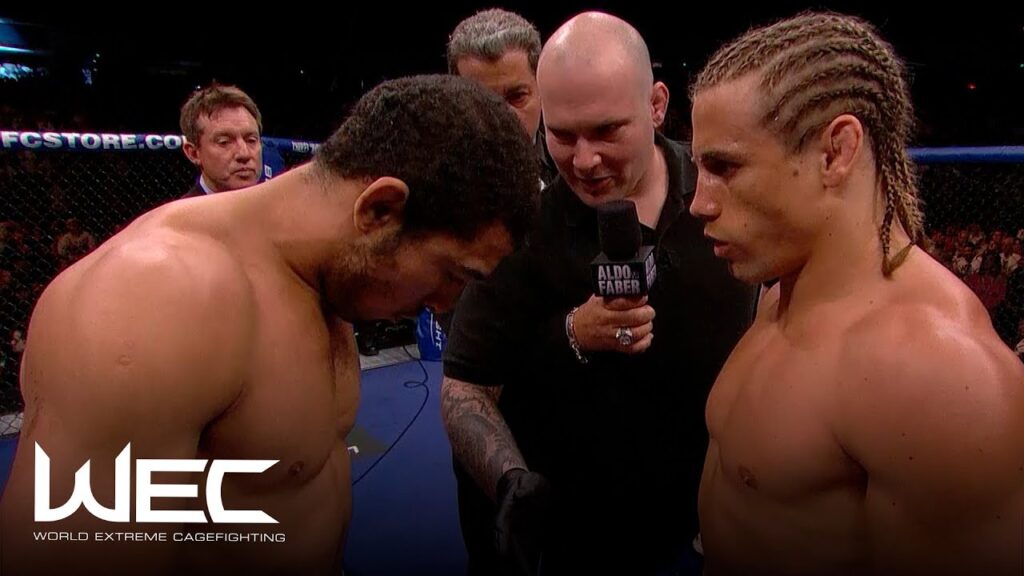
No other sports spell split-second decision-making with consequences quite like mixed martial arts does, and the actions of its referees are relevant in most instances. The premier organization in this discipline, the UFC, has had quite a number of controversial decisions by its officials, raising heated debates among fans, fighters, and analysts alike. These decisions can alter the course of a bout, influence the career path of a fighter, and in some cases, even change UFC history. It focuses on some of the most controversial referees’ decisions in the history of the UFC by presenting what exactly happened, why they were so controversial, and their implications, since, because of these decisions, careers have been changed. Herb Dean might be the most highly-respected referee in MMA, largely due to his cool head and broad experience in handling high-stakes fights. Yet, even the best cannot avoid controversy. One such instance was at UFC 169 in 2014 during the bantamweight title fight between Renan Barao and Urijah Faber. ControversyIn the opening round, Barao put down Faber with a punch that crumpled him to the canvas, following up with strikes on the ground. Hurt, Faber appeared to hold on while defending well enough by covering up to stop the fight. Referee Herb Dean had seen enough and awarded Barao the TKO victory. Most of the fans and a bunch of analysts felt that it was an early stoppage; Faber seemed to do an okay job of intelligently defending himself and had the decision at the top of the cards, no doubt. A real man who can actually stand there, take the blows, and get himself back in the fight, Faber immediately and passionately protested the stoppage of the fight at its conclusion. The decision was surrounded by a number of critics who claimed that the fight should have been allowed to continue on the magnanimity of what was at stake. ImpactThis early stoppage denied Faber the opportunity to mount a comeback, something we have seen in many of his fights. Indeed, the taking of this backdoor was something that really hammered home Barao’s victory, layering on more talk regarding the fight’s outcome. While Dean defended his decision by saying he was trying to do what was best for fighter safety, it remains one of the more contentious stoppages in UFC history. Steve Mazzagatti is a referee whose name has practically become synonymous with controversial calls, one of the biggest being his handling—or some would say, lack thereof—of the heavyweight fight between Brock Lesnar and Frank Mir at UFC 81, back in 2008. The ControversyBrock Lesnar’s second professional MMA fight was against the former UFC heavyweight champion, Frank Mir. Overzealousness on Lesnar’s part, compounded with his wrestling and crushing ground-and-pound capabilities, though, spelled early doom for Mir. In fact, the stoppage appeared to be imminent before a very slight pause on the contest from Mazzagatti, who deducted a point from Lesnar for landing a series of strikes to the back of Mir’s head. Most fans and critics feel it was a dubious call. As the two of them resumed to fight, Mir latched onto a technical opening and submitted him with a kneebar, making Lesnar tap out. The critics accused Mazzagatti with making an unnecessary fight and giving an undue advantage to Mir, which prematurely changed the tide of the bout . ImpactThe stoppage and deduction of a point made a lot of headlines, and even Dana White, president of UFC, was very vocal about Mazzagatti’s poor performance that night. The brawl added to the legend of Brock’s meteoric stardom in the UFC, and people had begun to wonder—what if the fight wasn’t stopped? Even now, the event has done little to create a good name for Mazzagatti as a referee with sound judgment. The ControversyFirst of all, Valentina Shevchenko is known to be one of the skilled and experienced fighters in her game today, while on the other hand, Priscila Cachoeira is not heard of much. From the initial bell, Shevchenko was all over Cachoeira, landing shots before taking her down, and after that, she continued with heavy punching and elbows.Despite the overwhelming attack, Yamasaki let this fight go way longer than most felt was needed. Bearing an unbelievable amount of abuse, Cachoeira lasted until the second-around submission, where Shevchenko locked in a rear-naked choke to dispatch her. The fight was so heavily one-sided that Shevchenko managed to do all of this and outstrike Cachoeira 230-3. ImpactYamasaki was criticized by all quarters for his call in letting the fight go on. Fighters, fans and the official UFC criticized him. More importantly, UFC President Dana white said that Yamasaki should never be allowed to officiate another UFC fight. This stressed the point that referees are supposed to protect fighters as the referee of a fight and further got inculcated in the mind of people that a late stoppage is as dangerous as an early one. Steve Mazzagatti showed his face on this list again, this time in the Jon Jones vs. Matt Hamill fight, during The Ultimate Fighter 10 Finale, 2009. Of course, the specific decision was weighty, as it was the only loss by Jon Jones – though it was in controversial circumstances. ControversyIt was clear that Jon Jones was beating the underdog wrestler Matt Hamill by way of wrestling and ground impounds, and the stoppage wasn’t that far away. Of course, in the process, Jones was throwing some 12-to-6 elbows – illegal under the Unified Rules of MMA. The bout was stopped, and Mazzagatti took away one point for the illegal elbow strikes from Jones, but during the stoppage, it was evident to everyone that the fight couldn’t go on because of the damage done to Hamill, really by legal strikes. Mazzagatti did not call the bout no-contest because it was due to the illegal strikes or neither did he call the DQ of Hamill but instead he called the match a disqualification win for the unbeaten Jones because of the illegal
The Role of Mental Coaching in UFC: Preparing Fighters for Battle

In mixed martial arts, it is the perfect marriage of both physical and mental attributes within the sport that equals success. While athletes competing in the Ultimate Fighting Championship are among the most talented and physically gifted people in the world, it is their mental toughness, focus, and the ability to fight through adversity that makes or breaks them inside the Octagon. As the sport has advanced, this is also much in realization of the benefits that go hand in hand with mental coaching. The following paper delves into the issues of mental coaching in the UFC, finding out how fighters prepare minds for the intense pressures of competitions, and techniques by mental coaches, all geared towards enhancing performance. More than likely, fighting in the UFC is one of the most difficult mental jobs in all of sport. Fighters are bombarded with the psychological stressors of being afraid of injury, feeling pressure to perform, the uncertainty of success, and all the time, they are under public and media surveillance. Furthermore, considering MMA is a contact sport, results-oriented ency really means constantly pushing the body to work at its limit—the physical nature may actually bring about mental fatigue with every fight. Common Mental Challenges: Pressure Performance: Performing at peak level, in front of vast audiences, under the media focus of global sites, may build immense pressure, which sometimes turns into performance anxiety. The fighter may have self-doubt, nervousness, or the fear of failure, which can affect his fighting. Fear of Injury: In MMA, there is always the chance of getting seriously injured, and sometimes the fear of this might not allow a fighter to go all out inside the ring. This very obviously leads to hesitation and, thus, impacts instantaneous decision-making at crucial junctures. Overcoming Defeats: MMA is a sport where everybody, notwithstanding how good he is, suffers defeats. Undergoing the psychological and emotional toil of the loss is of massive importance, as it may savage one’s confidence and motivation. Media and Fan Pressure: In a majority of cases, fighters are under the measuring eyes of the media and fans, who have high expectations and can be very critical. This may add to the heap of pressure acting on a fighter’s mind, especially high-profile ones. With the overwhelming challenges in view above, it can be easily noticed that mental coaching is an integral part of the fighter’s preparation these days for reasons. These benefits that are usually rashly looked for through mental coaching include the development of psychological skills to deal with the pressures that come with competing, maintaining focus, and performing at one’s best. It has become very evident that mental coaching will play an essential role as the UFC and MMA strengthen in popularity. During the early days of this sport, especially when it was least taught, there was less focus on mental training than there was on physical conditioning and technique. The evolving process of the sport led to a realization that shows psychological aspects are as valuable as physiological ones. First Mental Coaching Pioneers in MMA: Greg Jackson: He supported mental coaching from the very beginning of MMA, recognizing that mental preparation during fights was an essential part of the fighters’ regimen. According to Jackson, a good fighter was mentally sharp and emotionally stable, to both of which he used techniques of visualization, meditation, and other aids of the mind in training programs. Tony Robbins: One of the best and rather most famous motivational speakers and life coaches, Tony Robbins, catalyzed with a number of top-class UFC fighters, such as Conor McGregor. Robbins has been inspiring mental toughness, focus, and confidence in the men through his unique brand of performance coaching and psychology. Georges St-Pierre (GSP): A pioneer in his own right, Georges St-Pierre took early initiative in his career to avail himself of mental coaching. GSP worked with sports psychiatrist Brian Cain on mental strategies to manage anxiety, stay focused, and execute while under pressure. St-Pierre is often bluntly offered as the reason he is so successful in the UFC, given this fully developed approach to preparedness. The upsurge experienced by mental coaching in the UFC has occurred because of the realization in current times that a successful performance is definitively interconnected with mental toughness and psychological resilience. Mental coaching has generally been adopted within most fighters’ training camp regimes as fighters look for every slight advantage to procure victory. Such mental coaching in the UFC focuses on ways and approaches of assisting the individual fighters to prepare psychologically for the bare-knuckle competition. Most often, these are approaches specifically targeted at areas where a fighter requires most of his support. Most Common Techniques in Mental Coaching: Visualization and Imagery The mental technique of visualization is a strong one—seeing oneself across a finish line or perhaps mentally rehearsing exactly what one is going to do in any certain situation is very influential. Fighters use this skill in scenarios where they have to prepare mentally: for the execution of strategies, protection against opponents’ attacks or threats, and even for getting into the Octagon itself. Running scenarios in their minds brings up confident imaginations, emerging time after time without holding them back. For example, before every fight, Anderson Silva would run the entire bout in his head, from walking out to the raise of his hand in victory. Mental rehearsals such as this served as his calm and focus boost, helping him execute his game plan when it was most necessary, galled at the competition’s level. Breathing and Relaxation Techniques Breathing exercises and relaxation techniques may be utilized to help fighters overcome stress and maintain composure during training and on their fight night. Controlled breathing can reduce physiological arousal symptoms presented by anxiety, such as rapid heartbeats and muscle tension, and enhance relaxation. Fighters like Lyoto Machida and Georges St-Pierre also adopted breathing techniques as part of their pre-fight work, taking them into that relaxed focus right before stepping into the Octagon. In fact, such techniques have worked