
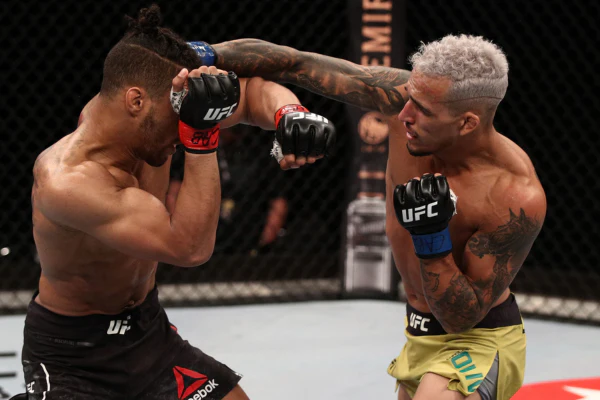
The final bell rings. You’re on your feet, heart pounding. Your fighter dominated—or at least, you thought they did. You wait for the announcer… and the other fighter’s hand gets raised. You throw your hands up at the TV and yell, “That was a robbery!” We’ve all been there. But what if it wasn’t a robbery? What if we’ve just been watching the fight with a different rulebook than the judges?
That feeling of frustration is one of the most common parts of being a combat sports fan. This clash between fan perception and reality in judging isn’t always because of corruption or incompetence. In practice, the disconnect happens because what our eyes are drawn to—like forward pressure, crowd noise, and superficial damage—often isn’t what scores points on a judge’s card. We see a story, but they are scoring a series of isolated, five-minute sprints.
The good news is that their system isn’t a secret code buried in a fifty-page document. Judges follow a surprisingly straightforward, hierarchical checklist to decide a winner for each round. This simple framework explains many of the most controversial MMA decisions that have left fans confused for years. It’s the key to understanding why a fighter moving backward can still easily win a round, or why a clean takedown is often valued more than a dozen light punches.
Learning the official criteria will fundamentally change how you watch fights, replacing that all-too-familiar anger with genuine insight. You’ll finally see the “game within the game” that decides outcomes, and you’ll be the one who can calmly explain to your friends exactly what the judges saw.
Forget the Whole Story: Why Judges Score Each Round as Its Own Mini-Fight
That dramatic comeback in the final round? The one where your fighter, after being a step behind all night, finally landed huge shots and had their opponent staggering at the bell? It’s the kind of thing that makes us leap off the couch, convinced we just saw the fight turn around. But to a judge, it might not matter. This is the single biggest source of fan frustration and one of the most common MMA judging misconceptions: a fight is not scored as a complete story. It’s a collection of short stories, with each round being its own five-minute mini-fight.
Under the 10-Point Must System, the winner of each round gets 10 points, and the loser gets 9 (or fewer, in cases of dominance). Think of it like a three-question test. If a fighter gets an A on the first two questions (winning Rounds 1 and 2, 10-9) but a C on the last one (losing Round 3, 9-10), they still pass the test with a better overall score. The final tally would be 29-28, even if they looked exhausted and were losing badly at the end. The strong finish doesn’t erase the early work.
A simple way to score a fight like a judge is to mentally wipe the slate clean when the horn sounds to end a round. Whatever happened in that round is now locked in. The next round starts at 0-0. This mental reset is the first step to seeing the fight the way officials do. Once we’re looking at just one round at a time, the scoring almost always comes down to one thing.
The King of All Criteria: How ‘Effective Striking & Grappling’ Decides 99% of Rounds
What’s the one thing that decides a round? It’s not who moved forward more, who looked busier, or who controlled the center of the cage. The first, last, and most important thing judges are instructed to look for is Effective Striking and Grappling. Think of this as the heavyweight champion of scoring; if one fighter has a clear advantage here, nothing else matters. This single concept is what separates a fan’s gut feeling from a judge’s scorecard.
But what does “effective” actually mean in a fight? It’s not just about landing the most shots; it’s about landing the shots that have the most impact. The Unified Rules of MMA give a clear definition:
- Effective Striking is judged by its immediate or cumulative effect. A punch that snaps an opponent’s head back is worth far more than ten soft jabs that land on their gloves. A hard body kick that makes a fighter wince and drop their hands is a hugely significant moment.
- Effective Grappling means using takedowns, submissions, and ground positions to get closer to finishing the fight. A takedown that leads to ground-and-pound is effective. Simply holding someone against the cage for two minutes with no damage is not.
Imagine this common scenario: Fighter A is constantly moving forward, throwing a hundred punches but landing mostly on the arms and shoulders of their opponent. Fighter B is moving backward but lands three clean counter-punches that visibly rock Fighter A’s head. While Fighter A might look busier and more “aggressive,” Fighter B is winning the round by a mile because their strikes were the only ones that were effective.
This is where most fans get tripped up. They see forward movement (Aggression) and assume that fighter is winning. However, Aggression and Cage Control are only used as tie-breakers. If the judges feel the effective striking and grappling was 100% equal—which is incredibly rare—only then will they look at who was more effectively aggressive. The fighter moving backward and landing clean counters has already won the round on the primary criterion, so the tie-breakers are never even considered.
Ultimately, it all boils down to impact. Judges are trained to answer the question, “Who did more to end the fight in that round?” It’s a hunt for damage and fight-ending moments.
Blood Doesn’t Win Fights: Why Visible Damage Can Be Deceiving
It’s a classic fight-night image: one fighter’s face is a crimson mask, while the other looks untouched. Our gut instinct screams that the bloody fighter is losing, but this is one of the biggest traps for the casual viewer. Judges are specifically trained to distinguish between superficial damage, which looks dramatic, and fight-altering impact, which actually determines who is winning. A little bit of blood can be very deceiving.
A small cut from a grazing elbow, especially on the forehead or scalp, can produce a shocking amount of blood without affecting a fighter’s ability to see or breathe. Contrast this with a clean hook to the liver that makes an opponent’s body seize up for a split second, or a heavy leg kick that forces them to switch stances. One looks scary; the other fundamentally changes the fight. Judges are told to score the shot that has the greater impact on the competitor, not the one that looks better on a highlight reel.
Think of it as winning the “impact battle” versus the “optics battle.” A fighter can be losing the visual war—sporting a swollen eye and a bloody nose—but be decisively winning the round by landing thunderous body shots that are draining their opponent’s gas tank. That immediate effect on performance and a fighter’s ability to continue is what gets recorded on the scorecard. The blood and bruises are just scenery.
This intense focus on fight-altering impact is the absolute core of modern judging. It’s why a fighter landing clean shots while moving backward will almost always beat a fighter moving forward and landing nothing of consequence. But what happens in those rare, razor-thin rounds where the impact is truly equal on both sides? That’s when, and only when, judges finally move down their checklist to the tie-breakers.
The Tie-Breakers: What ‘Effective Aggression’ and ‘Octagon Control’ ACTUALLY Are
Aggression and control are two of the most misunderstood concepts in all of combat sports. For many fans, the fighter moving forward is the fighter who is winning. But for the judges, these are secondary, last-resort tie-breakers used only when the primary criterion—effective striking and grappling—is absolutely even. If one fighter landed the more impactful offense, the round is theirs, period. Aggression and control don’t even enter the equation.
In those rare, truly dead-even rounds, judges will first look at Effective Aggressiveness. This isn’t simply walking forward. It’s about aggressively and purposefully attempting to finish the fight. Imagine a fighter relentlessly pursuing their opponent, throwing combinations with bad intentions and forcing them on the defensive. That’s effective aggression. What isn’t? A fighter who plods forward with their hands down, walking straight into clean counter-punches. They may be aggressive, but it certainly isn’t effective, and they are losing the round based on impact.
If, by some miracle, both effective striking and aggression are still completely equal, the judges turn to the final tie-breaker: Octagon Control. This refers to which fighter is dictating the pace and location of the fight. A wrestler who consistently pushes their opponent to the fence to set up takedowns is demonstrating control. Likewise, a skilled striker who uses footwork to keep the fight in the center of the cage, away from the wrestler’s domain, is also showing control. It’s about who is making the fight happen on their terms.
Ultimately, these two criteria are footnotes on the scorecard, meant to resolve rounds that are otherwise perfectly symmetrical in terms of damage and impact. But most close fights aren’t decided by these tie-breakers; they are simply close 10-9 rounds where judges had to make a tough call on impact.
Winning vs. Dominating: How a “Close” 10-9 Differs From a “Dominant” 10-8
Knowing what judges are looking for is the first step; the next is understanding how they score it. Every round is scored using the 10-Point Must System, where the winner gets 10 points and the loser gets 9 or fewer. The most crucial thing for a fan to understand is that a 10-9 is the default score for any round with a clear winner. It doesn’t mean the round was razor-close. A fighter can decisively out-strike their opponent for five minutes, winning every exchange, and still only win the round 10-9. Think of it as simply checking a box: “Did Fighter A win this round?” If yes, it’s a 10-9.
So, what does it take to earn a lopsided 10-8 round? The key word is dominance. A 10-8 isn’t just for winning; it’s for overwhelming an opponent to the point where they are barely competitive. To justify this score, judges look for a combination of significant Impact, Duration, and Dominance. This means a fighter must either inflict massive damage—like a knockdown or a rocking shot that nearly finishes the fight—or maintain complete control with damaging offense for a significant portion of the round, such as extended, brutal ground-and-pound where the opponent is just trying to survive.
Ultimately, the bar for a 10-8 is extremely high. While you might feel one fighter clearly “won” a round, judges see it as a standard 10-9 unless there was a moment of near-fight-ending impact or sustained, one-sided punishment. This distinction is the single biggest reason why a fight that feels like a blowout to a fan can end with a close 29-28 score on paper. The winner simply won three separate, competitive 10-9 rounds.
Three Mental Traps That Make Fans Bad Judges (And How to Avoid Them)
Knowing the rules is a huge step, but our brains have a funny way of interfering. We don’t watch fights with our eyes alone; we see them through a filter of expectations, emotions, and even sounds. This is where the biggest disconnects between fans and judges happen. By recognizing these mental shortcuts, you can start to see the fight more clearly.
Most of us fall into three simple traps when scoring from the couch:
- The Supporter’s Bias (Confirmation Bias): If you want a fighter to win, you’ll automatically notice every good thing they do and minimize their opponent’s success. Your brain actively looks for evidence to confirm you’re backing the right person, often ignoring clean shots coming the other way.
- The Storyteller’s Bias (Narrative Bias): We love a good story—the aging veteran having one last run or the underdog defying the odds. This can trick us into scoring the story we want to see, rather than the objective, round-by-round action that’s actually taking place.
- The Audio Bias: A roaring crowd or an excited commentator can make a glancing blow sound like a knockout shot. Conversely, clean, effective counter-punches that land in a quiet moment can go completely unnoticed by the audience, but not by the judges.
How do you fight these biases? Try this simple experiment during a close round: mute your TV. Turn off the commentary and the crowd noise. Suddenly, you’re forced to judge only with your eyes. You’ll be shocked at how often the fighter who sounds like they’re winning isn’t the one actually landing the cleaner, more effective shots.
Once you learn to spot these mental traps in yourself, you can combine that awareness with your new knowledge of the scoring criteria to see the fight more like a judge does, applying it in real-time on a chaotic fight night.
Was It REALLY a Robbery? How to Watch Your Next Fight Like an Expert
You’re no longer the fan on the couch, yelling at a decision you don’t understand. You’ve traded that frustration for insight. Where you once saw a chaotic brawl, you can now see the subtle math of each round and a clear path to victory. You now have the tools for understanding MMA scoring and can see the fight through the same lens as the officials, recognizing the moments of impact that truly swing a round.
The next time you watch a live event, put your new knowledge to the test. Instead of getting caught up in the overall narrative, use this simple method for scoring a fight like a judge:
Your New Fight-Watching Checklist:
- For each round, who won the impact battle (Effective Striking/Grappling)?
- Was it a clear win (10-9) or total dominance (10-8)?
- Lock in the score and reset for the next round.
When you see a fighter moving forward relentlessly but losing a 10-9 decision, you won’t just see a “robbery.” You’ll know that their aggression likely didn’t outweigh the clean, impactful counter-shots they were eating. You’ll understand that the fight wasn’t stolen; it was won on the margins of the most important scoring criterion.
This is your new superpower as a fan. You’ll still feel the passion and excitement, but it will be layered with a deeper appreciation for the sport’s technical chess match. While true robberies—decisions that are completely unjustifiable—do happen, you’ll now recognize that most controversies are simply close, competitive fights. You’re not just watching the fight anymore; you’re reading it.