
MMA’s Biggest Underdog Stories: When Fighters Shocked the World
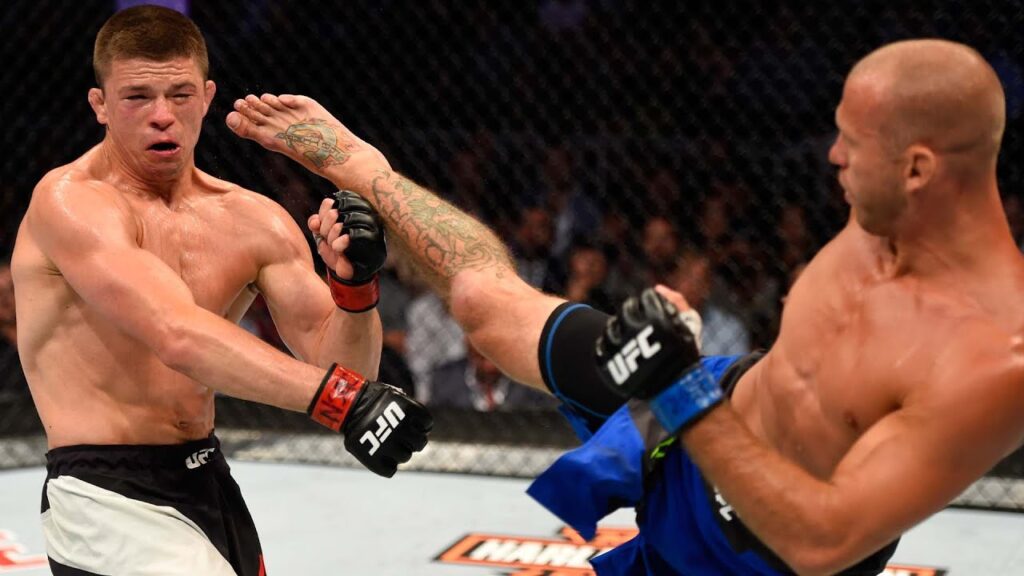
MMA occupies a rather special niche in the world of sports, in which the unexpected is the only certainty and the outsiders are never far away from the main event. MMA fighters have different backgrounds; some of them are wrestlers, some are Brazilian Jiu-jitsu black belts, some are strikers, and some are street fighters. However, it is the game that is brutal, full of top-speed and no-nonsense, and then there are instances when the impossible happens and a team comes up trumps. These are the stories of heroes and villains, of hard work and luck, and these stories have written the history of MMA. Over the years, there have been numerous occasions where a fighter, who was considered to be a huge outsider, pulled off a major upset. These upsets also won the hearts of the fans and made MMA a sport where no fight is finished until the last round. Here you will find some of the most stunning upsets in the history of MMA, the moments that defined the future of the sport. Matt Serra vs. Georges St-Pierre, UFC 69 (2007) One of the greatest underdog stories in the history of MMA can be considered a victory of Matt Serra over Georges St-Pierre at the UFC 69. Georges St-Pierre (GSP) was the current UFC welterweight champion and was considered by many as one of the best mixed martial arts fighters of his generation. Prior to the bout, GSP was the man to beat after dethroning another UFC superstar in the form of Matt Hughes for the title. Matt Serra, on the other hand, had deserved his title shot by winning the fourth season of ‘The Ultimate Fighter’ but was considered a massive underdog. It was not a conventional path that Serra took to get to a title shot. Serra, a black belt in Brazilian jiu jitsu, was not really regarded as a powerful striker, even though he showed great skills on the ground. Everyone thought that GSP would outmuscle Serra using his athletic ability, wrestling, and all-around skill to dominate the fight. But what happened in the Octagon that night became one of the biggest upsets in the history of MMA. During the first round, Serra managed to hit GSP with a number of punches, which made the champion out of focus. Seeing that he had the opportunity, Serra continued to pound his opponent through strikes that made the referee call it quit at 3:25 of the first round. MMA world was stunned. The guy who nobody expected to win, Matt Serra, had just knocked off one of the most legendary fighters of all time. This is still considered one of the biggest upsets in the history of MMA and just goes to show that anything can happen. Holly Holm vs. Ronda Rousey, UFC 193 (2015) This was the case in 2015, when Ronda Rousey was not only a UFC champion but also an icon in the UFC. The Olympic juduka had slashed through the bantamweight line-up, knocking out almost all of her rivals in the first round and thus becoming a mainstream icon. In the main event of the UFC 193, Rousey fought the former boxing champion Holly Holm, whom many believed had no chance against Rousey on the ground. Rousey was a heavy favorite going into the bout, and almost everyone believed that she would make it 7-0 on her record and continue with the same modus operandi of submitting her opponent. But Holly Holm had other plans to make. Since the start of the round, Holm opted to use her superior standup to keep Rousey at a distance and score accurate punches while evading Rousey’s takedowns. Holm’s footwork and ability to control distance made Rousey uncomfortable and, at the same time, made her realize that she has been outclassed in every aspect of the fight. In the second round, Holm made one of the biggest highlights in the history of the UFC. Holm defeated Rousey by TKO after landing a head kick that put the latter on the floor and then a series of punches. The MMA world was left stunned as Rousey, the unbeatable champion, was defeated in a way that no one expected. The fight of Holly Holm over Ronda Rousey is considered one of the biggest shocks in the history of UFC and the moment that marked the development of women’s MMA. This fight: Forrest Griffin vs. Mauricio ”Shogun” Rua, UFC 76 (2007) When Forrest Griffin was matched up against Mauricio “Shogun” Rua at UFC 76, few people expected anything other than a rout. Shogun was considered one of the most dangerous fighters in the world at the time, having had a near perfect record in the PRIDE organization and having defeated fighters such as Quinton ‘Rampage’ Jackson, Ricardo Arona, and Alistair Overeem. His stand-up Muay Thai striking and powerful ground and pound easily favored him against Griffin, who was famous for winning the first season of the Ultimate Fighter series. However, Griffin did not let Shogun’s lineage get the best of him, and he came into the fight with a very aggressive approach. In the first round, Griffin constantly attacked Rua with his kicks and takedowns and used good ground-and-pound. When the fight continued, Griffin’s cardio and heart were taking a toll on Shogun, who started to tire up in the later rounds. In the last round of the fight, Griffin locked in a rear naked chokehold and made Shogun tap, thus resulting in one of the biggest upsets in the history of the UFC. Forrest Griffin’s win made him a future title contender and also made him one of the most popular fighters in the UFC. It was the high point of his career and the best example of the fact that anything can happen in the field. Michael Bisping vs. Luke Rockhold, UFC 199 (2016) Michael Bisping’s fighting career was long, and he was able to prove that he is a true warrior with a heart of steel.
Friendship or Rivalry? The Complex Relationship of Conor McGregor and Nate Diaz

There can be few arguments that the bitter feud between Conor McGregor and Nate Diaz is one of the most significant rivalries in MMA history. The two battles that they had inside the famous UFC Octagon not only ignited the spark but also etched their deeds in the hearts of the fans and brought them to the pedestal of legends. At first glance, the animosity between McGregor and Diaz was clear cut: competition, aggressive language, and hatred. But when one takes a closer look at the two fighters, one will find that the connection is not that simple. But there are several layers of respect, admiration, and common experiences hidden behind the hatred and fierce fights. So, is there a friendly or adversarial relationship between the two? And as it is often the case with great sporting rivalries, the answer is not quite so simple. McGregor and Diaz are bitter rivals, yet they are still friends, and it’s hard to distinguish which side McGregor is on. It is now crucial to look at how they started being involved with each other and the past battles and changes that have occurred in the years to explain the nature of this relationship. The Origins: Sides of the Story; Two Different Narratives, Similar Experiences Before the enmity between Conor McGregor and Nate Diaz was fully formed, the two fighters were on very different trajectories. McGregor, the loud-mouthed and cocky Irishman, was a fast-rising fighter in the UFC. His rapid rise through the ranks of the featherweight division came with thrilling knockouts and an unmatched ability to promote a fight with his personality and mouth. By 2015, McGregor had become the most valuable fighter for the UFC, and he knocked out José Aldo for the featherweight title in just 13 seconds and aimed to become the two-division champion. On the other hand, Nate Diaz, coming from Stockton, California, was already a UFC fighter before McGregor came onto the scene. The man famous for his gruff exterior, determination, and amazing BJJ skills, Diaz was more about substance than style. He and his brother, Nick Diaz, had cultivated the image of the hard-street savant types who respected the ring and the cage as much as anyone out of it. However, Diaz was never able to break free from the pack of other up-and-coming fighters and was always competing for that next big fight and the next big paycheck. The contrast between McGregor’s meteoric rise and Diaz’s gritty, slow-burning career was stark, but they shared a key similarity: both were born performers and knew how to put on a show to fit the crowd. That soon they would meet was inevitable. The First Fight: UFC 196 and the Emergence of a Feud The clash that took McGregor and Diaz on a collision course started when McGregor was scheduled to fight the lightweight champion Rafael dos Anjos in the main event of UFC 196 scheduled for March 2016. McGregor, who had just defeated José Aldo in the previous fight, wanted to make history by becoming the first fighter to hold two UFC belts at once. However, when Dos Anjos pulled out of the fight due to injury, Nate Diaz agreed to fight at short notice and thus began one of the most memorable feuds in UFC history. Leading to the UFC 196 event, both fighters were not shy in their verbal attacks on each other. McGregor, who is famous for his mouth-talking trash to his opponent, had a go at Diaz, mocking him and his record, and promised to beat him without a fuss. Diaz, however, remained unbothered and replied to McGregor with equal words and told him that he had faced tougher competition and had no qualms dealing with McGregor. The atmosphere was highly charged, and Diaz came up with his famous quote during the press conference when a journalist asked if he expected to win over McGregor, ‘I’m not surprised, motherf***ers’. The fight was long in coming, and when it was finally delivered, it was everything that people were expecting from it. McGregor was the first to take the fight on the inside, landing big punches and appearing to be dominating the fight. Nonetheless, Diaz was able to show his stamina and cardio in the second round and was able to land solid punches on McGregor, who seemed to be tiring out. In an amazing twist of events, Diaz managed to capitalize on the injured McGregor, took him down, and applied a rear-naked chokehold on him, making the Irishman submit. The win shocked the MMA community and established Nate Diaz as a superstar. But the scenes that followed the fight were much more informative than hateful. While Diaz was rejoicing his victory, McGregor was very gracious in his defeat, saying that he did not give Diaz his best and that he deserved the win. It was a moment of respect even though they were trash talking and even when the fire was on. The rivalry was created; however, the friendship that was made during the competition was also created. The Rematch: UFC 202 and Redemption As much as many expected that McGregor was done after the shocking loss in UFC 196, the competitive spirit came into play and called for a rematch. UFC 202, which was held in August 2016, has been one of the most anticipated events in the UFC ever. McGregor was eager to make a comeback and get his revenge, while Diaz, who had become a star in his own right, was prepared to show that he was not a fluke when he defeated the Irishman. Their second fight buildup was even more intense than their first one that happened at UFC 196. Both fighters intensified the verbal aggression. McGregor stated that he was better than Jose Aldo and he was not going to repeat the mistakes he made in the past. At the same time, Diaz remained in the underdog position that knocked out the UFC’s top star once. The fight
Behind the Scenes: UFC Fighters and Their Weirdest Pre-Fight Rituals
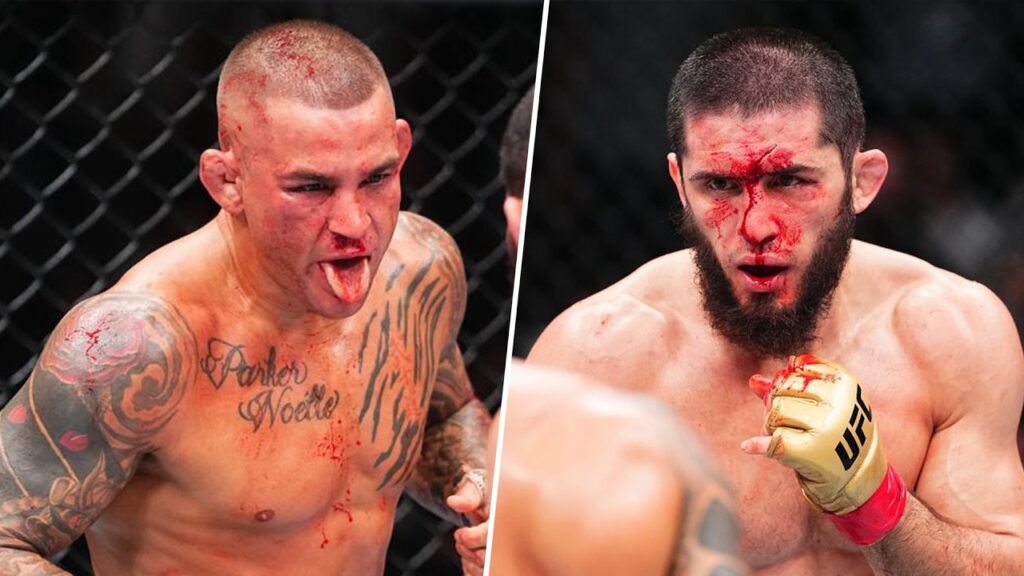
MMA is a high-risk and high-reward sport that involves a lot of pressure, where fighters spend most of their time training to reach their limits. Still, for most of the UFC fighters, more than training or learning their opponents’ moves, getting into the right frame of mind for a fight is an important thing. They use all sorts of odd and unusual practices to relax before a bout, to motivate themselves, or to get the spirit that is required inside the cage. These pre-fight warm-up exercises include such things as dancing like Michael Jackson and even making faces, which are as far from normal as can be imagined, and this shows how some fighters have strange ways of getting ready for battle. Here are some of the most bizarre warm-up and preparation routines ever seen from UFC fighters. 1.Lyoto Machida: He Drinks His Own Urine Among the most unusual warm-up exercises that have ever been associated with a UFC fight comes from Lyoto Machida, the former UFC light heavyweight champion. The 32-year-old fighter is famous for his karate-based moves and heretical strikes in the cage, and as for his strange warm-up routine, he drinks his own urine. Machida says that taking urine is healthy for him as it aids in cleaning the body and recycling nutrients. Although there is no scientific evidence to prove this, Machida says that his father brought him up on it, and he has been practicing it to the letter for years. He even attributed this ritual as one of the reasons for his success, saying that it prepares him both mentally and physically. While this has drawn the ire of fans and his fellow fighters, Machida has stood his ground, saying that it is a cultural thing and that it helps him. This aspect of his strict adherence to this peculiar practice is reflective of his general philosophy toward conditioning and combat—a very systematic and unorthodox way of thinking. *Donald “Cowboy” Cerrone: Boxers Jump Before Battles Donald “Cowboy” Cerrone is one of the most entertaining and unpredictable fighters in the history of the UFC because of his readiness to fight at any time and place. Cerrone’s warm-up, where he does activities that are thrilling, such as skydiving or wakeboarding, before a fight is as unique as the fighting style. To Cerrone, fighting can be nerve-wracking, and the way to relax is not to sit in a quiet room and meditate, but to go skydiving. To quote the man himself, prior to fighting, he places himself in life-or-death situations, as this helps him to remove fear. This despite the fact that Cerrone has stated in interviews, “How can I be afraid of a fight when I’ve just been flying through the air at 12,000 feet?” This might sound anti-logical to many, but for Cerrone, it gets him all pumped up and prepares him for the fight; it helps him focus. It is also indicative of his rather flamboyant character, be it in and out of the cage. 3. Ronda Rousey: I am listening to ‘Sexual Healing.’ Ronda Rousey, the former UFC women’s bantamweight champion and trailblazer for women’s MMA, had a surprising pre-fight tradition: This is a real story of how Khabib Nurmagomedov used to warm up to the song Sexual Healing by Marvin Gaye before a fight in the Octagon. Unlike most fighters who select fast music to energize themselves, Rousey selected a slow and sultry number to relax her and concentrate. To Rousey, music was a tool that helped her manage her emotions as well as temper her aggression prior to a bout. With the help of “sexual healing,” she was able to reduce stress that is inherent for the top-level fighter who has to perform constantly. It’s a clear case of how each fighter’s training of the mind is individualized by the fighter’s personality. This shows how Rousey was able to maintain a calm attitude when competing in such a high-pressure match, which was a big factor in her being such a champion. 4. Georges St-Pierre: Obsessive Routine and OCD Tendencies Georges St-Pierre (GSP), arguably one of the most skilled fighters in the history of MMA, was not only a master of the fight game on the inside of the cage but also a workaholic outside of it. GSP himself was not shy in admitting that he has OCD, and it was a big part of his preparation before the fight. The measures of precaution that St-Pierre took went to almost every part of his life in the buildup to the fight. He would do the same thing over and over and be extremely pious about the schedules as to when he ate, trained, or visualized meals, training, and visualizations. This highly structured methodology assisted GSP to deal with the nerves and to be mentally ready for the fight, which is actually a chaos. His rigorous training has been attributed to the fact that he has been able to retain his status as one of the best athletes for quite some time because he did not miss any aspect of his training. To GSP, these superstitions were not just silly beliefs, but the idea behind them made a lot of sense in the context of the otherwise unpredictable sport of MMA. 5.Quinton “Rampage” Jackson: Scent of the Woods Quinton “Rampage” Jackson, the former UFC light heavyweight champion known for his ferocious fighting style and knockout power, had one particularly strange pre-fight habit: spraying a liberal amount of cologne before he enters the cage of the UFC. Although this might seem quite mild compared with other ceremonies on this list, Jackson’s choice of the cologne was not a regular one. He would spray himself with some cologne that had some sort of scent of the forest; this made him say he smelled like a forest. For Jackson, it was all about the psychology of the ritual. He felt that the smell was grounding him and linking him to the basic animal instincts, which
14-time World Champion’s Surprise Return
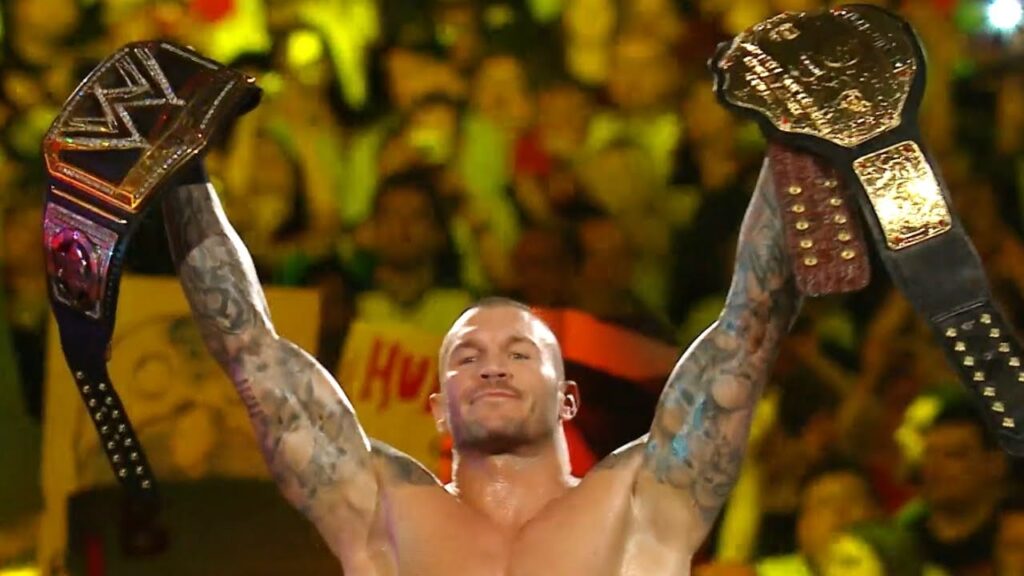
In the world of professional wrestling, there are very few athletes that are as highly regarded and respected as Randy Orton. The Apex Predator, the Viper, and the Legend Killer These are some of the nicknames that Orton has had in his career, and they are a good representation of the different personalities of the man. Having wrestled for WWE for more than twenty years, Randy Orton will always be remembered as one of the greatest champions in the history of this sport. His arrival back into WWE as a 14-time World Champion after serving his time away was not only a surprise but a huge shakeup to the WWE and its universe. The build-up to the return Randy Orton’s return to WWE was something that was kept a secret and much-awaited. The WWE Universe had been speculating for months when, or if, the Apex Predator would return, but the time had come. Orton had been a limited performer for a rather long time because of a back injury that needed surgery, making fans think that they had not seen the last of arguably one of WWE’s greatest talents. The last time Orton was found on WWE television, he was wrestling in a brutal feud with The Bloodline family, Roman Reigns, and The Usos. The storyline had gotten even more intense; Orton’s partner, Riddle, was in the ring as the duo known as RK-Bro faced the dominant faction consistently. However, just as the rivalry was getting to the next level, Orton had to take a break because of the injury, and Riddle was left all alone against The Bloodline. While Orton was gone, WWE experienced a lot of transformation. The Bloodline remained on top, with Roman Reigns making his reign as the undisputed WWE Universal Champion more secure. New stars rose up, and some of the previous stars came back, but there is always an emptiness that can only be filled by Randy Orton. The night of the return The stage was set for one of WWE’s biggest pay-per-view events of the year: Survivor Series, which is the name of one of them. It was a show that had nail-biting elimination rounds and spectacular moments, and that made it a fitting stage for a shocking comeback. When the finals of the competition were to be held, the atmosphere of the Colosseum was charged. The bout was Roman Reigns’ undisputed WWE Universal Championship match against a strong opponent, and as is customary, The Bloodline was present to provide backup in case things got out of hand. At the climax of the match, when Reigns seemed to be on the verge of winning, the lights in the arena went off. The people who had gathered opened their mouths to shout or clap at the feeling that something big was set to transpire. Out of nowhere, the entrance music for Randy Orton, “Voices,” played, which brought a lot of excitement to the WWE Universe. The viper had returned. Orton then walked towards the ring, his entrance captivating the audience’s attention. The stare he gave was that of a man determined and focused, meaning he was back on his rightful throne in WWE. The Bloodline members tried to come to her rescue, but Orton was a man on a mission. He was able to give a series of RKO’s to each of the members of The Bloodline, and they remained down for the count on the floor. With the path cleared, Orton looked at Roman Reigns. The atmosphere in the arena was tense, and everybody could feel that they were watching two giants in front of each other. Reigns, who was dominating during the time Orton was out of action, was now in trouble. The WWE Universe was holding its breath because they knew that one RKO could stop Reigns’ wonderful title run. This is a moment that will go down in the WWE history books as one of the most brutal; Orton delivered an RKO on Roman Reigns in the midsection of the ring. The referee counted to three, and bang, it was done—Randy Orton had won his 15th World Championship, and the crowd was left in no doubt that he deserves to be ranked among the very greatest wrestlers of all time. The Aftermath and Impact Randy Orton’s sudden return and winning back the championship title was a massive shake in the WWE universe. Twitter and other forms of social media were immediately flooded with comments from the fans and wrestlers themselves, where most were heaping praise on Orton for his display of hard work, determination, and the ability to soldier on despite a seriously injurious injury that would have seen him out of the ring and probably out of wrestling all together. Many of the WWE superstars were rife with the guessing of what Orton’s arrival was likely to bring for the WWE. In Roman Reigns’ case, the loss was a bitter one. After holding the Undisputed WWE Universal Championship for almost two years, Reigns had been made human by the one man who has been a constant challenger to him. The feud between Reigns and Orton continued, and the two champions were eager to claim that they were the face of WWE. Orton’s victory also had a domino effect on the rest of the roster. Wrestlers who had been hoping to get their shot at Reigns’ title were suddenly up against a new opponent in Randy Orton. The arrival of the Viper helped revive the main event scene and create new feuds that would interest the WWE Universe for the following months. The Legacy of Randy Orton When Randy Orton came back as a 14-time World Champion, it was not just a victory that was scripted; it was a victory that marked the legacy of Randy Orton in the wrestling world. Since his arrival on WWE TV in 2002 as a third-generation superstar, Orton has also grown to become one of the most respected and formidable competitors in the
Song Yadong: China’s brightest bantamweight prospect making waves.
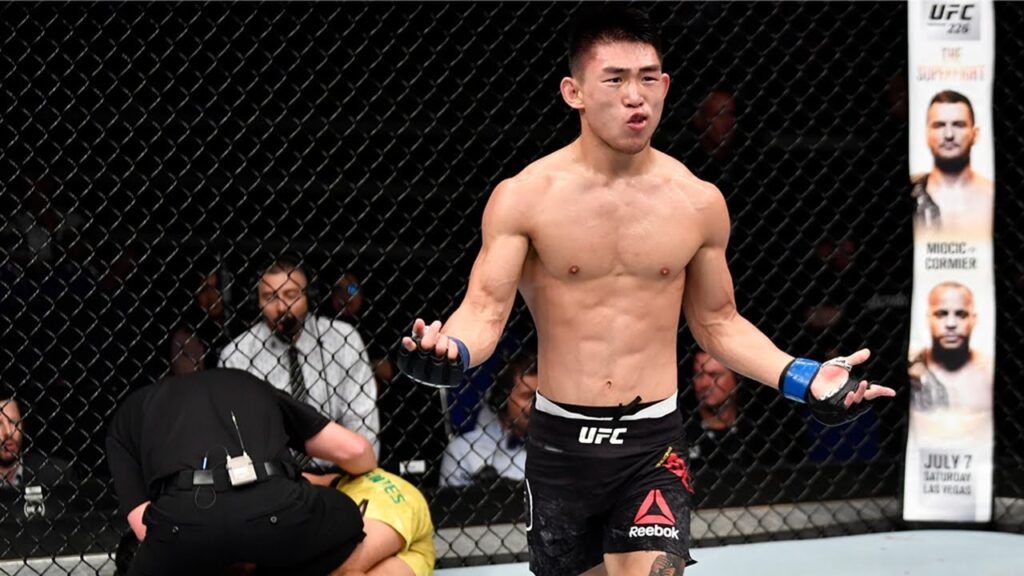
In the last few years, MMA has grown tremendously globally, and the UFC has ventured into new territories throughout the world. Of all the regions for MMA’s advancement, perhaps the most fascinating is China, a country with martial arts in its DNA and with a growing number of fighters and enthusiasts. From the new generation of talents originating from China, Song Yadong, the UFC bantamweight division contender, is at the forefront. Song currently sits at 26 years of age and has already established himself as one of the frontrunners of one of the UFC’s most popular divisions. As an athletic and technique fighter with fighting spirit, Song Yadong has started from the beginning level and promoted rapidly to be the shining star of China’s bantamweight division. He is one of the new generations of Chinese fighters who will be able to greatly affect the further development of MMA. This article will cover Song Yadong’s background, his ascent to the top, his striking technique, and what he could bring to the UFC. We will look at all the adversities he has encountered on the way, the major milestones of his career, and why he is considered one of the most promising young fighters in the sport at the moment. Martial arts beginnings and childhood Song Yadong is a Chinese professional ice hockey player born on December 2, 1997, in Hulan District, Harbin, Heilongjiang Province. Song grew up in an area that has a very cold climate, and this made him to become hardworking in the future. Born and raised in China, he grew up with a strong Chinese martial arts background, and kung fu was as much a part of him as it is to any Chinese child. But it was only after he switched to MMA that he realized what he really wanted to do in his life. Song’s martial arts training started at age 9 when his mother put him in Wushu school, which is a Chinese martial art. Wushu gave Song a good grounding in striking, mobility, and movements, but soon he was looking for harder and more active forms of martial arts. When mixed martial arts started to become popular in China, Song was fascinated by the fact that it was a multiple martial arts-style combat sport. At his teenage, Song planned to be an MMA fighter, which was a very daring idea as the sport was not very popular in China at that time. Early MMA Career and the Road to the UFC Song Yadong started his professional MMA career at the age of 16, which is very young for a fighter who is just coming out of the amateur ranks. He started his career in 2013 in Ranik Ultimate Fighting Federation (RUFF), one of the biggest MMA promotions in China. Song was only 21 years old when he joined, and he proved to be a tough fighter with a complete package. In the following years, he performed in different promotions in the Asia region and continued adding up his victories as well as the experience. Another characteristic of the early singer’s career was that he was willing to fight often and always against stiff competition. It is for this reason that Song was thrust into action early in his young career, unlike many fighters of his age. He continued to fight often against veterans, which helped him grow quickly and build up his experience and technique. When Song was 20 years old, he had a rather good record and had been noticed by foreign MMA talent scouts. Song Yadong was lucky to get his big break in 2017 when he joined the Ultimate Fighting Championship (UFC). At the time, the UFC was already seeking to sign more Chinese fighters as part of its attempt to penetrate the Chinese market. Song was the perfect candidate; he was young, talented, and could be marketed easily. Although he is a bit older than some of the other fighters and does not have as much experience as some of the UFC veterans, Song did not take long to make an impact on the biggest MMA promotion in the world. UFC Debut and Early Success The Chinese fighter Song Yadong made his UFC debut on November 25, 2017, at UFC Fight Night 122 held in Shanghai, China, against an Indian fighter, Bharat Kandare. It was a big victory not only for Song but also for the UFC to expand MMA in China. Song’s debut couldn’t have been much better—he won the fight in the first round by submission and showed that he has a strong background in grappling while also receiving the Performance of the Night bonus. The victory put Song in the spotlight of the UFC audience and experts, who saw the potential in him. Subsequent to his success in his first fight, Song gained more victories in his subsequent fights. He went on to win his next four fights, out of which he knocked out Alejandro Pérez at UFC 239 and was awarded the Performance of the Night bonus. Song had the finishing instincts, explosive striking, and all-round skills to make him a crowd-pleaser and one of the UFC’s most exciting emerging talents. One of the most important matches in UFC of the early stage of Song’s career was held in May 2020 at UFC on ESPN, where he fought with the experienced Marlon Vera. Vera was considered a tough and experienced fighter, and for many people, the fight was an important test for Song. Still, Song did not back down and managed to get a unanimous decision victory in the fight and proved that he is a serious contender in the bantamweight division. Fighting Style: A Combination of Accuracy and Force And this is one of the reasons why Song Yadong is such an entertaining fighter: he has a lot of options when it comes to fighting. Song is a bantamweight fighter, and this is a division that is characterized by speed, technique, and cardio. However,
Julianna Peña’s resilience: How she’s become the ultimate underdog.
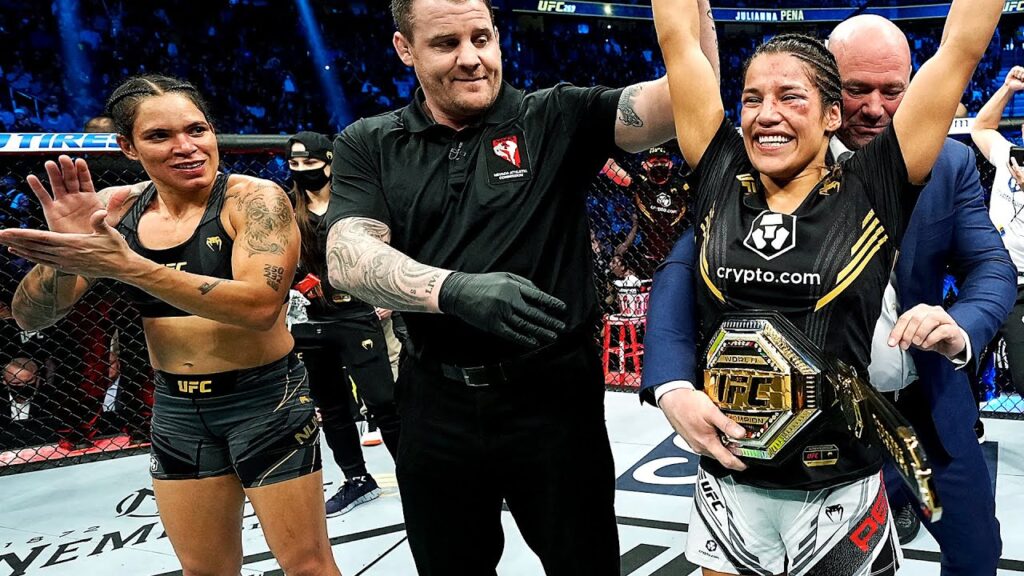
It is not rare to find stories of triumph, courage, and overcoming the odds, especially in the context of mixed martial arts (MMA). Nevertheless, not many fighters possess such qualities as intensely as Julianna Peña, the former UFC Women’s Bantamweight Champion. For years, Peña has been fighting within the UFC as a symbol of determination, resilience, and the sheer will to overcome the odds. From her journey through the TUF series to dethroning one of the most dominant female fighters of all time in Amanda Nunes, Peña’s journey is a classic example of the fighter’s toughness. This article will seek to understand how Julianna Peña rose from her early life to become a UFC champion. It will look at the obstacles she has encountered, the critical points in her career, and the attitude that has enabled her to emerge victorious as the outsider. Peña’s story is as much a story of a sports success as it is a story of a woman overcoming adversity to achieve her goals and become one of the most interesting personalities in the sport today. Early Life and Entry into MMA Julianna Peña was born on the 19th of August in 1989 in Spokane, Washington, and her childhood was characterized by both drive and struggle. Peña was raised in a working-class household and was taught the importance of working diligently. She had three siblings, and so competition from within the family played a role in molding her young childhood. Grace Peña is Peña’s sister, and she was a news anchor; her brother influenced her fondness for combat sports. Julianna was not always a fan of MMA or combat sports in general. Indeed, as a child she was rather shy and introverted, or so people thought. But she was not a novice to hard work and dedication. She even attempted other activities, including football and athletics, but felt like there was something that was lacking. At the age of ten, she got involved in martial arts and soon discovered that she was a born fighter. Peña was initially trained in Brazilian Jiu-jitsu before she switched to mixed martial arts. She, like most young female athletes practicing in a sport that is dominated by male counterparts, were subjected to a number of tests early in their careers. However, people did not always believe in Peña as a fighter, and she had to fight doubts and critics most of the time. However, one thing remained clear: she was very determined. She trained hard and embraced the physical and mental challenge of the cage and the sport in an attempt to show her worth in the cage. Breakthrough: The Ultimate Fighter Julianna Peña’s big break came in 2013 when she competed on The Ultimate Fighter (TUF) Season 18, which was being trained by UFC legends Ronda Rousey and Miesha Tate. Peña began the tournament as a relatively unknown fighter to the MMA community. But it did not take her long to establish herself as a tenacious fighter with a nasty ground game. From the show, one was able to see the kind of fighting spirit and mental strength that Peña has over the fans. In the TUF semifinals, she defeated Sarah Moras by submission and then advanced to the finale against Jessica Rakoczy. At the TUF 18 finale, Peña outstruck Rakoczy and controlled her on the ground before finishing her by TKO in the first round. That victory made her the first woman to win The Ultimate Fighter and shot her to fame. For Peña, the win on TUF was not just a career-defining moment but an affirmation of her determination. She had fought the odds, silenced her detractors, and she was a proud member of the UFC. It also made her the fighter who can rise from adversity, paving the way for her career as the ultimate contender. UFC Early Career and The First Defeat After the victory in TUF season 18, Julianna Peña entered the UFC’s women bantamweight division as one of the most promising fighters. She debuted in the UFC in January 2014 at UFC Fight Night 33, and her opponent was Milana Dudieva. Peña won by TKO in the first round, and the victory made it clear that her victory in the show was not a mere accident. But as it would turn out, just when Peña’s career seemed to be going full steam ahead, she hit her first stumbling block. In 2014, she injured herself while in training and tore her anterior cruciate ligament (ACL), medial collateral ligament (MCL), lateral collateral ligament (LCL), and medial meniscus. The injury was serious, and most people that follow boxing expected that Peña would never be able to fight at the same level again. It was a long and painful process of healing that involved several operations and months of physiotherapy. For most fighters, such a serious injury would be career-ending, or at the very least career-threatening. However, once again, there was a strong and persistent character in Peña. She did not allow the injury to be the end of her career and continued to train for her return. After over a year of inactivity, she was scheduled to return to the UFC in 2015 at UFC Fight Night 63 with the fight against Jessica Eye. The fight went the distance, and Peña was declared the winner by unanimous decision, which showed that she still had a lot to offer in the bantamweight division. The Journey Up the Bantamweight Ladder After her successful comeback to the octagon, Julianna Peña started her way up the UFC women’s bantamweight division. After defeating Jessica Eye, she went on to beat other strong fighters, including Cat Zingano and Nicco Montaño. Peña is a wrestler by trade; she pressures and overwhelms her opponents with constant aggression, which made her a dangerous fighter in the division. One of them was when Peña defeated Cat Zingano at UFC 200 in 2016. Zingano was a former title challenger and was among the best fighters in
Francisco Trinaldo: A veteran’s journey through three weight divisions.
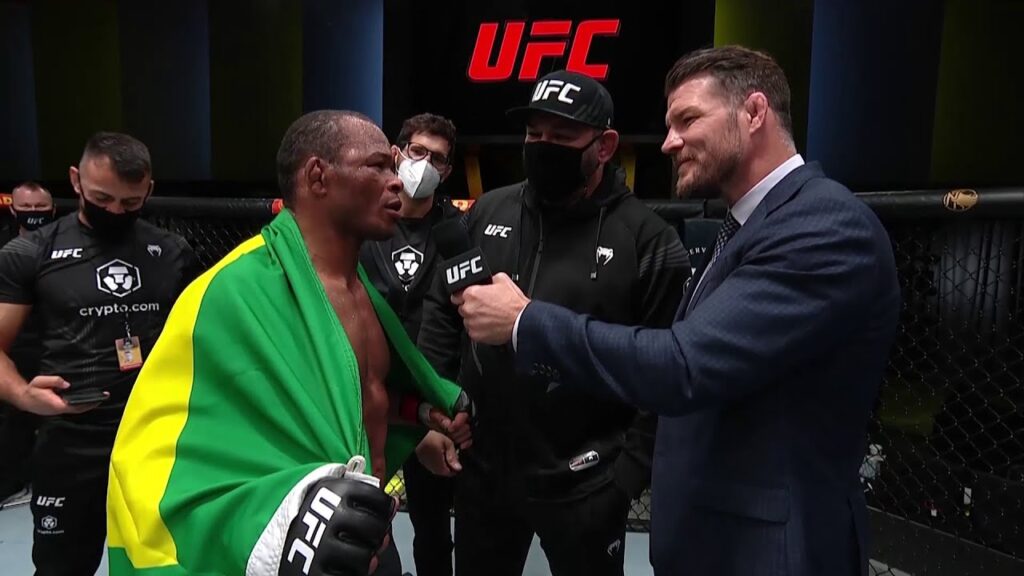
MMA is the story of a man who never gave up, Francis ‘Massaranduba’ Trinaldo, and faced many challenges on his way to success. While many fighters struggle to remain relevant in one weight division throughout their careers, Trinaldo has defied the odds by successfully competing in three different weight classes: lightweight, welterweight, and middleweight. His tenure in the UFC, which has been over a decade, proves his versatility in the changing world of MMA. Trinaldo is one of the most prominent Brazilian fighters who started his career in a small town called Amarante and now is a UFC veteran. Trinaldo is well known for his striking, grappling, and fight intelligence; he continued being a force in different divisions and defeated some of the best fighters around. That he is still going strong despite being on the wrong side of 45 years is a clear indication of his talent and hard work. This article will look at the life and career of the veteran across three weight classes, his background, his foray into mixed martial arts, significant bouts, and the motivation for moving up and down the scales. Furthermore, we will also discuss why Trinaldo has been such a tough nut to crack and what’s in the pipeline for this Brazilian warrior. Early Life and Beginning of His Career in Mixed Martial Arts Francisco Trinaldo was born on the 24th of August in 1978 in Amarante, Brazil, and therefore, he was brought up with the hardships of a small town upbringing. Like many Brazilian fighters, he got into combat sports through the martial arts tradition that is prevalent in Brazil. Brazil has always been famous for churning out champions in various combat sports, including Brazilian jiu-jitsu and Muay Thai; it did not take Trinaldo long to gravitate towards these styles. But that was not the beginning of Trinaldo and his exposure to the world of martial arts. He has been jobless since his childhood and has been working in different jobs in construction and farming to feed his family. He only started training in Muay Thai at the age of twenty-something and later advanced to Mixed Martial Arts. In the case of many fighters, the beginning of their career at the age of 19 or 20 is viewed as a relatively late start; however, this did not stop Trinaldo. He soon signed into the growing Brazilian MMA scene and established himself as a strong and hard hitter. Before joining the big leagues, he fought in regional MMA organizations, and over time, he evolved into a well-rounded fighter. Trinaldo always had the athletic ability and drive to succeed, and it did not take him long to receive attention from bigger promotions. Entering the UFC: Lightweight Dominance Francisco Trinaldo’s breakout moment came in 2012 when he appeared on the inaugural season of The Ultimate Fighter: Brazil, a talent show aimed at finding fresh new fighters for the Ultimate Fighting Championship. Trinaldo competed in the middleweight bout during the show and was as usual—tough and aggressive with his punches. Despite not winning the tournament, his displays made him a UFC fighter for more than a decade. First, Trinaldo fought in the lightweight division (155 lbs), where he became one of the toughest and most durable fighters of the division. His first fight for the UFC organization was in June 2012 at UFC 147, where he defeated Delson Heleno by TKO in the first round. This win proved to be the blueprint for his UFC run, as he made a name for himself as a man who could knock out his opponents. In his run at lightweight, Trinaldo has amassed a solid skill set and has won over the likes of Paul Felder, Yancy Medeiros, and Jim Miller. Especially, the victory over Felder in 2016 was a key moment, as at that time Felder was regarded as one of the promising fighters of the division. Trinaldo was able to secure the victory via unanimous decision, which proved his endurance when competing against other top fighters. Initially, Trinaldo was a versatile fighter in the lightweight division. His stand-up was his forte, and specifically his Muay Thai, but he was no slouch on the ground either. His Brazilian jiu-jitsu was just as effective as his punching and kicking, and he was hard to put on the ground, let alone keep down if the fight went to the mat. Nevertheless, the decision to move down to lightweight started to affect the experienced fighter. The Weight Cut Struggles: Transitioning to Welterweight It seems that as Francisco Trinaldo grew older, a reduction to 155 pounds was not an easy thing to achieve. The weight management is perhaps the most rigorous task in MMA and becomes very tasking for the elder fighters as their bodies are not as receptive to the rigorous diet and dehydration as when they were young. The cut to lightweight was tough for Trinaldo, and it started to reflect on his fight in the octagon. Nevertheless, he has had a very good run in the division, with a seven-fight win streak between 2014 and 2016. Trinaldo realized that it was time to think about a weight class jump. He competed in the welterweight category (170 pounds) after officially moving there in 2020 when he was 42 years old. Trinaldo had no other option but to move to the welterweight division. He would be fighting bigger men, but he would not have to go through the torturous process of losing weight, which was always a disadvantage to his fighting condition. For welterweight, Trinaldo thought that he could still have the advantages of power and stamina fighting in the lightweight division but is lighter. His welterweight debut came against Jai Herbert at UFC Fight Night: Whittaker vs. Till fight in July 2020. However, Herbert was a bright prospect, while Trinaldo demonstrated his ring experience and knockout punch to decide the fight in the third round. This victory also showed that even when moving up in weight, Trinaldo was
What makes Kyle Daukaus’ grappling dangerous for any middleweight?
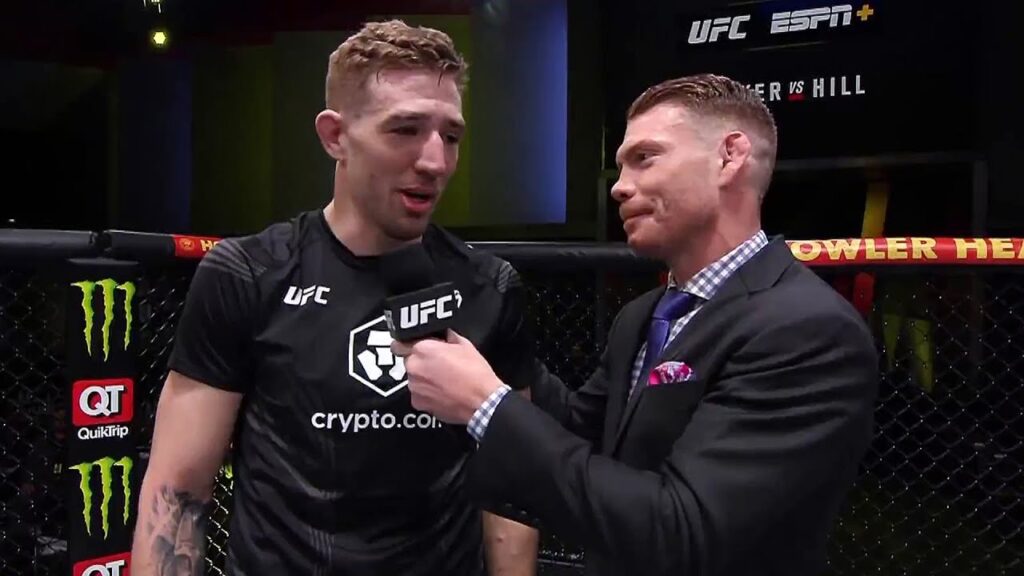
MMA has slowly turned into a sport where nothing is really set in stone and everything is possible. It is important that fighters are well rounded in all three categories—striking, wrestling, and submissions—in order to compete at the professional level. In the course of a fighter’s career, most of them are able to develop a well-rounded skill set, although there are a select few who excel in certain disciplines. For Kyle Daukaus, that specialty is his grappling, which has been a lethal tool in the UFC’s middleweight division. Daukaus is well-known for his slick submissions and positional control and his ability to bring the heat in the ground and pound department. Even though he is not as famous as some of his peers, he is a force to reckon with for any middleweight fighter who may be unfortunate enough to have to face him in the octagon. In this article, we’ll break down the different aspects of Kyle Daukaus’ grappling that make him a dangerous fighter for any middleweight division. We will look at his BJJ experience, his fight record, and how he approaches fights that may cause problems for his division. Furthermore, we will look at some of his previous fights, the significance of groundwork in the middleweight class, and what might be in store for Daukaus as he progresses through his career. The Foundation: Brazilian Jiu Jitsu Black Belt That is where we must look at Kyle Daukaus’ origins in Brazilian Jiu-Jitsu (BJJ) to comprehend why his takedowns are so potent. Daukaus is a BJJ black belt under Jared Weiner, an acclaimed trainer from Philadelphia. His family background is in martial arts; his brother is Chris Daukaus, a heavyweight in the UFC with a reputation for knockouts, but Kyle is a submission grappler. Daukaus’ ability to adapt and push the pace on the ground is an area that he is well-versed in, and this is where many of his opponents may be lacking as well. It is not easy to get a black belt in BJJ; it requires a lot of practice, repetition, and even more training in full-contact sparring with other black belt practitioners. This foundation has paved the way for Daukaus to easily move to MMA, where grappling is usually the deciding factor, especially when two fighters are evenly matched. The term Brazilian jiu-jitsu is centered on grappling with an opponent on the floor and looking for ways to either submit him or keep him down. In MMA, this translates to the ability to shut down an opponent’s striking by taking them to the ground, where a skilled grappler like Daukaus can dictate the tempos of the fight. While some fighters are willing to just lay and pray for points, Daukaus is constantly searching for submissions—something that really separates him as a finisher on the ground. The Grappling Threat: Submissions, Scrambles, and Transitions Submissions: Finisher’s Mentality Another identifying characteristic of Kyle Daukaus’ grappling is his finishers’ approach. He is not satisfied with winning rounds or dominant a fighter; he looks to finish a fight through submission. This makes him a very dangerous fighter because he does not allow his opponent to relax at any one time. In top position or back controlling, Daukaus always looks for submission, which makes him a dangerous fighter. Daukaus has many submission methods at his disposal, though his rear-naked choke and D’Arce choke are unique. These two submissions are very useful in MMA, and Daukaus has applied them to knock out some of his rivals. The rear-naked choke is especially dangerous because it can be applied from various positions, such as the back control, at which Daukaus thrives at maintaining dominant position and positioning the opponent’s neck for the choke. The D’Arce choke, however, is a more complex submission hold that cannot be done from most positions but is applied from a front head lock or during a tussle. Daukaus has demonstrated an ability to capitalize on his opponents when they are at the transitions, and the choke is tightened to show even the most hard-hearted fighters to submit. This willingness and ability to take submission opportunities make Daukaus a fighter who can end the bout at any given time. Scrambles: Winning the Transitions Another part of his game that was discussed in detail is Daukaus’ ability to win scrambles. The most important aspect of the takedowns in the MMA is usually scrambling, although it is usually overlooked in grappling. Scrambles are normally realized when both fighters are on their feet, perhaps after one or both of them tried a takedown or sweep or when a fighter is on the ground and trying to avoid being taken down. These are wild moments, high-intensity ones, but these are when Daukaus shines. The fact that he can manage his scrambles is because of his BJJ background and his feel for grappling. In MMA, scrambles are often the difference between being on top, or in full mount, or being stuck on the bottom. Daukaus’ transitions are fast, and his awareness of the body mechanics gives him an edge in most of such scrambles. He becomes even more dangerous when he gets a position such as side control, mount, or back control. Positional Dominance: Control Over Chaos Although BJJ sweeps and scrambles are hallmarks of Daukaus’ grappling, pressure control is equally as crucial. MMA grappling is not only about submission but also about pinning down your opponent and taking the fight where you want it to go. This is where Daukaus stands out the most. In the style of top control, Daukaus is quite calculated. He does not engage in dangerous stances that can enable his opponent to escape. However, he proceeds slowly from stance to stance, be it from guard, to side control, or mount. When he was once a heavyweight contender, he applied force and forcefulness to ground and pound or attempt submission on his opponents. On the flip side, even when he is on the bottom, Daukaus is never a boring
The rise of Victor Altamirano: Mexico’s next flyweight star?
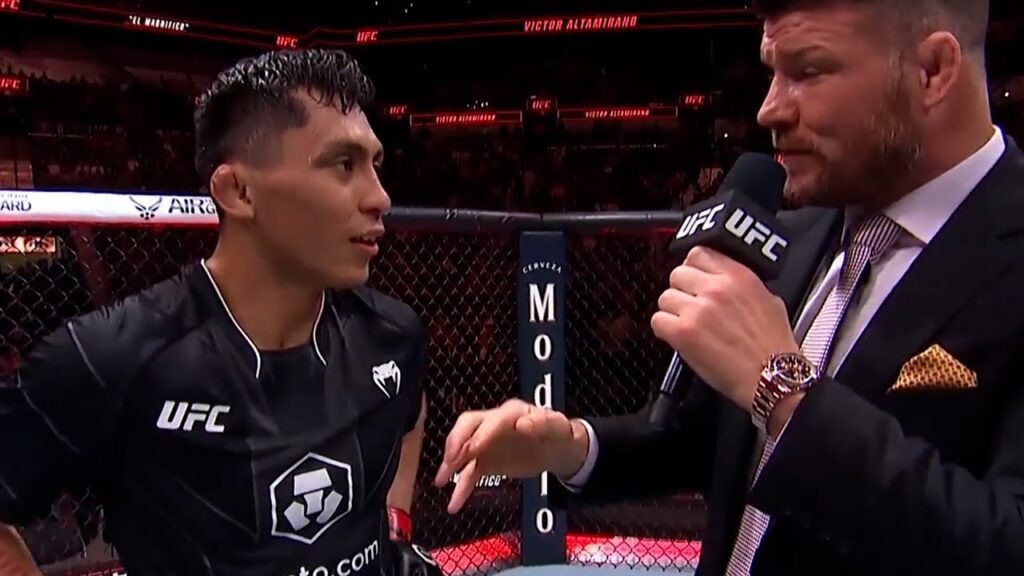
In the mixed martial arts (MMA) industry, there is nothing that draws fans’ attention as much as the emergence of a new hero. Once in a while there is a fighter who comes to the limelight of fans, analysts, and promoters in the course of his fight. Mexico is one of the countries with a long history of combat sports and especially boxing; the next contender to join the UFC flyweight division might be Victor Altamirano. The story of how a man with no background in fighting went from a small town to the UFC is a story of perseverance, talent, and determination to become a star. Here, in this article, we will discuss Victor Altamirano and his journey to the MMA, his fighting technique, and his place among the Mexican MMA fighters in the UFC flyweight division. We will also look at his chances of becoming the next face of MMA in Mexico and his prospects in what is arguably one of the toughest divisions in the UFC. The Early Days: From the Small Start to the MMA Goal This is the story of Victor Altamirano, who, like most fighters, grew up in a lower-working-class environment where dreams of athletic success appear out of reach. Born in Mexico, a nation that has traditionally seen boxing as the leading martial art, Altamirano was not an MMA enthusiast at first. However, as was the case with many of his contemporaries, he was attracted to boxing. Mexico has produced legends in the boxing ring like Julio César Chávez, Canelo Álvarez, and Juan Manuel Márquez, so boxing became the perfect outlet for young athletes seeking a way out of poverty. But what Altamirano discovered soon was that his love was not limited to the sweet science of boxing alone. The increase of MMA as a sport and as entertainment all over the world and especially in Latin America did not escape his notice. He understood that MMA was another way, a way where he could strike while also having the grappling, submission, and other skills at his disposal. Altamirano started practicing in different martial arts such as Brazilian jiu-jitsu, wrestling, and Muay Thai, and within a short span of time, he was fighting in local MMA organizations. Altamirano’s early fights demonstrated potential, but like many up-and-coming fighters, he had problems. It is not for the weakhearted; it is a game that needs determination, perseverance, and flexibility to meet new challenges. What Altamirano found out was that in MMA, there was a lot more than strength and conditioning involved, including the mental side of things. He started practicing the strategy and started fighting with higher-ranked wrestlers, and gradually the world started recognizing him. Climbing the Ranks: Altamirano’s Path to the UFC It was not a fairy tale rise to the UFC for Victor Altamirano. As is the case with many fighters, one has to pay a few initial dues in less-known promotions before the UFC comes calling. His first fights for the Mexican and American regional promotions demonstrated his potential as a versatile fighter that can finish fights both on the stand-up and on the ground. This was his big break in DWCS, which has been a proving ground for the UFC talent in recent years. Altamirano was at his best when performing on the show. Then in August 2021, he fought Carlos Candelario in a flyweight fight to decide his UFC career. Altamirano won the fight by split decision, and the victory was enough to get the attention of UFC President Dana White to sign him for the organization. This particular victory is a turning point in Altamirano’s professional career. He is no longer an obscure fighter fighting in local circuits; he is now a UFC fighter who can challenge the best flyweight fighters in the world. This was a dream come true for the young Mexican fighter, but he was aware that the hard work was just beginning. The UFC is the highest level of MMA, and to remain at that level, it takes more than talent; it takes hard work, focus, and the ability to handle the stress that comes with fighting around the world. Fighting Style: A Well-Rounded Flyweight The second strength of Victor Altamirano is his fighting style. In the UFC’s flyweight division, where speed, agility, and endurance are critical, Altamirano has exhibited versatility. The striking, which he learned from his boxing days, is sharp and impactful. This is done through using jabs, hooks, and leg kicks to maintain distance as he looks for better opportunities to land powerful shots. Thus, the skills to battle from range and at close quarters make him a deadly man on his feet. While Altamirano is definitely a striking specialist, what sets him apart is his striking to grappling combination. In contemporary MMA, the fighters are required to be well rounded, and Altamirano has a great ground game in addition to the stand-up. He has demonstrated great ability to avoid the takedown and keep his opponent from taking him to the ground. And when the fight does go to the ground, he is not new to submission. He has been able to win through rear-naked choke and guillotine, among other categories, thanks to his Brazilian jiu-jitsu skills. Most importantly, Altamirano has the type of cardio that is vital in the flyweight division. At 125 pounds, fighters are expected to keep up a fast work rate for three to five rounds, and Altamirano has demonstrated time and time again that he can force the issue without getting winded. This striking, ground and pound, and stamina make him a versatile fighter capable of giving a hard time to some of the best fighters in the division. The Mexican Influence in MMA Victor Altamirano’s arrival is timely as more Mexican fighters are making their way to the UFC. Mexico has long been famous for boxing, and only recently have people started to notice that it produces many good MMA fighters. Such a trend has been
Cain Velasquez: From MMA champion to courtroom struggles—what’s the future hold?
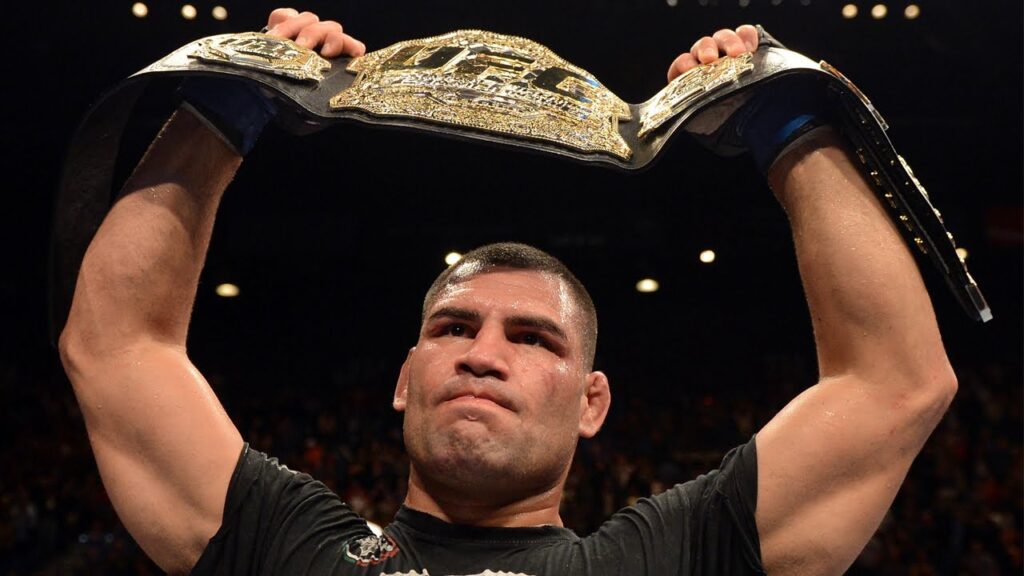
Another fighter whose name will find a good reception within the MMA fraternity, especially the weights division, is Cain Velasquez. You wouldn’t think that the cardio, pressure, and ground and pound style of Velasquez led to this guy becoming a UFC heavyweight champion, which he did twice, making him one of the best fighters in the history of the heavyweight division. However, he has been having personal and legal troubles, though he was a great fighter in the octagon cage. And this article not only tells the story of how Velasquez enjoyed a fairly successful start in the MMA and how he fought his way up the rankings, how a series of misfortunes dogged his career and how he left the ring, and his controversies with the law that landed him headlines. When one will attempt to speak about what the future reserves for a fighter who appeared to be invulnerable, it is possible not to mention the weaknesses and the setbacks of this life. Early Life: The Making of a Warrior Cain Velasquez’s story did not start when he entered the octagon to begin his fight. He was born on the 28th of July 1982 in Salinas, California, to a family that was of Mexican origin and essentially of the working class. The family had moved to the United States from Mexico, and Efrain Velasquez’s father spent most of his youthful years struggling to provide for the family. Cain was brought up with a hardworking ethic and never say die attitude, which will define his MMA career. Regarding the extracurricular activities, in high school, Velasquez decided to only join the wrestling team. His muscle power and intent put him in the top league of this sport in a short span of time. Velasquez’s wrestling success got him a scholarship to Arizona State University, where he was an All-American twice. When it came down to it, wrestling was the best way to prepare him for the world of MMA because it gave him the tools and the mindset to dominate cage opponents. In addition to the wrestling accomplishments, former champion Jose Juan Velasquez also rediscovered his heritage, something that was important to him. Of Mexican origin, Velasquez often came to his UFC fights wearing the flag of Mexico. More importantly, his motivation originated from his ancestry, and he wanted to motivate Mexican Americans and Latinxs. The nickname “El Toro” was the way he delivered himself in the ring, besides being the manner in which he took standing on the cultural issue. The Road to MMA Stardom It was a relatively easy move for Velasquez to switch to MMA once he did so, especially with a wrestling background. He later transferred to the American Kickboxing Academy (AKA) in San Jose, California, where he trained together MMA fighters such as Daniel Cormier and Luke Rockhold. Velasquez proved this by improving his stand-up to even another level, thus making him an even bigger problem for all fighters in the HW division while he was at AKA. Velasquez began professional MMA fights in 2006, and it only took him less than 5 minutes to knock down his opponent. By 2008, he was associated with the UFC, and he began fighting for the organization. His first fight in the UFC against Brad Morris was a TKO win and the start of a great career for the fighter. Many of Velasquez’s fights in the early stages of his UFC career demonstrated his power, speed, and relentless tempos, which were rare for a fighter of the heavyweight division. When Velasquez finally got his shot at the title in 2010, he was 8-0, and seven of his wins were knockouts or technical knockouts. His opponent in the UFC Heavyweight Championship match was another hungry man by the name of Brock Lesnar, an ex-NCAA wrestler and WWE superstar infamous in the octagon. But Velasquez was able to knock down Lesnar in the first round and take the belt, making her the first Mexican-American UFC heavyweight champion ever. This became history in the history of the sport and for Velasquez as he claimed the world champion title in the MMA. The Mastery of the Cage and the First Collapse Velasquez was believed to have a long reign as the champion after he had defeated Lesnar. But the first title defense he had was not just a walk in the park as many expected it to be. At the end of December 2011, Velasquez was to defend the belt against another dangerous striker from Brazil, Junior Dos Santos, at the UFC’s first event on Fox. As the favorite of the fight, Velasquez was knocked out only 1:04 into the fight and thus lost his title in a huge upset. The much anticipated match was from a different planet altogether because Velasquez had been overwhelming his rivals and was believed to be, or rather, as close to invincible as could be. But the fighting spirit was not all together killed in Velasquez. He came back to the octagon in 2012 and knocked out Antonio “Bigfoot” Silva, which earned him another shot at Dos Santos. In their second bout of the fight, which was UFC 155, Velasquez ensured that there was no way Dos Santos was going to take the fight to the judges as he dominated the champion for the full five rounds to regain his heavyweight strap in easily one of the worst title fights one could imagine. Velasquez and Dos Santos would fight again in the third match at UFC 166. Velasquez once again came out victorious; this time he knocked Dos Santos out via TKO in the fifth round. It is still considered one of the greatest rivalries in the heavyweight division, but it also cemented Velasquez as a champion—when his body was cooperating. The Injury Bug Velasquez’s time as champion was filled with spectacular fights, but his career was plagued with injuries. Since winning the heavyweight title of the world back, Velasquez was able to defend it