
When did Georges St-Pierre retire from the UFC?
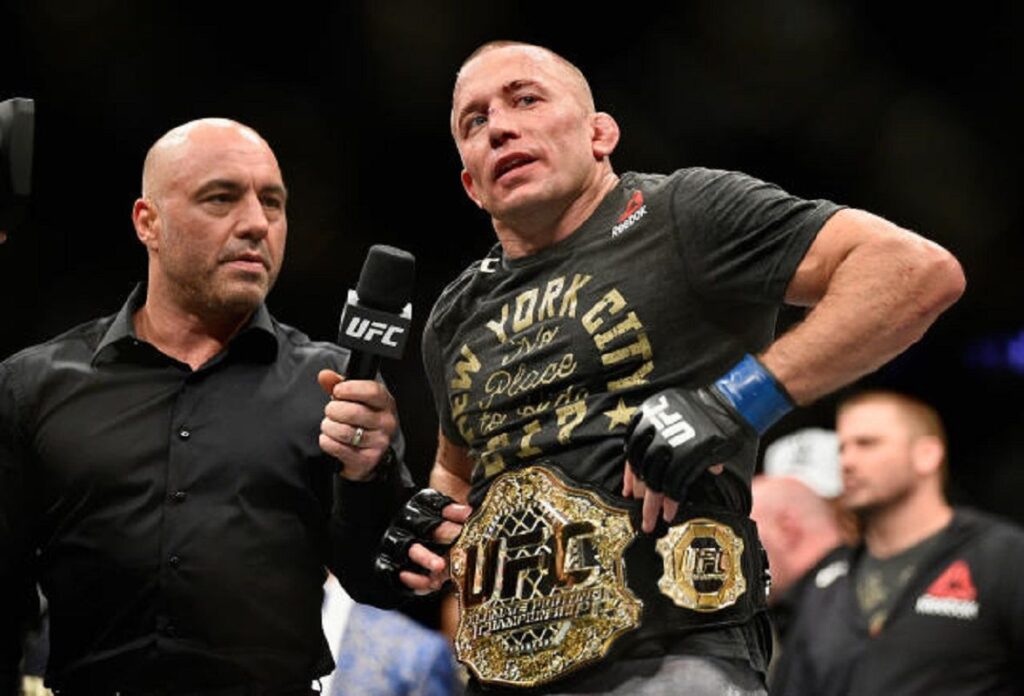
Georges St-Pierre is widely considered the greatest welterweight in the sport of MMA and among the greatest champions the UFC has ever seen. This article takes a closer look at when the UFC Hall of Famer retired from the promotion, his legacy, and his impact on the sport after a career spanning over a decade. Georges St-Pierre competed in the UFC’s welterweight division and became the division’s longest-reigning champion. During his second reign, the legendary Canadian fighter set a new UFC record for the most successful welterweight title defenses with nine victories. Georges St-Pierre’s Career Georges St-Pierre undoubtedly has one of the most impressive resumes in the history of the UFC and faced some of the world’s best welterweights during his time at the promotion. He made his promotional debut against Karo Parisyan at UFC 46 in January 2004, winning via unanimous decision, and then challenged Matt Hughes for the welterweight title after beating Jay Hieron at UFC 48. St-Pierre lost his first title bid after Hughes submitted ‘Rush’ in the first round of their title fight at UFC 50. However, he redeemed himself with four consecutive wins before beating Matt Hughes in the rematch to take home welterweight gold at UFC 65. While he lost his first title defense against Matt Serra via first-round TKO at UFC 69, St-Pierre won the interim title against Hughes in their trilogy fight and then secured the undisputed champion status after beating Matt Serra via second-round TKO at UFC 83. After winning the UFC welterweight title back, Georges St-Pierre went on an incredible nine-fight fight win streak, beating MMA greats like B.J. Penn, Carlos Condit, Nick Diaz, and Johny Hendricks along the way. After beating Johny Hendricks at UFC 167 to secure his ninth title defense, Georges St-Pierre went on a four-year-long hiatus before returning to challenge Michael Bisping for the middleweight title at UFC 217 in November 2017. ‘Rush’ dominantly submitted Bisping in the third round to become the fourth fighter in UFC history to be a two-division champion. Georges St-Pierre’s Retirement Georges St-Pierre vacated his welterweight title in December 2013 and the middleweight title just 34 days after winning it in December 2017. St-Pierre had previously revealed that he suffered from ulcerative colitis and had several fight bookings that failed to materialize. The Canadian legend even attempted to drop down to lightweight to face Conor McGregor and Khabib Nurmagomedov but his efforts were thwarted by UFC president Dana White. Georges St-Pierre officially announced his retirement in February 2019. He left the sport with an incredible 26-2 record and is one of the most highly accomplished fighters the promotion has ever seen. Conclusion After vacating both his titles, Georges St-Pierre retired from the UFC in February 2019. He defended his welterweight championship nine consecutive times, a feat only Anderson Silva and Jon Jones surpassed in UFC history. Outside the octagon, St-Pierre was a dedicated ambassador for MMA, and his impact on the sport cannot be overstated.
When was Brock Lesnar’s last UFC fight?
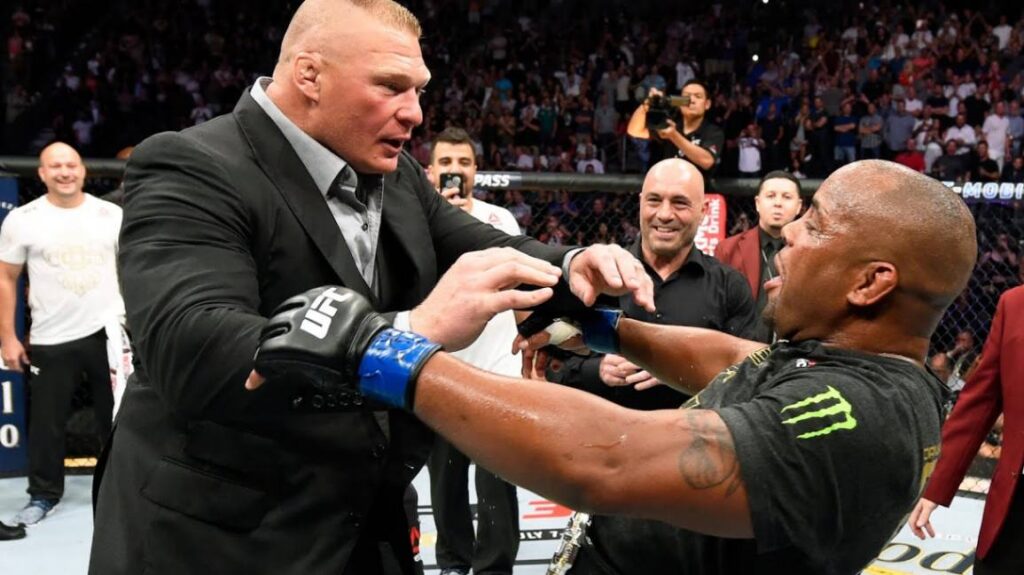
Brock Lesnar, known for his imposing size and athleticism, was one of the most feared heavyweight champions in the UFC. This article explores the details of his last fight in the UFC, the subsequent controversy surrounding it, and the significance of the bout. The Historic Fight In July 2016, at UFC 200, more than four years after his loss to Alistair Overeem at UFC 141, Brock Lesnar faced Mark Hunt, a powerful striker from Down Under. The matchup showcased a contrast in styles, with Lesnar’s exceptional wrestling abilities challenging Hunt’s striking talent. Lesnar began the fight strong, utilizing his wrestling pedigree and size advantage to take Hunt down multiple times, neutralizing his striking. In the second round, Lesnar continued his takedown-heavy approach while Hunt looked for opportunities to unleash his knockout power. In the third round, Lesnar capitalized on Hunt’s miscalculated punches, pinning him against the cage. From there, Lesnar transitioned to a mount position and delivered a barrage of haymakers. Lesnar won the fight via unanimous decision. The Controversy Despite Lesnar’s emphatic victory over Mark Hunt, the result was later changed to a no-contest due to Lesnar’s failed out-of-competition and night-of-fight drug tests. Lesnar tested positive for clomiphene and hydroxy-clomiphene, two anti-estrogen drugs. As a result, Lesnar received a one-year suspension retroactive to the date of the fight and was fined $250,000, which amounted to 10% of his disclosed fight purse of $2.5 million. Interestingly, Mark Hunt filed a lawsuit against the UFC, alleging that the promotion was aware of Lesnar’s PED use before the fight. Aftermath and Legacy Although Brock Lesnar’s UFC career consisted of only eight fights, his title reign and last fight left a significant impact. He reached new levels of stardom during his time as a UFC champion, and his return fight at UFC 200 was a massive success for the promotion. An important aspect of Lesnar’s title run and his last fight was his battle with diverticulitis, a condition that affected his intestines. This medical condition plagued him throughout his career and led to extended periods of inactivity. Despite the controversy and health challenges, Lesnar’s last UFC fight showcased his unique combination of size, strength, and wrestling dominance. The success of UFC 200 demonstrated his star power, and he solidified his place in the hearts of UFC fans. Conclusion Brock Lesnar’s last UFC fight took place at UFC 200 against Mark Hunt, where he secured a unanimous decision victory by outwrestling his opponent. Although the decision was later changed to a no-contest due to Lesnar’s failed drug tests, his impact on the sport and his reign as champion remain significant chapters in the history of the UFC’s heavyweight division. Watch the full fight below:
Brock Lesnar’s UFC title reign: All the details
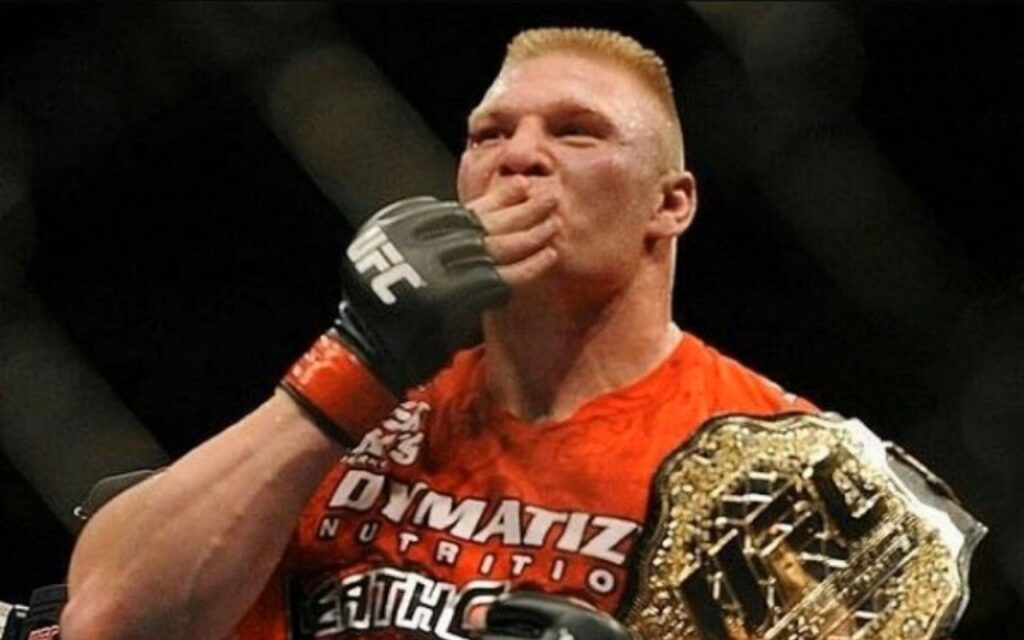
Brock Lesnar is recognized as one of the most dominant heavyweight fighters in the history of the UFC’s heavyweight division. This article focuses on the specifics of Lesnar’s title reign, including the number of successful title defenses, notable opponents, and the significance of his reign in the heavyweight division. Brock Lesnar’s UFC Title Reign – After joining the UFC in 2008, Brock Lesnar quickly rose through the ranks and secured the UFC heavyweight title after just three fights. He claimed the championship by defeating Randy Couture via second-round TKO at UFC 91, utilizing his immense power to secure the victory. Lesnar went on to defend his title twice. Notable Title Defenses Frank Mir: Lesnar faced Frank Mir twice in his UFC career. In their first encounter at UFC 81, Lesnar was submitted by Mir in the first round, unable to match Mir’s grappling skills. However, Lesnar later avenged this loss in his first title defense at UFC 100, delivering an impressive second-round TKO to unify and retain his heavyweight title. Shane Carwin: Approximately one year after defending his title against Frank Mir, Lesnar defended his championship against Shane Carwin at UFC 116. Lesnar secured a second-round submission victory over Carwin, successfully preserving his heavyweight crown. Significance of Brock Lesnar’s Title Reign – Brock Lesnar’s title reign holds significant importance in the UFC’s heavyweight division. Despite its relatively short duration, Lesnar’s dominance, size, power, and wrestling prowess made him one of the most feared heavyweights in the promotion. It’s worth noting that Lesnar faced health challenges due to an intestinal condition during his reign. Lesnar’s intimidating persona and impressive skill set left a lasting impact on his opponents and the MMA fanbase, solidifying his reputation as one of the greatest heavyweights of all time. Aftermath and Legacy Although Brock Lesnar competed in only eight UFC fights, his title reign left a lasting legacy. He defeated renowned fighters like Randy Couture to claim the heavyweight championship and successfully defended his title against formidable opponents such as Frank Mir and Shane Carwin. Despite eventually losing the belt to Cain Velasquez, an esteemed heavyweight contender, Lesnar’s popularity remained intact. Even his final defeat against Alistair Overeem didn’t diminish the admiration fans had for him, as his charismatic personality and unique fighting style made him a household name. Conclusion Brock Lesnar’s time in the UFC octagon solidified his status as one of the most recognizable figures in combat sports. His rapid rise to the top culminated in winning the UFC heavyweight championship after just three fights and successfully defending the title twice against notable opponents. Lesnar’s impact on the sport and his reign as champion will continue to be a defining chapter in the history of the UFC’s heavyweight division. Watch Brock Lesnar’s greatest UFC moments below:
How many UFC fights does Brock Lesnar have?
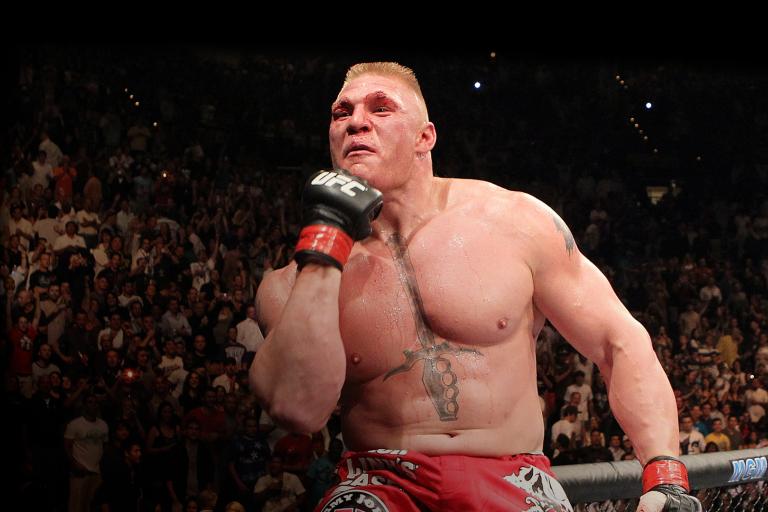
Brock Lesnar, widely recognized as one of the most prominent UFC heavyweight champions, left an indelible mark on the promotion during his tenure. Over the course of three years, Lesnar captured the heavyweight championship, successfully defended it twice, and eventually lost the title. This article offers a closer examination of “The Beast Incarnate’s” UFC journey, providing an overview of his brief yet triumphant career as an MMA fighter. Brock Lesnar’s UFC Fights Brock Lesnar competed in eight UFC fights, amassing a record of 4-3-1 within the promotion. His impressive performance against Min-Soo Kim at Dynamite!! USA in June 2007, where he secured a dominant first-round TKO victory, led to his signing a one-fight contract with the UFC, earning the attention of UFC President Dana White. In his UFC debut at UFC 81 in February 2008, Lesnar faced Frank Mir. Despite executing two early takedowns, Lesnar succumbed to Mir’s grappling expertise and was swiftly submitted via kneebar a mere 90 seconds into the first round. Lesnar rebounded from his loss to Mir with a commanding unanimous decision triumph over Heath Herring in his second UFC appearance at UFC 87. This victory propelled Lesnar to a title shot against reigning heavyweight champion Randy Couture in his third fight. At UFC 91, Lesnar claimed the heavyweight gold after securing a round-two TKO victory over “The Natural.” Lesnar successfully defended his title twice, defeating Frank Mir in their rematch and Shane Carwin. However, his title reign came to an end when Cain Velasquez secured a first-round TKO victory over Lesnar at UFC 121, dethroning him as the heavyweight champion. Following a loss to Alistair Overeem at UFC 141, Lesnar decided to retire from MMA. Nevertheless, less than five years after his retirement, Lesnar made a high-profile comeback against Mark Hunt at UFC 200. Although Lesnar initially won via unanimous decision, the result was overturned to a no-contest due to his failed drug tests. Aftermath and Legacy During his prime, Brock Lesnar was one of the UFC’s most prominent superstars, largely due to his extraordinary size and knockout power. He even became the highest-paid fighter on the UFC roster during his tenure, though it was marred by steroid violations. Nonetheless, his impact on the sport and his reign as champion remain a defining chapter in the history of the UFC’s heavyweight division. Conclusion From February 2008 to December 2011, with one high-profile outing in July 2016, Brock Lesnar competed in the UFC. During his tenure, the former heavyweight champion fought a total of eight times within the promotion. Notably, Lesnar successfully defended his title twice. Given his remarkable accomplishments and immense popularity, Brock Lesnar continues to be regarded as one of the most iconic heavyweights in UFC history. Watch Brock Lesnar’s best UFC moments below:
When did Brock Lesnar make his UFC debut?
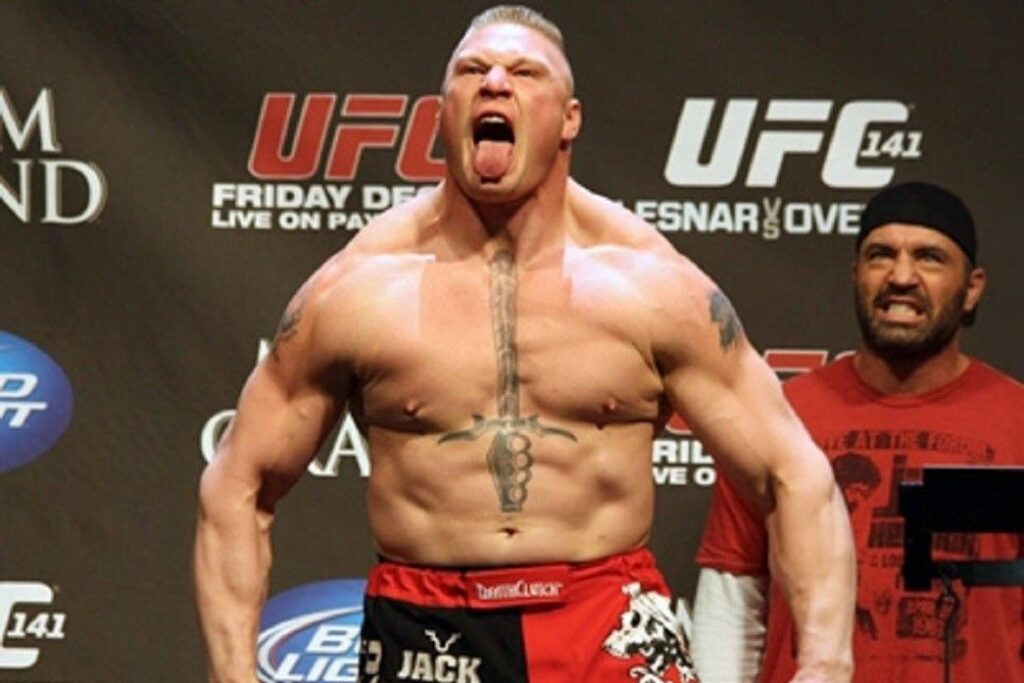
Brock Lesnar, a wrestler-turned-MMA fighter, is recognized as one of the most exceptional athletes in the realm of combat sports. He emerged as one of the biggest stars in the UFC. This article aims to delve into the specifics surrounding Lesnar’s inaugural appearance in the UFC octagon, highlighting the event, his opponent, and the impact he had on the sport. Brock Lesnar’s UFC Arrival Brock Lesnar made his UFC debut a mere eight months after his first-ever MMA bout against Min-Soo Kim at Dynamite!! USA in June 2007. Lesnar secured a first-round TKO victory against his South Korean opponent, capturing the attention of UFC President Dana White. Impressed by Lesnar’s performance, White offered him a one-fight contract. Subsequently, Lesnar was scheduled to make his UFC debut against former heavyweight champion Frank Mir in a highly anticipated clash at UFC 81: Breaking Point in Las Vegas in February 2008. The Fight Brock Lesnar faced Frank Mir just eight months after his inaugural MMA outing, and the outcome was unfavorable for the South Dakota native. In the early stages of the first round, Lesnar executed a takedown and landed several powerful strikes on Mir before being penalized for a back-of-the-head punch. Despite securing two takedowns early in the first round and delivering forceful ground-and-pound strikes, Lesnar struggled to contend with Mir’s grappling skills. Mir, a jiu-jitsu specialist, swiftly applied a kneebar, forcing Lesnar to submit a mere 90 seconds into the fight. Aftermath and Legacy Despite losing his debut fight, Brock Lesnar received a new contract offer from the UFC. He went on to dominate Heath Herring via unanimous decision in his second octagon appearance. Lesnar then faced Randy Couture for the UFC heavyweight title at UFC 91 in November 2008, securing a second-round TKO victory and capturing the UFC heavyweight gold less than a year after his promotional debut. Lesnar successfully defended his belt twice before losing it to Cain Velasquez at UFC 121 in October 2010. In his last fight before his initial retirement from MMA, Lesnar faced Alistair Overeem in his UFC return. After suffering a first-round TKO defeat at the hands of Overeem, Lesnar announced his retirement from the sport. However, following a nearly five-year hiatus, he made a highly anticipated comeback at UFC 200 against Mark Hunt. Lesnar secured a unanimous decision victory over “Super Samoan,” but the result was later overturned to a no-contest due to Lesnar testing positive for steroid use. Conclusion Although Brock Lesnar only competed in the UFC eight times, the former heavyweight champion solidified his status as one of the promotion’s most iconic fighters. He also became one of the highest-paid athletes in UFC history. Over the course of his nearly decade-long career, Lesnar fought nine times, concluding with a UFC record of 4-3-1. It is worth noting that Lesnar has expressed no intention of returning to MMA and now exclusively identifies himself as a WWE superstar. Watch Brock Lesnar’s best UFC moments below:
Did UFC commentator Joe Rogan fight professionally?
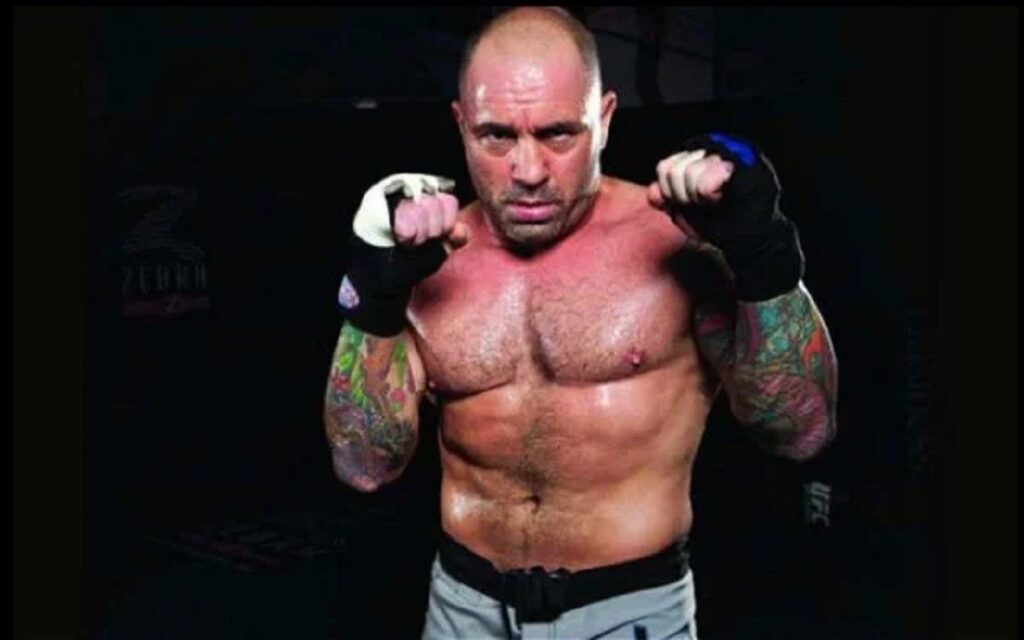
Joe Rogan, a renowned personality in the realm of combat sports, has garnered widespread recognition as a UFC color commentator, stand-up comic, and podcaster. This article aims to delve into Rogan’s martial arts experience, shed light on his professional fighting record, and examine his impact on the world of MMA at the age of 55. Joe Rogan’s Martial Arts Experience Joe Rogan is a highly skilled mixed martial artist, boasting a Tenth Planet jiu-jitsu black belt under Eddie Bravo and a black belt in “GI” Brazilian jiu-jitsu under Jean Jaques Machado. His passion for grappling is well-documented and frequently becomes a topic of discussion on his globally renowned podcast, “The Joe Rogan Experience.” Even his former teacher, Jean Jacques Machado, has attested to Rogan’s unique love for martial arts and his willingness to grapple with anyone. Additionally, Rogan possesses extensive experience in Taekwondo, having achieved the status of a four-time full-contact Taekwondo state champion. After dedicating a considerable amount of time to mastering this Korean martial art, Rogan turned his attention to kickboxing and Muay Thai. Thanks to his proficiency in Taekwondo, Rogan seamlessly transitioned to kickboxing and became recognized for his impressive kicking techniques. Joe Rogan’s Professional Fighting Record While Joe Rogan is a prominent figure in the world of MMA and has undergone rigorous training in various martial arts disciplines, he has never fought professionally in MMA. However, he has previously engaged in kickboxing competitions, where he achieved a record of 2-1. Rogan’s kickboxing career came to an end at the age of 21 due to recurring headaches and injuries, leading to his retirement from competitive kickboxing. As a four-time state-level champion in Taekwondo, Rogan continues to consider martial arts as a hobby and remains dedicated to its practice, even though he does not pursue it as a profession. Witnesses who have observed Rogan in action attest to his exceptional skills and impressive movements. Conclusion Joe Rogan’s expertise in combat sports is undeniably significant, and he has made substantial contributions to the popularization of MMA. Although he has not engaged in professional fighting, Rogan’s presence as a UFC color commentator and his regular discussions on martial arts topics in his widely acclaimed podcast showcases his extensive experience as a martial artist. It comes as no surprise that he excels in his role given his remarkable background in the field. Watch Joe Rogan’s famous kicks below:
Joe Rogan’s Martial Arts Background: All the details
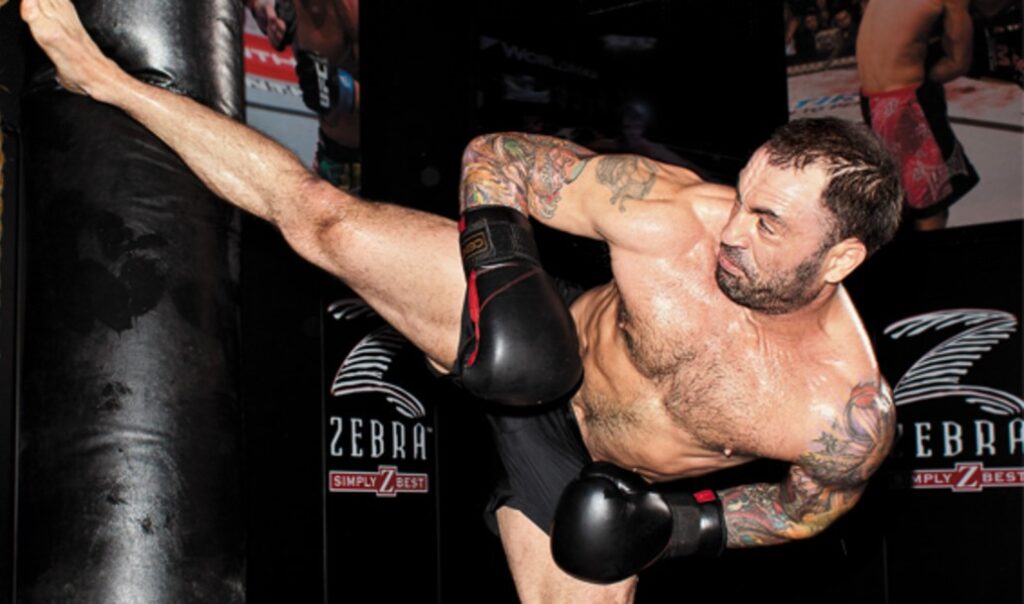
Joe Rogan, a prominent figure in the world of MMA, has solidified his place in the hearts of mixed martial arts fans worldwide. Known as a perennial UFC color commentator and podcaster, this article delves into Rogan’s martial arts background and examines the significant influence he has had on the sport at the age of 55. Joe Rogan’s Martial Arts Background While Joe Rogan has never competed in professional MMA, he boasts a noteworthy martial arts background. As a four-time full-contact Taekwondo state-level champion, he has showcased his skills in the realm of Taekwondo. Additionally, Rogan holds a record of 2-1 as a kickboxer. His dedication to martial arts is further evident in his possession of a Tenth Planet jiu-jitsu black belt and a black belt in gi Brazilian jiu-jitsu under Jean Jaques Machado. Rogan’s love for martial arts extends beyond his previous accomplishments in Taekwondo and kickboxing. He has been spotted practising various forms of martial arts, regularly engaging in Brazilian jiu-jitsu and Muay Thai. His expertise in Taekwondo has seamlessly translated into Muay Thai, thanks to his rigorous training and unwavering commitment to honing his skills, particularly his kicking techniques. Regarding jiu-jitsu, Rogan’s mastery of the art is highly regarded. Even his former teacher, Jean Jacques Machado, has expressed that Rogan’s passion for martial arts and his fearlessness in grappling with anyone make him truly exceptional. Joe Rogan and the UFC Given his extensive martial arts experience and his close ties to the UFC, many anticipated that Joe Rogan would venture into professional MMA fighting. However, Rogan had no interest in pursuing a career as a cage fighter and instead focused on providing color commentary from cageside at the UFC broadcast desk. Rogan’s debut as a UFC color commentator occurred at UFC 37.5, a result of persuasion from UFC president Dana White. Since then, he has become one of the most beloved personalities within the promotion and has played a significant role in propelling the UFC to new heights. Conclusion With his extensive training and experience as a martial artist, Joe Rogan’s insights hold substantial weight in the world of MMA, making him one of the most knowledgeable sports commentators in the field. Beyond his accomplishments in combat sports, Rogan’s talents extend to stand-up comedy and podcast hosting, further solidifying his multifaceted status as a highly regarded personality. Watch Joe Rogan training his kicks below:
When did Joe Rogan first feature on a UFC broadcast?
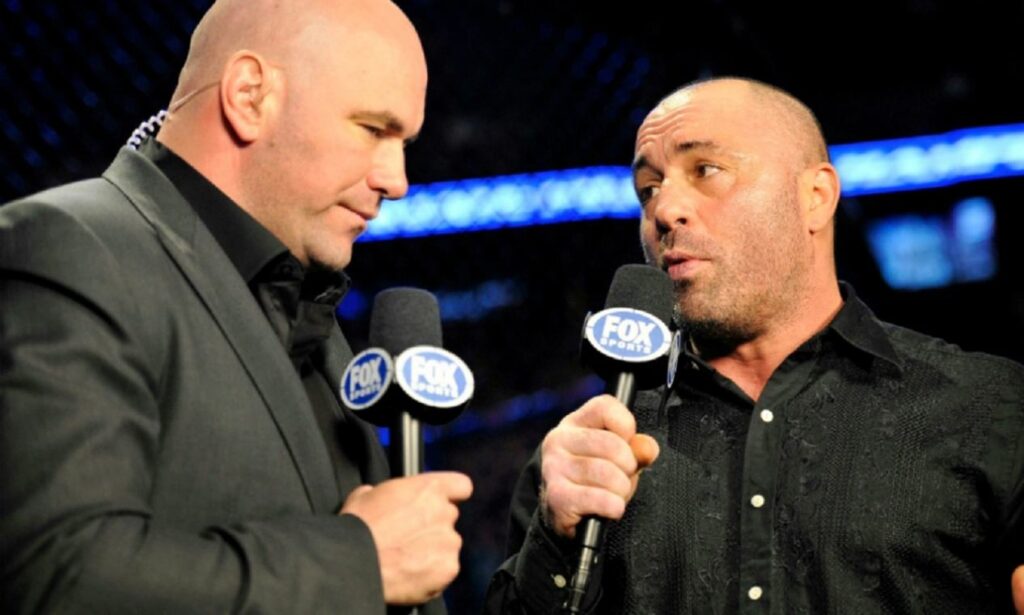
Joe Rogan, a renowned stand-up comedian, podcast host, and MMA commentator, is widely recognized as one of the most influential personalities of our time. Hosting “The Joe Rogan Experience,” one of the world’s most popular podcasts, and working as a color commentator for the UFC, Rogan has established himself as a prominent figure. This article explores Rogan’s association with the UFC and delves into his inaugural UFC broadcast. Joe Rogan’s First UFC Broadcast Joe Rogan made his debut as a UFC commentator at the UFC 37.5 event held at the Bellagio Hotel in Las Vegas in 2002. The headline bout featured a light heavyweight clash between Chuck Liddell and Vitor Belfort. While UFC 37.5 marked Rogan’s first appearance as a commentator, he had already been involved in several UFC events as the behind-the-scenes interviewer since UFC 12. UFC 37.5 was a special fight card organized at short notice to promote the organization on Fox Sports Net’s “The Best Damn Sports Show Period.” The best fight of the night was selected to be televised during the show’s “All-Star Summer” celebration in June 2002. This event consisted of only six fights, a smaller number compared to the UFC’s usual lineup. The event was given the number 37.5 because UFC 38 had already been announced and marketed for the promotion’s debut in England three weeks later. The card also featured an exhilarating showdown between Robbie Lawler and Steve Berger, which was recognized as the best fight of the night. Joe Rogan’s Relationship With the UFC Initially, Joe Rogan had no intention of becoming a UFC color commentator. However, the organization’s president, Dana White, persuaded his old friend to give it a try for one event. Despite Rogan’s primary desire to have fun and witness professional fighters in action, he reluctantly agreed to White’s request, and the rest is history. Rogan’s deep passion for mixed martial arts is well-known, and he frequently discusses the sport on his podcast. Moreover, he regularly interviews MMA fighters as guests on his show. Rogan continues to be a fixture in the UFC, occupying a seat cage-side at the broadcast desk during the promotion’s pay-per-view events. His broadcasting team for these events typically includes UFC legend Daniel Cormier and seasoned sports presenter Jon Anik. Conclusion Joe Rogan’s significance and influence in the MMA world are indisputable. His contributions have played a pivotal role in the unparalleled success of the UFC, and his impact on the sport cannot be overlooked. Rogan remains a prominent figure, providing commentary at major pay-per-view events in North America, while “The Joe Rogan Experience” podcast continues to attract a record-breaking number of listeners. Watch Joe Rogan’s first appearance on the UFC broadcast below:
Khabib Nurmagomedov’s retirement: All the details
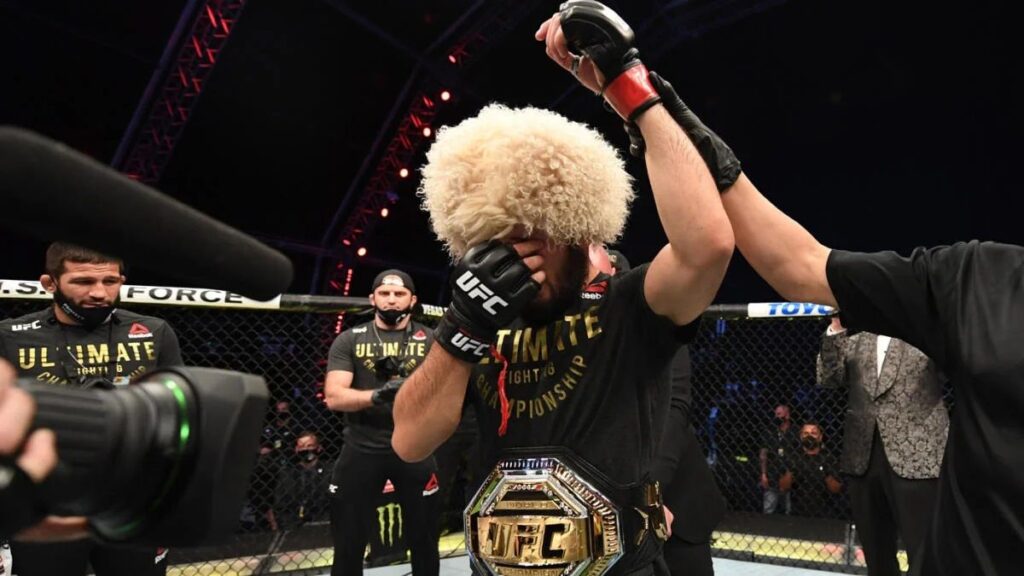
Khabib Nurmagomedov is a name that resonates with greatness in the world of MMA. Following his retirement, Nurmagomedov was widely regarded as the greatest lightweight fighter in MMA history and one of the all-time UFC champions. This article explores the remarkable career of ‘The Eagle,’ his retirement, and the reasons behind his decision. Khabib Nurmagomedov’s Career Competing in the UFC’s lightweight division, Khabib Nurmagomedov held the lightweight championship from April 2018 to March 2021, establishing himself as the longest-reigning champion in the promotion’s history. Having secured two Combat Sambo World Championships, Nurmagomedov made his professional MMA debut at the age of 20 in September 2008 at CSFU: Champions League. After an undefeated record of 16-0 in the national MMA circuit, he signed a multi-fight contract with the UFC in 2011. Nurmagomedov’s promotional debut took place in January 2012 against Kamal Shalorus at UFC on FX 1, where he emerged victorious with a third-round submission. Following an impressive nine-fight undefeated streak, ‘The Eagle’ challenged Al Iaquinta for the UFC lightweight title at UFC 223 and secured a unanimous decision victory. The most notable moment in Nurmagomedov’s career came at UFC 229 when he defended his title against Conor ‘The Notorious’ McGregor, in what became the highest-selling pay-per-view event in UFC history. He further defended his title against Dustin Poirier and Justin Gaethje. His Retirement Khabib Nurmagomedov defended his lightweight title for the final time against Justin Gaethje at UFC 253 in October 2020, winning by second-round submission. During a post-fight interview in the octagon, Nurmagomedov announced his retirement and hung up his gloves. In an emotional speech, he revealed the reason behind his decision. The passing of his father, the legendary Abdulmanap Nurmagomedov, in July 2020 had a profound impact on him. Nurmagomedov made a promise to his mother that he would not continue fighting without his father’s presence, and thus chose to retire in honor of that promise. Retiring with an unparalleled record of 29-0, Khabib Nurmagomedov is regarded as one of the UFC’s most accomplished fighters. In recognition of his achievements, he was inducted into the UFC Hall of Fame in June 2022. Legacy Khabib Nurmagomedov’s accomplishments in the UFC are truly remarkable. Despite competing only 13 times in the promotion, he defeated notable opponents such as Rafael Dos Anjos, Edson Barboza, Al Iaquinta, Conor McGregor, Dustin Poirier, and Justin Gaethje. Throughout his career, Nurmagomedov achieved superstardom and participated in the highest-selling pay-per-view event in UFC history. He also set and broke numerous promotional records. Conclusion Khabib Nurmagomedov’s impact on the sport of MMA is undeniable. He solidified his status as one of the sport’s biggest superstars, headlining the highest-selling pay-per-view event in UFC history and leaving an indelible mark on the promotion. Nurmagomedov’s legacy as a legend in the sport will endure for years to come. Watch Khabib Nurmagomedov’s UFC highlight reel below:
Why did Khabib Nurmagomedov retire?
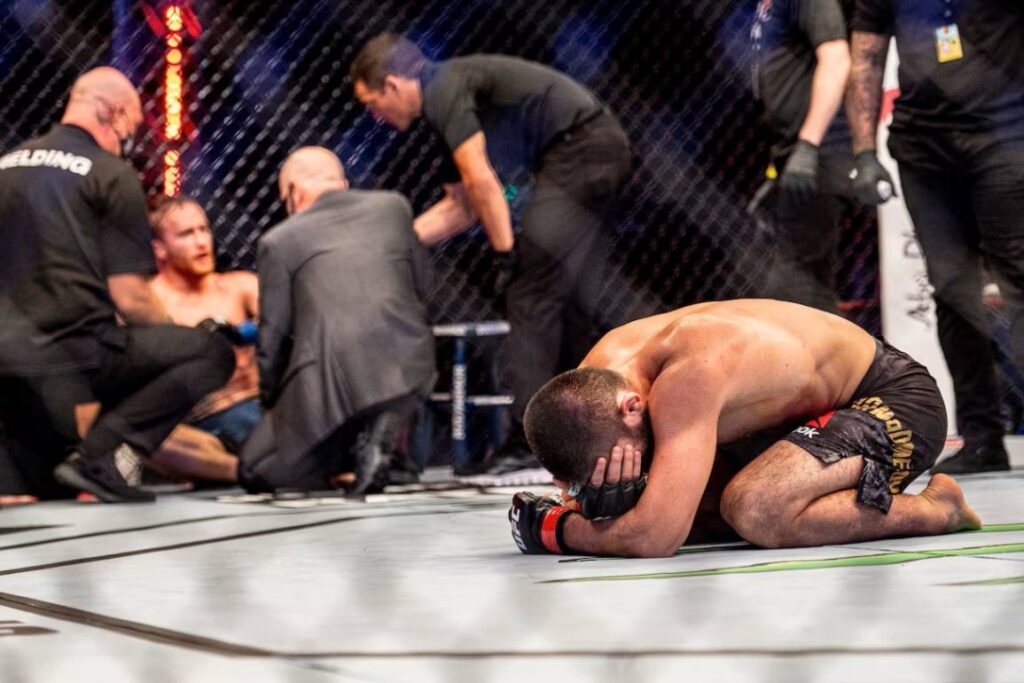
Khabib Nurmagomedov is widely regarded as one of the greatest fighters in the history of the UFC and holds the distinction of being the greatest lightweight champion in the organization. This article explores the career of this UFC legend and examines the reasons behind his decision to retire after a successful career spanning over a decade. Khabib Nurmagomedov’s Career Khabib Nurmagomedov, a two-time Combat Sambo World Champion, made his professional MMA debut at the age of 20 in September 2008 against Vusal Bayramov at CSFU: Champions League. After building an undefeated record of 16-0 in the Russian MMA circuit, Nurmagomedov signed a multi-fight deal with the UFC in 2011. He made a memorable entrance into the UFC with a third-round submission victory over Kamal Shalorus at UFC on FX 1 in January 2012. Following an impressive nine-fight winning streak, Nurmagomedov faced Al Iaquinta for the UFC lightweight title at UFC 223, winning the fight via unanimous decision and capturing the lightweight gold. Nurmagomedov gained widespread recognition for defending his title against Conor McGregor at UFC 229, which became the highest-selling pay-per-view event in UFC history, recording 2.4 million pay-per-view buys. He successfully defended his title two more times against Dustin Poirier and Justin Gaethje. Reasons for Retirement After his victory over Justin Gaethje at UFC 254 in October 2020, where he won by second-round submission, Khabib Nurmagomedov utilized his post-fight interview to announce his retirement. He placed his gloves in the center of the cage, symbolizing the end of his remarkable career, and delivered an emotional speech explaining his decision. The passing of Nurmagomedov’s father, the legendary coach Abdulmanap Nurmagomedov, in July 2020 had a profound impact on him. His father had always been in his corner during fights, and in his post-fight speech, Khabib Nurmagomedov revealed that he made a promise to his mother not to continue fighting without his father’s presence. He chose to retire in order to honor that promise. Legacy Khabib Nurmagomedov’s accomplishments in the UFC are truly remarkable. Despite having fought only 13 times in the organization, the Dagestani grappling maestro defeated notable fighters such as Rafael Dos Anjos, Edson Barboza, Al Iaquinta, Conor McGregor, Dustin Poirier, and Justin Gaethje during his active career. Throughout his career, Nurmagomedov became one of the biggest stars in the sport and was part of the highest-selling pay-per-view event in UFC history. He also set and broke multiple promotional records during his time in the UFC. Conclusion While some fans may argue that Khabib Nurmagomedov retired too early, his impact on the sport is undeniable. He introduced Sambo to the world and brought the Soviet fighting style into the spotlight. Following his retirement in October 2020, Nurmagomedov established his own MMA promotion, Eagle FC. He has since become an active coach at the American Kickboxing Academy (AKA) under the guidance of head coach Javier Mendez. Nurmagomedov continues to coach and corner fighters, including current UFC lightweight champion Islam Makhachev and top-ranked middleweight contender Belal Muhammad. Watch Khabib Nurmagomedov’s last fight below: