
Road Dogg Named THIS former D-Generation X Member As The Wrestling GOAT
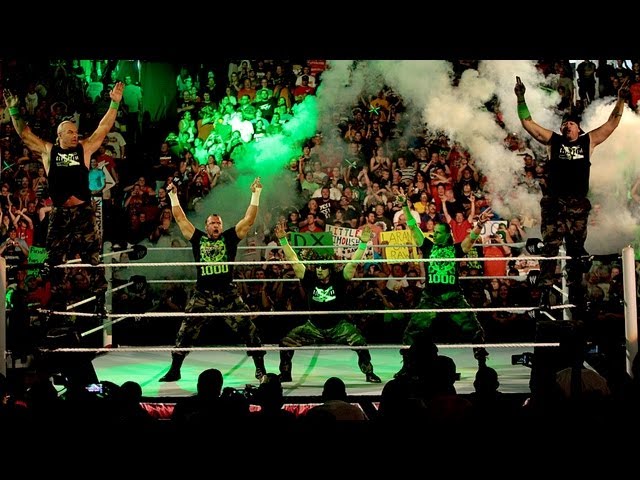
Brian Girard James, commonly known as WWE icon Road Dogg, had an illustrious career in professional wrestling. His path as a significant player in the wrestling business has been filled with both victories and hardships. Road Dogg recently disclosed his prior issues, including problems with addiction, and talked about his experiences in WWE and elsewhere. His stint with the renowned D-Generation X faction, a period of wrestling history replete with spectacular incidents and famous rivalries, is one notable facet of his life. In this piece, we examine Road Dogg’s life story, his position within D-Generation X, and his viewpoint on the greatest wrestler in history. In the 1980s, when he was still a Marine, Road Dogg started competing in professional wrestling. He earned a name for himself in the world of professional wrestling when he joined the World Wrestling Federation (now WWE) in 1994, going by the name “The Roadie.” It didn’t take him long to take on the alias “Road Dogg Jesse James” in 1996, a name that would come to represent his career as a wrestler. Road Dogg’s collaboration with fellow WWE superstar Billy Gunn to establish the storied tag team known as The New Age Outlaws was one of his professional high points. A legendary tag team in wrestling history would emerge from this alliance. The New Age Outlaws claimed the WWE Tag Team Championship as well as several WWF Tag Team Championships. A golden period in professional wrestling was defined by their alluring personalities and fun promos, which won them over fans. Their association with the D-Generation X group propelled the New Age Outlaws to popularity. The gang upended the wrestling industry, challenging conventions and violating rules alongside Shawn Michaels and Triple H. With legendary wrestlers like The Rock and Stone Cold Steve Austin, they got into historic feuds that helped make wrestling history. D-Generation X was known for defying convention and breaking rules in ways that had never been done before in the world of professional wrestling. Their mischief, crude humour, and catchphrases became ecognizable. They once demonstrated their bravery and brazen style of wrestling by driving a tank into a rival WCW event in one memorable instance. Even though the D-Generation X period was a professional high point for Road Dogg, he struggled with personal issues that caused him to leave WWE in 2001. Road Dogg has been open about his struggles with addiction to drugs and alcohol. He said that he was “on dope the whole time” throughout the 1990s, which brought up hazy recollections of that period. Road Dogg’s narrative, though, takes a turn for the better. His life wasn’t defined by his difficulties. He started a road of healing and atonement instead. Before joining TNA (Total Nonstop Action Wrestling), his journey took him to the indie wrestling scene. In 2014, he ultimately returned to WWE. In his time away from WWE, he once again collaborated with Billy Gunn under the moniker VKM—a play on the names of Shawn Michaels and Triple H—and they amusingly ridiculed them. A turning moment in Road Dogg’s life and career occurred when he rejoined WWE in 2014. He changed careers from wrestler to producer before taking the primary writing position on SmackDown. His passion for the wrestling industry and his contributions to WWE were both clear. Despite his prior troubles, he had no ill will against Vince McMahon. In truth, Road Dogg received free rehab treatment because of Vince McMahon’s sponsorship. This deed of goodwill had a significant influence on Road Dogg’s viewpoint on the wrestling business. Road Dogg’s view on the best wrestler of all time—often referred to as the GOAT (best of all time)—is a fascinating component of his recent disclosures. Road Dogg has changed both personally and professionally in his 13 years of sobriety. He emphasised Vince McMahon’s involvement in assisting him in overcoming addiction and expressed his sincere thanks for the WWE chairman’s assistance and generosity throughout his trying moments. In a moment of reflection, Road Dogg said that his earlier animosity towards WWE was unjustified. He acknowledged that he had been excessively self-centred and said that his previous buddies had failed to defend him. At the moment, he recognised his weakness and would have shot himself as well. The development that Road Dogg has undergone during his trip is highlighted by his self-awareness and newly discovered admiration for Vince McMahon’s compassion and leadership. In conclusion, despite its highs and lows, Road Dogg’s wrestling career is a monument to persistence and personal development. His time spent with D-Generation X left an imprint on professional wrestling, and his post-wrestling career demonstrated his dedication to the industry he adores. His inspirational recovery from addiction and thanks for Vince McMahon’s help are examples of the value of kindness and second chances in the wrestling business. The narrative of Road Dogg serves as a reminder that it’s never too late to make a return and a new beginning, whether in the world of wrestling or in real life.
WWE Hall Of Famer Takes A Dig At Fans For Criticising Becky Lynch’s Heel Turn At SummerSlam 2018
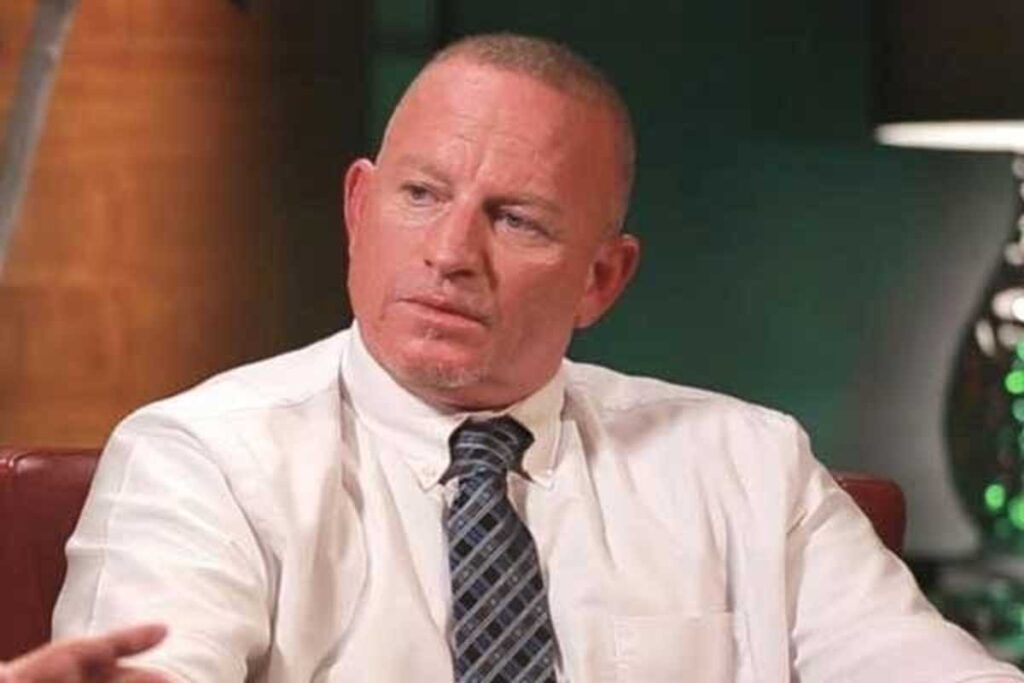
WWE legends and former superstars from the attitude era are making their presence felt these days. In the world of professional wrestling, unexpected twists and shocking moments are part of what make the sport so exhilarating. One such moment occurred at WWE SummerSlam 2018 when Becky Lynch, after a hard-fought match, turned on her friend Charlotte Flair. What was intended to be a heel turn for Lynch ended up receiving a surprising reaction from the Brooklyn crowd at the Barclay’s Centre—a loud cheer for “The Man. This incident has sparked an ongoing debate about whether fans were right to cheer for the heel turn. During the event, Charlotte Flair emerged victorious in a match against Carmella and Becky Lynch, clinching the SmackDown Women’s Championship. However, it was the post-match actions that grabbed the spotlight. After embracing Flair, Becky Lynch suddenly unleashed a vicious attack on her friend, marking her transformation into a heel character. The creative narrative behind the turn was that Flair had weaselled her way into the match and stolen the title opportunity from Lynch, who had earned her title shot. On the recent episode of the Oh, You Didn’t Know?” podcast, former WWE superstar “Road Dogg” Brian James weighed in on the controversy. He expressed his belief that the fans were in the wrong for cheering Lynch’s attack on Charlotte Flair. James questioned the crowd’s response, particularly when considering the context of the situation. He stated: “The idea was that Charlotte came in and weaselled her way in and won the title, and she kind of stole it from ecky.. Becky had a title match.” “So, why—and that’s just where maybe I’m older and I don’t understand, but you don’t just get handed crap around here? So to me, the whole thing was that I thought the fans were wrong.” Using an analogy from the world of sports, James drew a parallel between Lynch’s actions and a scenario involving poor sportsmanship. He questioned whether fans would cheer for a losing team that resorts to violence after a match. “You’re cheering the wrong person here because—what if the Bad News Bears were shaking hands with the team, or whoever, your baseball-playing son is shaking hands saying, Good game, good game, or your softball-playing daughter, Good game, good game, and the team that loses just beats the crap out of the person? “Do you pop for that, or do you go, ‘Oh my god, what are you doing? That’s horrible sportsmanship.’ That’s what Becky did, and people loved it.” James also expressed his realization that wrestling fandom’s landscape has been significantly influenced by social media, particularly Twitter. He noted how fan reactions on platforms like Twitter now play a substantial role in shaping conversations and opinions about wrestling events. “It let me know then, like, oh okay. There’s no goodness left at all [laughs]. It’s all Twitter; the world is Twitter. The world is Twitter now.” Despite the crowd’s enthusiastic response, James firmly stood by his stance that fans were mistaken in cheering Lynch’s actions. He asserted that, from a storytelling perspective, Lynch’s character was the heel in the situation, and her actions were those of a spoiled sport who couldn’t handle defeat: “This is still my stance, and I’ll have this conversation with anybody, and maybe I’m wrong, but it’s my belief. Becky was the heel with every move she made, but the crowd ate it up.” “Yeah, we predicted that they would pop for Becky [at SummerSlam] because Becky’s star was rising. I thought, ‘Well, surely they’re going to see that Becky is just a spoiled sport here.’ She lost.” James recognised that societal factors, along with the influence of wrestling on Twitter, contributed to the unique crowd reaction. While the intention was to present Becky Lynch as the heel, the complexities of the modern wrestling landscape blurred the lines between traditional character roles. The incident at SummerSlam 2018 is a prime example of how wrestling storytelling can sometimes take unexpected turns, eliciting differing reactions from fans. While some fans saw Becky Lynch as a hero standing up for herself, others, like Road Dogg, perceived her actions as those of a heel. This ongoing debate showcases the intricate relationship between wrestling narratives, fan perspectives, and the evolving dynamics of the wrestling community in the age of social media. Fans will be keen to know how this shapes up for their favourite Man, Becky Lynch.
