
UFC History: Who won UFC 1?
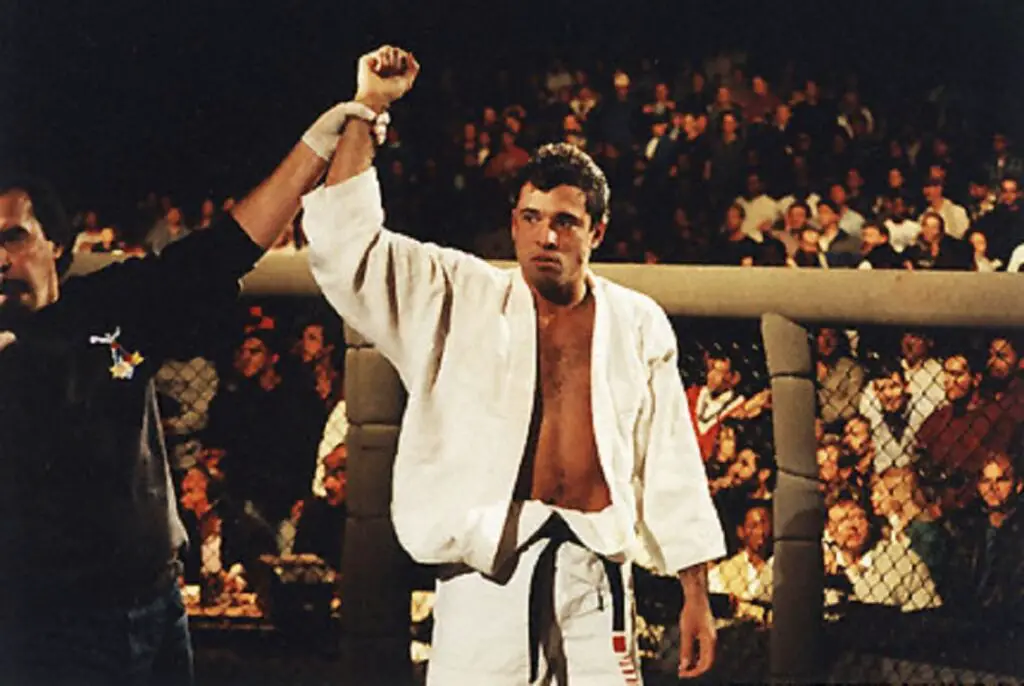
When discussing the origins of the UFC, it is impossible to overlook the monumental significance of its inaugural event, UFC 1. Held on November 12, 1993, in Denver, Colorado, UFC 1 revolutionized the world of combat sports and laid the foundation for what would become one of the most popular and widely recognized MMA promotions in the world. The format of UFC 1 was unique and unprecedented at the time. Conceived by Rorion Gracie, Art Davie, and John Milius, the tournament aimed to determine the most effective martial art by pitting fighters from various disciplines against each other. With minimal rules and weight classes, the event promised an unbridled showcase of raw combat skills. When it came to determining the winner of UFC 1, one name emerged as the undisputed champion: Royce Gracie. Hailing from the legendary Gracie family, Royce Gracie showcased the effectiveness of Brazilian Jiu-Jitsu and forever changed the trajectory of the UFC. Over the course of the evening, Gracie battled against formidable opponents from different martial arts backgrounds, showcasing his ground fighting expertise and submission prowess. Despite being smaller in stature than many of his opponents, Gracie defied the odds and emerged victorious. Gracie’s strategic approach to fights, combined with his mastery of Brazilian Jiu-Jitsu, proved to be a winning formula. He dispatched his opponents with precision and efficiency, utilizing submissions to submit them one by one. In the finals, Gracie faced off against Gerard Gordeau, a Dutch savate and karate specialist. Gracie quickly secured a takedown, maneuvered into a dominant position, and forced Gordeau to tap out due to a rear-naked choke, solidifying his championship status. Royce Gracie’s victory at UFC 1 not only earned him the distinction of becoming the first-ever UFC champion but also showcased the effectiveness of Brazilian Jiu-Jitsu in the realm of mixed martial arts. His groundbreaking performance set the stage for the Gracie family’s continued success in subsequent UFC events, as well as the evolution of MMA as a whole. UFC 1 stands as a pivotal moment in the history of combat sports. It not only introduced a new platform for fighters to test their skills but also challenged preconceived notions about the effectiveness of different martial arts disciplines. Royce Gracie’s triumph at UFC 1 will forever be etched in the annals of MMA, serving as a testament to the power of technique, strategy, and adaptability in the world of combat sports. Watch a recap of UFC 1 below:
Recapping UFC 1: The first-ever UFC event
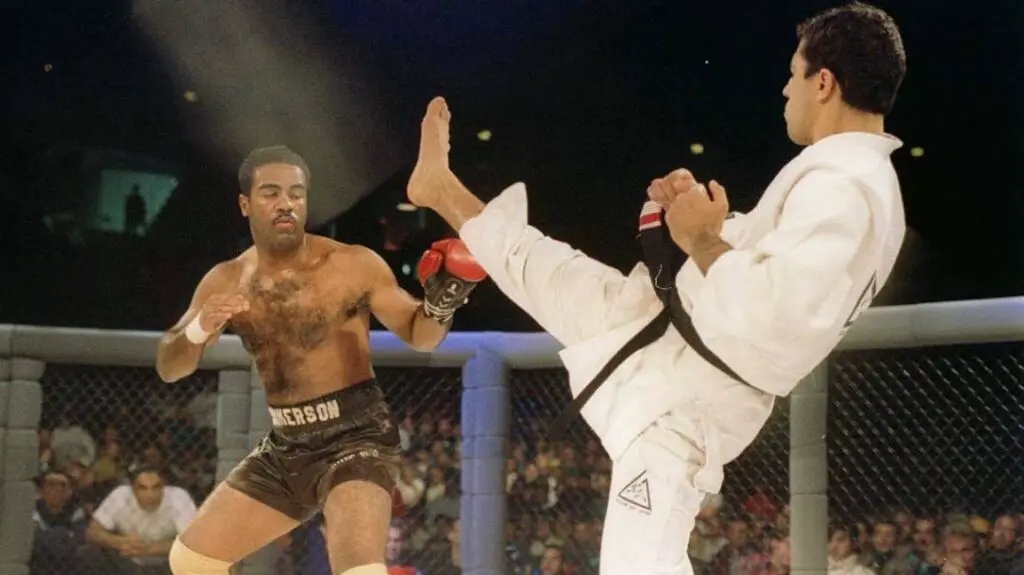
In the annals of mixed martial arts (MMA) history, UFC 1 stands as a momentous event that laid the foundation for the Ultimate Fighting Championship’s future success. Taking place on November 12, 1993, in Denver, Colorado, this groundbreaking tournament set the stage for a revolution in combat sports. UFC 1, also known as “The Beginning,” unfolded at the McNichols Sports Arena. The brainchild of Rorion Gracie, a Brazilian Jiu-Jitsu practitioner, and Art Davie, a marketing specialist, the event aimed to showcase various fighting styles and determine the most effective discipline in a no-holds-barred environment. Eight fighters, each representing a different martial art, stepped into the octagonal cage to vie for the title of the first-ever UFC champion. These combatants brought with them an eclectic mix of skills and backgrounds. Notable participants included Royce Gracie, a Brazilian Jiu-Jitsu expert; Gerard Gordeau, a Dutch savate and karate specialist; Ken Shamrock, a renowned shoot wrestler; and Patrick Smith, a taekwondo black belt. The tournament employed an open-weight format, with fighters of different sizes and disciplines pitted against each other in single-elimination matches. The rules were relatively minimal, allowing strikes, kicks, submissions, and even headbutts. Gloveless and with limited protective gear, the fighters were primed for an intense spectacle. Throughout the night, combatants showcased the effectiveness of their respective martial arts. Royce Gracie’s Brazilian Jiu-Jitsu proved particularly dominant, as he effortlessly submitted his opponents with a wide array of techniques, demonstrating the power of grappling and submissions in MMA. Despite facing much larger opponents, Gracie showcased his technical prowess and skill, proving the effectiveness of his family’s fighting style. In the tournament’s final, Royce Gracie faced Gerard Gordeau in a battle of David versus Goliath. Gracie’s slick grappling and submission skills overwhelmed Gordeau, leading to a submission victory via a rear-naked choke. With this victory, Royce Gracie etched his name in the history books as the first-ever UFC champion, illustrating the potency of Brazilian Jiu-Jitsu in the MMA landscape. UFC 1’s impact cannot be overstated. It introduced the world to the thrilling spectacle of mixed martial arts and sparked a revolution in combat sports. This seminal event laid the groundwork for the growth of the UFC, transforming it into a global phenomenon and inspiring countless fighters to embrace the art of mixed martial arts. Watch a recap of UFC 1 below: