
How Fighters Stay Mentally Strong After Devastating Losses
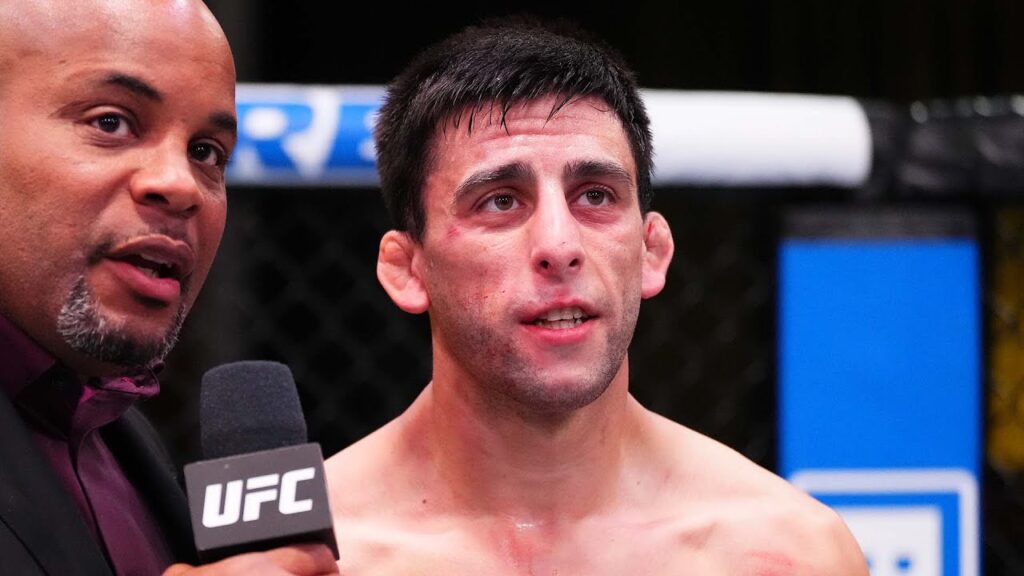
MMA is one of the most challenging and energy-consuming sports in the world, both physically and mentally. MMA practitioners risk their health and wellbeing each time they enter the cage to compete against their counterparts and other challenges such as pressure and expectations as well as fear of losing. In such a high-stakes environment, losses are expected, and some losses are very damaging. Fighters end up doubting their skills, careers, and future. But how do fighters psychologically come back from such devastating losses and be able to sustain the mental strength to go back and fight again at the elite level? The psychological aspect of MMA is as significant as the physical one, and the ability to recover from a loss is a great example of psychological endurance. Although every fighter’s experience of going through hardship is different, there are several typical approaches and attitudes that keep fighters psychologically fit after they have been knocked down. The strategies are as follows: acceptance of the loss, personal change, support, perspective, and inspiration from the loss. Accepting the loss and moving forward to gain from the loss The first thing anyone has to do to maintain a healthy psychological state after a loss is to acknowledge the defeat and not to run away from it or to deny it. In combat sports, there are losses, and no fighter is invincible; even the legends of the UFC have had their share of defeats. Unlike other forms of business where people see the loss as a permanent way of doing things, many fighters consider it a way of learning. MMA champions such as Georges St-Pierre and Anderson Silva have both had their share of losses in their careers, but they agree that one has to learn from a loss. St-Pierre, considered to be one of the best MMA fighters of all time, was also stripped of his UFC welterweight belt in an upset defeat by Matt Serra in 2007. Instead of letting the loss become his identity, St-Pierre made it a point to turn that defeat into something productive. He changed his training, corrected the mistakes he made, returned a better fighter to regain his title, and then defended it for years. Accepting the loss enables fighters to analyze what went wrong, if it was a technical mistake, lack of concentration, or poor preparation. In this way, they are able to learn from their mistakes and try to fix them the next time they get into a fight, and thus are able to return to the fight arena as stronger fighters. This process needs a positive attitude, or what is known as a growth mindset, that is, the notion that skills are not inherent but can be cultivated through perseverance. The athletes who have this attitude realize that defeat is not the end of the world, and the worst thing is when you do not make use of the experience that comes with it. Focusing on Self-Improvement A devastating loss can lead to self-doubt, but many fighters overcome this by focusing on the things they can control: their employability skills, training for a particular job, and attitude. In a fight, it is easy for the fighters to focus on the losses they incurred and allow it to demoralize them. Nonetheless, those fighters who are able to regain the concentration on improvement are always the ones who come back stronger. For instance, Anderson Silva could have become a victim to his recent knockout by Chris Weidman and allowed that to ruin his career. Still, Silva decided to be more positive and concentrate on the possibility of coming back to the sport he liked. While Silva’s record later turned to be more of a loss, one could not help but appreciate his desire for constant improvement and growth as a martial artist. Stars like Dominick Cruz, who has had many losses and multiple injuries in his career, has time and again emphasized that the key to improvement is in honing marginal gains during training. Cruz had been in a situation where he had to make a comeback from the long layoff and losses, but he has always gone into such situations with the belief that every day is a day added to improve. Therefore, the energy spent on self-improvement as opposed to the past serves as a way of keeping the fighters in charge of their lives and careers. The Case of Building a Strong Support System The stamina required for the fighter to come back and make a comeback after a disastrous defeat is derived from the support system. People who are close to the fighters, such as coaches, teammates, family, and even fans, can come in handy in motivating the fighters and bringing back confidence. The lifestyle of MMA may lead to the fighter being alone, and they may feel lonely, especially when they lose, but those with family support will not be affected much. A lot of fighters discuss the role of a coach as not only being a mentor that teaches them how to move on the mat and deliver a punch but also someone who reminds them to be cheerful. Daniel Cormier, a former two-division UFC champion, relied on his trainer, Javier Mendez, as well as his family to get through his second defeat to Stipe Miocic. Even if the fight was a defeat, Cormier was mentally prepared and fought one more time before hanging his gloves and the importance of having a team that supports you when the results are not positive. This is especially so for fighters who depend on their fellow fighters to hold them up, as this gives them the morale boost of teamwork. MMA training camps are not always easy, and fighters tend to have each other’s backs and challenge each other. It is always helpful to have teammates that know the physical and emotional demands of the sport to give a fighter the motivation to get back up again. They also foster camaraderie through
How Alexandre Pantoja’s mental toughness made him a UFC champion.
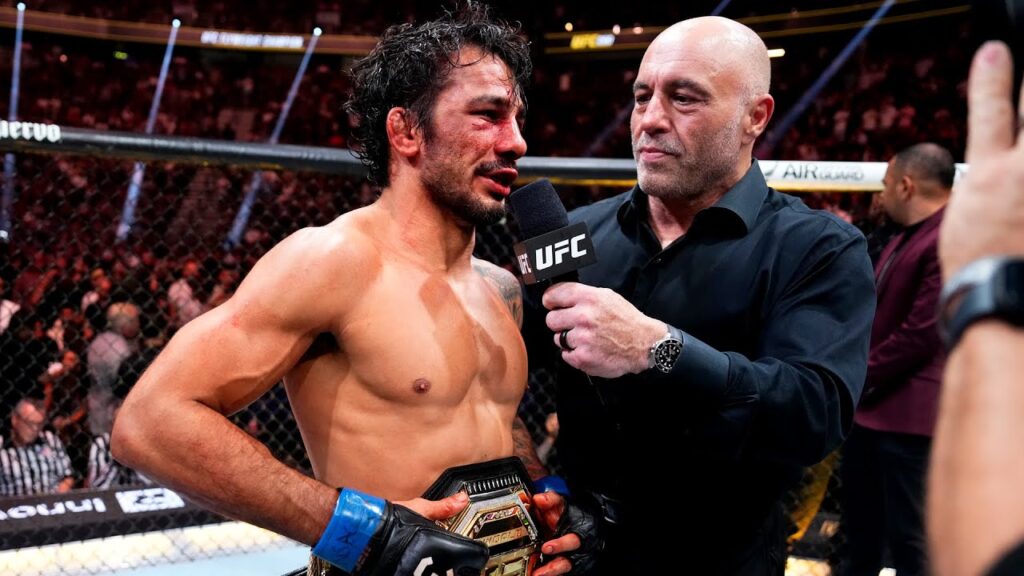
MMA is as much a fight of the mind as it is of the body and this is something that is often overlooked. The Octagon is not only a place where physical strength is put into a trial, but also psychological and emotional strength. Many of the fighters are talented and have the physical abilities that can help them win the fights and become champions but there is something that sets the champions apart from the rest. Alexandre Pantoja is another fighter in this list, a man whose mental strength has been almost as important as his skills. Alexandre Pantoja had always wanted to become the UFC Flyweight Champion and he made it happen in July of 2023 when he won the title against Brandon Moreno via split decision at UFC 290. The battle which has been described by many as one of the best in the history of the flyweight division was a clear indication of Pantoja’s toughness, determination and confidence. But this victory was not achieved in a day; it was the result of many years of struggle, efforts and, above all, a strong will power. In this article, the author will look at how Alexandre Pantoja’s mental strength that was developed during the tough years led him to become the UFC champion. First of all, we will describe the early stages of his career, the difficulties he faced and the turning points in his life. Last of all, we will discuss how Pantoja’s mental strength has become his biggest asset when fighting in the Octagon. Early Years: The concept of Mental Toughness. Mental toughness is not something that one is born with; rather it is developed over the course of a lifetime through work, struggle and self-improvement. For Alexandre Pantoja, his mental toughness was being developed even before he entered the world of UFC. Pantoja was born on April 16, 1990, in Rio de Janeiro, Brazil, and thus raised in a country where MMA is a lifestyle and where legends like Anderson Silva and José Aldo are considered national pride. But, as it often happens with fighters from poor families, Pantoja’s road to the top was not a bed of roses. He was raised in a rather tough environment and that is why he had to learn how to struggle and stand up for himself from an early age. MMA, therefore, was not only an interest, but also a means of self-fulfillment and a source of an opportunity to let off steam in the megacity of Rio de Janeiro. Pantoja started practicing Brazilian Jiu-Jitsu (BJJ) at the age of 15 and this would be the stepping stone to his MMA career. BJJ is very scientific and one has to have a lot of patience in order to practice it. Pantoja has trained in BJJ and the experience he gained in the discipline prepared him for the nature of combat sports where victory is not easily achieved. Pantoja began to train and compete in local tournaments and experience the joy and sorrow of training which eventually shaped his mental strength that is characteristic of his fighting style. He had the passion and the drive to excel in a sport that required one to have a strong body and mind. The Early Struggles: Resilience in the Midst of Challenges Alexandre Pantoja had his initial career in the UFC before switching to the Brazilian Mixed Martial Arts where he fought in the local shows. In the initial years of his career, Pantoja had to struggle through several challenges such as inadequate funding, scarce training facilities, and the challenge of performing against strong competitors. Life of a regional MMA fighter in Brazil is not a bed of roses as people may think. Fighters have to take up other employment opportunities to cover their needs and they have very tight training regimens that do not allow much time for anything else. Pantoja, like so many others, had to fight his way up and through the ladder of the competition. This is the time when his physical and mental strength was put to the test. The only thing that Pantoja could not predict was the reality of whether or not his dream of becoming a world-class fighter would ever come true and this was a burden that he had to bear, but he never gave up on his dreams. It was therefore not surprising to see him get a chance to represent the country in an international arena. In 2014, Pantoja appeared on “The Ultimate Fighter: The above mentioned has shown that inclusion of Latin America as a member of the cast is appropriate. It was however a great experience even though he did not clinch the championship as he wanted. It helped him to perform in front of a larger number of people and attract the attention of UFC representatives. Most importantly, it gave him an opportunity to develop himself mentally as he was exposed to high stakes games against some of the best talents in the world. Still, Pantoja would have to endure before getting his shot at the UFC through the show. He moved on to other organizations and started piling up victories and gaining more experience. The late call to the UFC could have been a demoralizer to most fighters, however, for Pantoja it was just another challenge to conquer. His patience was also his mental strength and it was being rewarded as he continued to sharpen his skills and build towards his first UFC fight. Entering the UFC: The First Big Test of Mental Toughness Pantoja made his entrance to the UFC in 2017, fighting with Eric Shelton, the winner of the reality show The Ultimate Fighter. At this time, Pantoja had already earned a great deal of victories, but the UFC was a higher level of competition, a promotion that contains the highest level of fighters in the world. The pressure of competing in the biggest stage of the sport can bring down even the most
