
UFC Paris: Paul Craig Announces Retirement After Knockout Loss
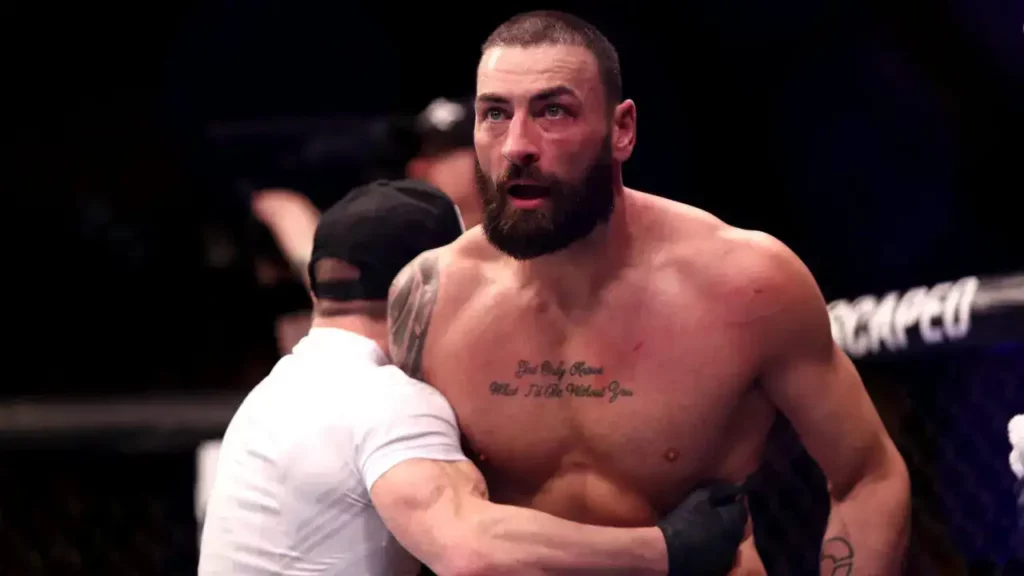
In Paris, A Night of Highs and Lows. UFC Paris provided a drama-filled, emotional, and career-making night. The French spectators saw both joy and disappointment, with the highlight being the retirement of the Scottish veteran Paul Craig after being knocked out by Modestas Bukauskas. Brazilian prospect Caio Borralho, also on the same card, solidified his ascending position in the middleweight division with another strong showing. The incident revealed why UFC Paris has rapidly become one of the most discussed events on the MMA calendar. From homegrown talent to international stars, the night provided the fans with a view of the emotional impact of the sport and its inexorable forward momentum. The Illustrious Career of Paul Craig. Paul Craig, or Bearjew, has been a well-regarded member of the UFC since his debut in 2016. An expert in submissions, especially the triangle choke, Craig was reputed to be able to reverse the tide of a fight even when he was losing on the scorecards. His toughness and closing skills made him a fan favorite, particularly in the light heavyweight division, where he produced memorable performances against such names as Jamahal Hill and Nikita Krylov. The decision to go down to middleweight was meant to revive Craig, but the shift was not easy. Although he enjoyed some initial success, he failed to achieve consistency in the new weight category. The battle with Bukauskas in Paris was an opportunity to recover, but it was disappointing and became the final episode of his career within the Octagon. The Punch that Shocked the World. The fight against Modestas Bukauskas was a good one at the beginning, as Craig was seeking to use his grappling against the younger and quicker man. But Bukauskas demonstrated sharp hitting and control, slowly getting into range. During the second round, a well-timed combination felled Craig, and the referee intervened to stop the fight. When the crowd walked to the finish, Craig pulled off his gloves and left them in the middle of the cage, the universal gesture of retirement in MMA. Fans applauded and respected his decision as they saw the legacy he left behind. The influence of Craig on Scottish MMA. The retirement of Craig is especially important to Scottish mixed martial arts. He was the most notable UFC fighter in the country, who motivated numerous young Scottish and other athletes to become MMA fighters. His legendary victories, particularly his skill in overcoming defeats, turned him into an icon of perseverance. Craig never won a UFC title, but his legacy is his grit, his entertainment value, and the trail he blazed for Scottish fighters in an international promotion. He is retiring, and an era is over, but his impact will be felt in the sport. Modestas Bukauskas comes forward. To Modestas Bukauskas, it was not just another win. It was a time when his development as a fighter and his capability to act under pressure were demonstrated. Bukauskas had already experienced misfortune in his UFC tenure, such as losses and absence from the promotion, but his comeback has been characterized by newfound confidence and ability. Beating an experienced fighter such as Craig gives Bukauskas momentum and credibility in the middleweight division. Although it was a bitter night considering that Craig has retired, to Bukauskas it was an indication that he is up to the challenges ahead. Caio Borralho Continues His Momentum. Although the emotional highlight was Craig’s farewell, UFC Paris also gave a stage to emerging stars. They included Caio Borralho, who still causes a commotion in the middleweight division. Borralho, with his combination of grappling ability and calculated striking, scored another victory for his resume, further cementing his status as one of the brightest prospects in Brazil. The fact that Borralho controls how his fights are fought has been remarkable. He displayed patience, control, and fight IQ in Paris, frustrating his opponent and winning the decision easily. Every performance solidifies his position as a fighter to be followed in a division that is actively seeking new competitors. The Importance of the Borralho Ascendancy. Middleweight is a division that has been marked by old names, but a new generation of talent is starting to change that. Borralho is a symbol of this new generation. His combination of athleticism, technical skill, and the ability to handle pressure makes him a fascinating subject in a weight division that feeds off personalities and skill sets. Borralho, with his victory in Paris, puts himself in a better position in the rankings and prepares possible matches with the proven competitors. The fact that he has been successful in Europe also indicates his capability of performing on large stages, which the UFC will appreciate because it seeks fighters who can headline cards around the world. Contrasting Journeys The Paris card highlighted a difference between the paths of combatants in the UFC. On the one hand was Paul Craig, a veteran of the battle, whose career ended after many exciting performances. Across the street was Caio Borralho, an up-and-comer whose career seems to be just starting. These similar tales underscore the sporting cycle. Old names fade, new names emerge to take their place, and the dynamic character of mixed martial arts means that the fans are constantly experiencing the past and the future simultaneously. Fan Reactions to UFC Paris The night was full of emotions among fans in Paris. Craig retired and was given a standing ovation by the crowd, who recognized his contribution to the sport. Meanwhile, they accepted the performance of Borralho, who could become a star in the future. Social media was full of tributes to Craig, as fighters and analysts spoke in praise of his career and strength. Meanwhile, there was excitement surrounding the gradual ascendancy of Borralho, and many are now confident that it will not be long before he is matched against a ranked opponent. Conclusion UFC Paris provided a night to be remembered both in its conclusion and inception. The end of a great career of heart, strength, and
Back With A Boom: Caio Machado’s Knockout Streak Puts Him On The Brink Of A UFC Return
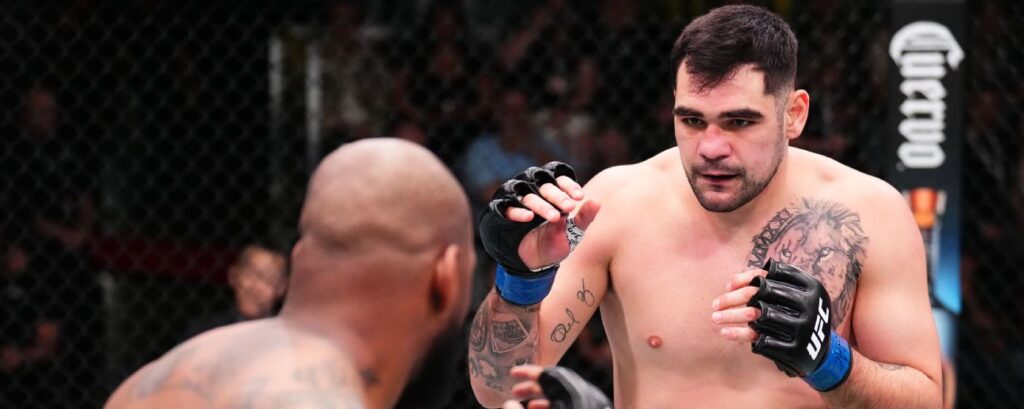
The recent shape of Caio Machado, as a fringe prospect, is difficult to overlook. Since leaving the UFC, the Brazilian light heavyweight has compiled a series of theatrical stoppages fought in regional and international organizations, bringing about a series of outcomes that has promoters and matchmakers inquiring whether the UFC ought to reunite with “Bigfoot” once more. The story of Machado now is a classic MMA redemption story—but the facts of how the hype came to pass are important. The findings altered the discussion. The past year of Machado has been decisive. Since leaving UFC, the 31-year-old has achieved a streak of first-round stoppages, with the most recent being a knockoutat a Kings Championship card and previous victories at Thunder Fight and UAE Warriors. Those shows were not paint-by-numbers; they were emphatic finishes, a combination of better striking variety and more disciplined fight IQ that suggests the fighter leaving the world’s biggest stage is not the same fighter now knocking the opponent out in the first few minutes. The talk of a UFC return has real momentum and is not an idle rumor largely because of that streak. Who is Caio Machado on paper? Machado is a southpaw, about 6’4″ tall and a light heavyweight, whose resume is uneven, but who possesses the physical attributes every matchmaker dreams of: size, power, and reach. His official profiles attribute him as a combatant who has honed his finishing rate since exiting the UFC window, and his training establishment in Vancouver with FKP MMA has demonstrated consistent transformation in his stand-up. The record figures differ a little between databases as he continues to earn bouts, though it is agreed that Machado is a dangerous, improving 205-lb fighter who can turn a fight with a single punch. Why UFC would think of re-enlisting him. The UFC may be interested because of three commercial and competitive reasons. To start with, the fresh finishes of Machado generate instant promotion: highlight tapes are ticket sellers and subscription sellers. Second, the light-heavyweight division is already transitioning to fluxus; it is standard practice at UFC to stock up on established finishers to produce a match that challenges competitors and raises the profile of potential stars. Third, Machado has a Brazil association, and the marketing has over and over again been banking on Brazilian talent to power up the South American markets. Combined with Machado and his combination of form and marketability, he is a rational re-signing candidate. Tactical fit: The way his game will work in UFC-level competition. Technically, the recent victories of Machado demonstrate a better sense of distance and cleaner combinations as compared to the previous seasons of his career. Those changes are significant: at the UFC level, single power is often not enough without regular setup work and better takedown defense. The eye-catching diversity of Machado, such as the flying knee finish that was in the news a few days back, is an indication of danger to those who do not realize his timing. But his losses before show his weaknesses on the mat and in protracted grappling sequences, which the coaching and volume of sparring partners at UFC would demand he correct soon, were he to return. Fan reaction and pundit take—hunger for new names The fanbase response to the streak by Machado has been positive yet tempered. Social feeds and community forums are buzzing about a possible comeback; commentators note that the UFC is advantaged by a steady stream of fighters who come back even more confident and sharper after not being under the promotion. Nevertheless, a lot of voices call on caution, pointing out that the domination in the region does not necessarily translate to victory over ranked UFC fighters. Concisely, the story is appealing—a warrior made himself new and came back home, but matchmaking is going to be the ultimate measure. The direction that Machado has signalled to the public and his own words. In recent interviews and podcasts, Machado has mentioned his ambitions and progress and indicated that he is interested in a comeback to elite competition but requires the appropriate opportunity and time frame. Combined with his active fight schedule, those public remarks generate a believable public argument that he is ready to be on the next level, and they provide the UFC matchmakers with a type of sound-bite momentum that usually drives a signing. When Machado keeps completing games in dominating style, the negotiations about the contract might turn into a reality in the nearest time. Barriers and cynicism: what might halt the revival. A successful return is not an automatic thing. The UFC considers stylistic preparedness, medical authorization, and timing in the marketplace. It is going to require Machado to prove to the executives that he can enter competitive contests without being a last-minute mismatch and that his new shape can be replicated against ranked competition. Regional promotions in the form of contractual logistics also count; other organizations insist on release clauses or compensation. Lastly, the needs and the divisions’ priorities of the UFC will determine the speed at which he fits into the mix. None of these are insurmountable, but they dampen the excitement. Conclusion: timing, trajectory, and the stakes The recent streak of knockouts by Caio Machado has transformed an otherwise background name into a compelling reinvention tale. When the UFC signs him, it is based on the figures, the finishes, the highlight moments, and the market pull, which would be business- and sporting-wise. To Machado himself, it would be a chance of vindication as well as a great gamble: a chance to establish a comeback legacy or a test of high stakes that reveals remaining weaknesses. To the fans, the idea of a comeback is easy and too good to resist: a comeback would bring a hot, unpredictable taste back to a division that thrives on dramatic twists. Whether this is another rumor or the beginning of a genuine, dramatic UFC homecoming is going to be determined in the next few weeks and any
UFC’s Most Memorable Knockouts: Top 10 Highlight-Reel Finishes
When it comes to the Ultimate Fighting Championship (UFC), knockouts that live forever with fans and in athletes’ minds are also a part of its name. A knockout is the most powerful, precise, and skillful execution known to man; it is as pure a form of boxing as there can be. Here, we explore the top 10 jaw-dropping UFC knockouts that are responsible for taking the sport to another stratosphere in a brief moment and solidifying their place in history. Conor McGregor vs. Jose Aldo was one of the most anticipated fights in UFC history. The reigning featherweight champion, Aldo, was unbeaten for over a decade. Regarded as the cocky trash-talker with one-punch knockout power, McGregor was the young star out to topple a king. The whole thing went down in 13 seconds. The timing of the punch was flawless, with McGregor connecting a left hook just a split second after Aldo lunged forward and sending the Brazilian’s body rigid before he collapsed to leave him out cold. The win, with a 13-second finish record in a UFC title fight at the time, guaranteed Conor McGregor later on his superstar status. It was a finish that not only dethroned one of the greatest fighters to ever step into an MMA cage but also announced McGregor as an international superstar. It displayed his uncanny accuracy and mental strength—qualities that have come to define him. The UFC middleweight champion Anderson Silva was widely regarded as an extremely evasive striker and a dominant force within the weight class. Vitor Belfort was an exciting striker in his own right, someone many believed to pose a real threat to Silva’s reign. Belfort gets a front kick to the face, which was not something that really happened too often in MMA at that point. Belfort fell to the canvas, where Silva blasted away at him with punches for the knockout victory. One of the all-time best knockouts in UFC history. It showcased Silva’s creative striking and solidified his position as one of the greatest fighters in MMA history. There was a whole heap of bad blood going into the UFC 239 fight between Jorge Masvidal and Ben Askren. Ben Askren, the unbeaten wrestler who was sending shockwaves through his early UFC career, vs. Foldover-fast hands with something to prove Jorge Masvidal Five seconds into the fight, Masvidal ran across the cage and delivered a flying knee that immediately starched Askren. It was later the fastest knockout in UFC history. Masvidal not only shattered records with that 5-second knockout but also provided a household name for the UFC. The image of Masvidal showing Askren during his unconscious slumber becomes the essence and brutality of mixed martial arts. Then-champ Ronda Rousey was the undefeated bantamweight champion and a global superstar. The former boxing champion Holly Holm entered this fight as the underdog. This kick from Holm to Rousey in the second round of their fight knocked out Rousey cold. The sight of Rousey, who had appeared untouchable up to that point, flat on the mat rocked the world. Rousey had been rolling through her fights, but this knockout served as a reminder in MMA of how significant striking is. It made Holm’s career and reminded everyone that no matter how great a champion is, they are only as good as their last fight. The feud between Dan Henderson and Michael Bisping had festered for years during their time as rival coaches on The Ultimate Fighter. Bisping needed his trash talk silenced by the heavy right hand of Henderson, and that’s exactly what he got. In round two, Henderson threw his signature “H-bomb” right hand, which landed flush on Bisping’s chin, knocking him completely unconscious from where he fell to the floor. Next, he delivered an airborne forearm to the slumbering Bisping, which ignited its fair share of controversy and discussion. This KO would go on to be one of the most replayed moments in UFC history. It reinforced the athleticism of Henderson and featured a lasting reminder of the speed with which MMA knockouts can be well-enched. One of the most famous head-kick knockouts came from former K-1 kickboxer Mirko Cro Cop. Brazilian jiu-jitsu specialist Gabriel Gonzaga was not supposed to stand and trade with Cro Cop. Putting the world in shock, Gonzaga lands a head kick that puts Cro Cop to sleep. The knockout was even more memorable because of the violent visual of Cro Cop’s left leg flinging beneath him as he crumpled. It was an upset that magnified the unpredictability of MMA and how every fighter, no matter what their specialties are on paper, enters a match with deathly finishing potential. The Brazilian striker Edson Barboza was famous for his dynamite kicks. Terry Etim was a solid challenger who wanted to prove his worth. In the third, Barboza landed a spinning wheel kick that caught Etim flush on the jaw and left him unconscious. His strike was lightning quick and perfectly threaded, making for one of the instant highlights of the event. It is often referred to as one of the best knockouts in UFC history based on how rare it was and for simply being a phenomenal athlete. It was a demonstration both of how the striking game in MMA continues to develop over time and of Barboza’s exceptional abilities. A hot prospect with terrifying knockout power, Francis Ngannou, is meeting veteran Alistair Overeem. Ngannou was looking to prove himself against a contender. In the first round, Ngannou shot an uppercut, literally taking Overeem off his feet and leaving him motionless when he hit the canvas. The knockout was vicious and memorable. The finish helped solidify Ngannou as one of the scariest strikers in all of MMA. It showcased the potential to rule an entire division and finish every opponent with a single sweep of his gloves. The Korean Zombie himself and Yair Rodriguez were both furious fighters known for their exciting fighting styles. Their fight was a competitive back-and-forth that went into
