
WWE Real-Life Friendships: Bonds Above The Ring
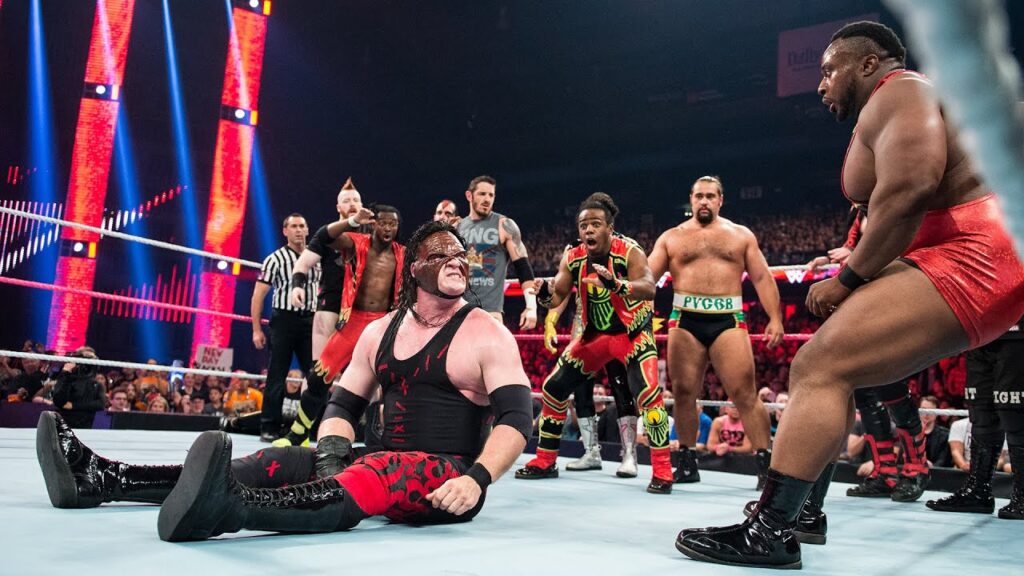
Professional wrestling often alludes to a world of competitive rivalries, dramatic storylines, and characters that are huge in their proportion. Down this route of scripted feuds and staged staredowns lies romance: real friendship developed amongst the superstars of the WWE. Most of it goes beyond the ring; in this world of professional wrestling, there can be a real sense of camaraderie and mutual respect within what is often challenging, labor-intensive work. In this article, we shall consider some of the most potent real-life friendships in the WWE that have stood by time and the wrestling business. The New Day: Xavier Woods, Kofi Kingston, and Big E.One of these immortalized instances of friendship in WWE is among the real-life best friends and The New Day members: Xavier Woods, Kofi Kingston, and Big E. The faction started in 2014 and quickly became one of the most popular and successful factions in WWE history—though their undeniable chemistry shows in the ring during on-mic work. What shines through, though, is their undisputable real friendship outside of the ring. After all, Woods, Kingston, and Big E always talk about the brotherly bond they all share. It is founded such that the three are there for each other through thick and thin, meaning through personal and professional matters like injuries and family milestones. Their friendship is based on mutual respect, shared interest in video games, comic books, and a commitment to success. This kindred spirit seeps into their performances, making any of The New Day’s segments and matches have that most accurate and heartfelt notion to them. Perhaps the best of times for this friendship was realized at WrestleMania 35 when Kofi Kingston won the WWE Championship. Big E and Xavier Woods were visibly clutching one another, tears streaming down both their faces, in a moment that resonated with how much this meant to so many people as Kingston held that title nearly 11 years after coming under contract for the WWE. Their legit joy and pride for what Kingston had done found an audience and put a stamp on just how strong a bond it would prove to be—not only for those men on the road but also in actually helping each other’s careers progress. Sasha Banks and BayleyAnother pair of WWE superstars whose real-life friendship has made a huge difference in their on-screen chemistry: Sasha Banks and Bayley. Moreover, both are significant players in the Women’s Evolution in WWE, having a hand in some of the most unforgettable matches and moments over the past few years. Banks and Bayley first met at NXT, forming a strong friendship based on their love of wrestling and their desire to take the women’s division to greater heights. Their rivalry in NXT, particularly the match at the 2015 NXT TakeOver: Brooklyn, is said to have been one of the best women’s matches ever witnessed. All the while, however, throughout all the intense rivalries, nothing could tear their mutual respect and friendship apart. The two continued to progress in their relationship when they were called up to the main roster. Again, whether working against or with each other, this real-life friendship shined through. Amidst the COVID-19 pandemic, Banks and Bayley remain at the forefront of WWE’s women’s division, portraying their versatility and closeness in numerous storylines. Their friendship set the base for all their successes, allowing the two to push each other to great heights and manufacture moments that will never leave the WWE Universe’s memories. Kevin Owens and Sami ZaynKevin Owens and Sami Zayn are friends whose friendship began long before they even signed with WWE. The two men met on the independent wrestling circuit while traveling, performing in different organizations. The one thing that has survived takes those days in the Indies into coming into the family—a place where both have had reasonable amounts of success for themselves. Owens and Zayn’s real-life friendship has been well-documented, and WWE often nods to their bond in how they create their storylines. They have been stubborn business rivals, hardcore fight allies, which produced heated, exciting matches piled up with some compelling narratives. Their familiarity with the ring style and holding a deep personal connection proved a significant part in what would turn into a sequence of some of the most charged matches in WWE, both emotionally and technically. Such a bond has been alive in one of their most silent, shining moments in WWE, WrestleMania 37, where Owens and Zayn collided in a much-anticipated match. This was regardless of the possible differences between them on the show’s storylines; the lived respect for one another and friendship shone through, so it was even more unique, especially for the fans who witnessed that. Their journey from wrestling in small, rented halls to performing on Wrestlemania is a tale showcasing friendship and commitment. Becky Lynch and Charlotte FlairThrough it all, Becky Lynch’s and Charlotte Flair’s careers have had something in common: their friendship. The two wrestlers started training at WWE’s Performance Center together and quickly bonded over their shared experiences as second-generation wrestlers (Lynch’s dad also wrestled, while Flair is the daughter of WWE Hall of Famer Ric Flair) and their desire to make it big within the wrestling world.Lynch and Flair’s friendship imbued their on-screen rivalry with far more meaning, and their work was amongst the most engaging storylines in the WWE. It eventually peaked in 2018 after Lynch defied Flair, leading to an intense series of matches with high tension and moments that kept viewers at the edge of their seats. Indeed, even if they are up by far less amiable in the ring, their respect and friendship did not go anywhere from behind the screens. The caliber in their good friendship was rekindled when Lynch announced her pregnancy in 2020. Flair immediately turned to social media to wish Lynch a quick recovery among her initial well-wishers—a sign that she firmly upholds the tightness of their relationship. It just goes to show how much real-life friendships can help add weight
Top 10 Gimmick changes In WWE
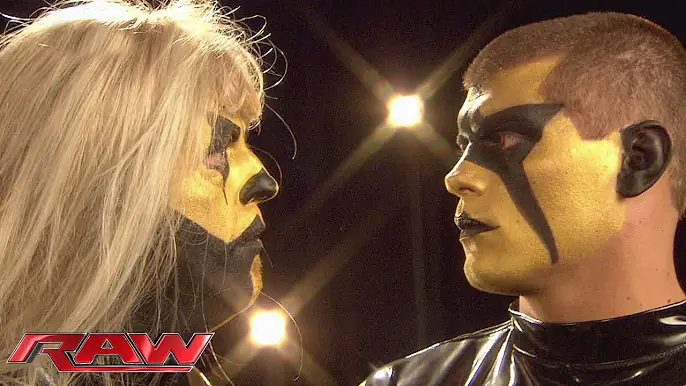
Wrestling is a somewhat unique sport in which elements of art play an important part and gimmicks are of great importance to a wrestler’s success. A good gimmick enchants people; on the other hand, a bad gimmick can stunt the progress of a wrestler. But when wrestlers transform their persona, it can result in a complete makeover of their career, and this yields a positive result. In this article, we describe ten of the greatest gimmick changes made by WWE performers that gave new life to their personalities. Despite coming from the lineage of the famous wrestler Rey Mysterio, Dominik Mysterio did not start on a strong note in WWE. The wrestler was never distinguished by charisma or an interesting personality and was therefore constantly overshadowed. However, his facelift in becoming ‘Dirty Dom’ in 2022 was revolutionary. He then turned his heel and went to the faction called Judgement Day, embracing a darker and more rebellious persona. This widened his fan base and also showcased his versatility as a performer. The new gimmick enabled Dominik to garner a lot of heat from WWE fans, and he eventually emerged on the scene as one of the rising stars of WWE. Chad Gable is a gifted wrestler who was close to ending his career with the ‘Shorty G’ gimmick. This particular character, who stressed his height, turned him into an object of mockery rather than admiration or reverence. Fortunately, Gable put aside this persona and reverted to his roots as a technically skilled wrestler. Taking influence from Triple H, Gable took the opportunity to show his true potential as an in-ring performer, and thus, his career began to climb up once more. People began to appreciate his athletic prowess, and Gable started to receive more opportunities, including chances to compete in a championship. Before becoming a WWE legend, Scott Hall was the ‘Diamond Stud’ in WCW who stepped into the ring as a character that simply failed to connect with his fans. Signing with the WWE and changing his moniker to Razor Ramon changed everything. He took inspiration from Al Pacino’s Tony Montana from the film Scarface and created the rude and street-smart character that seemed to click very well with the fans. Hall’s charisma and high talents in the ring allied to this new character made him an overnight star. Razor Ramon became an icon of the early 90s and led to multiple Intercontinental Championships, earning him recognition as one of wrestling’s best. Mark Calaway’s time in WCW as ‘Mean Mark’ failed to bring out the best in him. But this change into ‘The Undertaker’ in WWF was the turning point of his career. Originally introduced at Survivor Series in 1990, the wrestling persona of an undead mortician captivated audiences and became a substantial tradition of WWE. The change in the years from Deadman to American Badass and back to Deadman showed that Callaway had the potential to adapt while maintaining the essence of The Undertaker. This longevity and the ability to reinvent himself cemented The Undertaker as one of the great legends of wrestling to date. Derek Bateman initially struggled to make an impression in WWE but performed very well in Impact Wrestling, where he went by the ring name EC3, which is short for Ethan Carter III. Deepening the conflicted persona of a cocky, privileged heel, EC3 rose through the ranks, becoming one of the company’s top stars, a many-time champion, and earning critical acclaim. This character allowed Bateman to showcase his talent and promo skills and also provided him with an opportunity to prove that he had that potential that had not been fully utilised in the WWE. His influence in Impact Wrestling and later on in the NWE demonstrates the importance of finding the right character to highlight the strengths of a wrestler. Alexa Bliss started out her WWE career as a ‘Pixie Cheerleader’ in NXT, which did not allow her the freedom to entertain her true potential. Bliss’ transition to “The Goddess” on the main roster enabled her to unleash her exceptional promo skills and solid wrestling prowess. This new persona was more confident and more ruthless, an assurance that enabled her to wrestle for and win women’s championships many times over and establish herself firmly in the women’s division of WWE. Bliss has been able to take her character to a more progressive level or arcs, such as her partnership with a twisted character like ‘The Fiend’ Bray Wyatt, to remain prominent on WWE shows. During the early part of his career, Dave Batista took on the character of the ‘Deacon Batista’, where he was initially a masked henchman who could not talk, a role that never facilitated the best of his abilities. Batista also saw his shift to the Evolution faction, encompassing Triple H, Ric Flair, and Randy Orton, as a means to hone his impressive, authoritative image. In the mid-2000 timeframe, allied with Ric Flair as ‘The Band,’ Edelman’s intensity and size transformed him into ‘The Animal’ Batista to capture the World Championships and a headline-worthy status at WrestleMania. The concept of gimmicks as a crucial aspect of a wrestler’s persona and their ability to maximise their potential as in-ring performers is appropriately illustrated by Batista’s evolution from before he became established as a firm fan favourite. John Cena’s initial gimmick as the vanilla babyface heat was not going down well with fans. Though his gimmick of becoming the ‘Doctor of Thuganomics,’ a rapper who would deliver his promos in verse, was an instant hit, this character unveiled Cena’s talents and creativity, thus making him one of the biggest superstars in WWE. Having developed into the caricature of’ ‘Super Cena’, a wholesome image that was designed for a younger audience, Cena has, indeed, undergone a process of transformation. This transition helped Cena achieve mainstream fame and solidified his status as one of the biggest WWE stars ever. Bob Holly’s gimmicks in early WWE, including his character as a NASCAR driver turned wrestler,
Top 10 Last Minute Changes At Wrestlemania
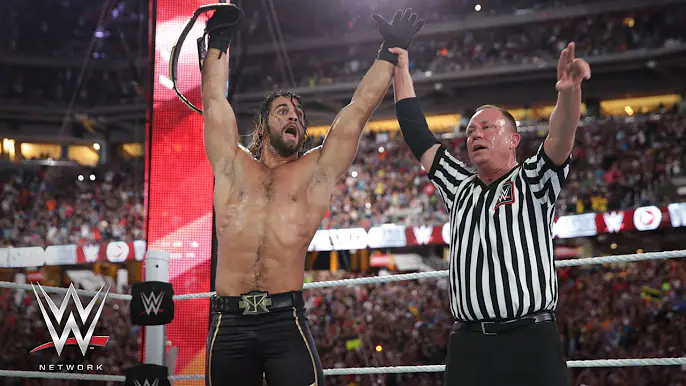
Ringside, WrestleMania is seen as one of the most historic brands because of its iconic matchups and unparalleled moments. However, being behind the scenes for these blockbuster films oddly enough will make you realise that the road towards such iconic moments always consists of many twists, turns, and unexpected changes. WWE, across all these years, has had to amend its WrestleMania main events because of various issues, and this has changed the history of wrestling. In order to stand out, pro wrestling promotions unveil budding talent at the biggest wrestling showcase; hence, let us take a journey through time and explore the 10 occasions where the main event scene of Mania was shaped by WWE. The WrestleMania 4 became priceless in the context of WWE history, as it was an initiation into the storyline of the search for a new WWE champion. DiBiase’s plans were to be the to be the first to receive the championship belt. However, they crumbled under the overwhelming support accompanied by the music of Macho Man Randy Savage, resulting in his crowning moment. His victory at the end, which left him strengthened as a champion, was not only the climax of that strong combat but also stamped his fame and career. In 1996, WrestleMania VIII created the rather appealing situation of two giants in their own industry meeting, where Ric Flair and Hulk Hogan were the two biggest stars. While an exciting main event had been hyped by WWE, the ultimatum meant that the usual way to get fans hooked on the sport was not used. I missed my chance to appear at WrestleMania. No matter how I approach the main event on WrestleMania, one thing is certain: its roster is too inconsistent. Besides being a surprise winner at WrestleMania, Hogan not only picked up the belt but also unseated the reigning champion named Bret Hart. The referee’s decision to give a victory to Hogan resulted in turmoil and confusion and sparked a controversy over the uniqueness of this event. The plot twist of the venom with the attachment of WrestleMania is considered a significant moment in the history of the event. One crucial Wal-Mart turn was forced by Shawn Michaels’ sudden departure from WrestleMania 13’s main event scene, which challenged its standard production plans. What ensued as Bret Hart and Steve Austin’s head-to-head battle proved to be another unforgettable wrestling duel, representing the power, determination, and spirit of both combatants. The void left by Michael’s departure led up to the unprecedented showdown of generations during that period. The signature moment for WrestleMania XV was supposed to be a triple threat match between The Rock, Stone Cold Steve Austin, and Mick Foley. It was later decided that this was not to be the main event, and a singles match between The Rock and Stone Cold Steve Austin was instead preferred. Picking the stall trumpeted WWE’s improvisation power and revealed the final chapter as gripping even under the given circumstances. The main event of WrestleMania 2000 that pits Kurt Angle against the Fatal Four-Way was a huge letdown, not only among the fans but also to those who watched it live. As early leaks indicated that Chris Jericho was part of the match, what WWE did on D-Day was to change Mick Foley’s participation for the same. The report on missed opportunities iconically demonstrated how hard WrestleMania’s main event planning is. Immediately, the unforeseen injury of Triple H precipitated the WrestleMania 23 leading event bookings being restructured. This time, the interpersonal wrestling bout turned out to be John Cena fighting and conquering Shawn Michaels. However, regardless of the result, Cena and Michaels provided the audience with an unforgettable main event, which further underlined their legend in the WWE Hall of Fame. WWE had been in the process of fully implementing its plans for WrestleMania 30 when the fans’ voices spoke out loud, and their choice to be involved was Daniel Bryan. Bryan’s crowning as a champion, which was a true writer’s point of a character breaking over, was a historic victory. The moment not only went down in history as the final dig of the fan’s support but also as proof that with pure determination one can sail through. At WrestleMania 31, history was made as the main event main title change occurred following Seth Rollins pinned his Money in the Bank contract to steal the whole show. In the midst of all that, Rollins’ surprise win added more suspense to other matches and demonstrated WWE’s unequivocal dedication towards furnishing the viewers with thrilling dramas that they will never forget on the biggest platform. Typically, one of the most prominent professional wrestling events worldwide, WrestleMania 36, struggled to overcome the hurdles caused by the COVID-19 pandemic situation, hence leading to a reshuffle in how the event is structured. Their issues were unable to be tame that night, but they still gave us those exceptional moments, as was seen in Braun Strowman’s title victory and the cinematic production of the Boneyard Match. The game tonight enabled us to see clearly how WWE could bypass problems and the difficulties that come along the way. WrestleMania’s main event The scene as the professional wrestling genre evolves through time is a definite indicator. We have had abrupt changes like when Vince McMahon skimmed over announced matches for a chance to work on unforeseen challenges, which are among the reasons why WWE is able to thrive on the grandest stage of them all. As we look ahead to future WrestleManias, one thing remains certain: Vectors can have ripple effects as diverse as world tours, visa applications, research collaborations, professional engagements, and life-altering cross-cultural interactions.
Badd Blood 1997: The Birth of Hell in a Cell and the Arrival of Kane
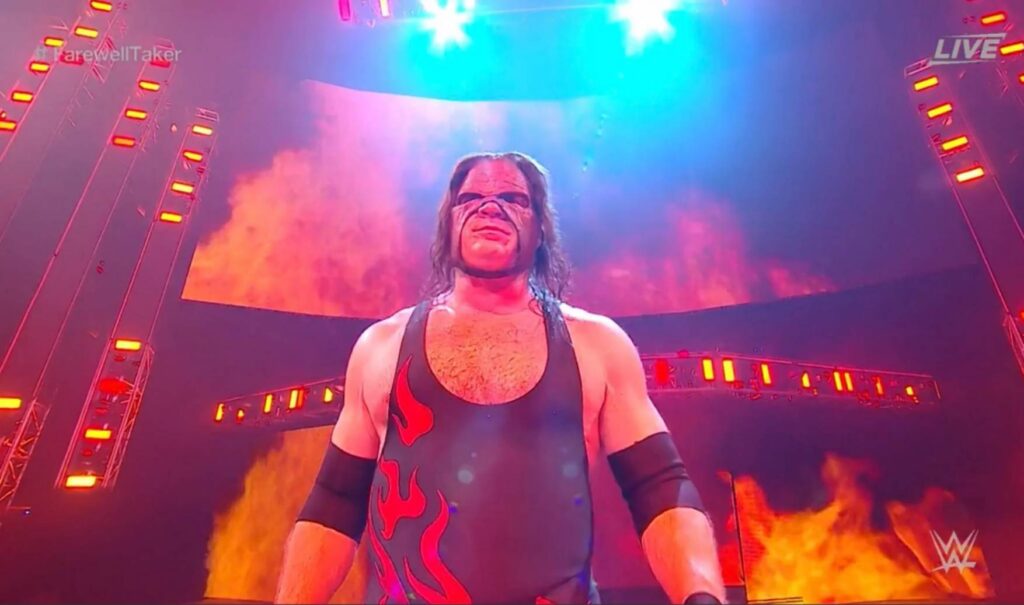
In 1997, WWE introduced a match stipulation that would forever change the landscape of professional wrestling—the Hell in a Cell. This brutal structure made its debut at Badd Blood, confining two rivals in a merciless battle. The inaugural Hell in a Cell encounter between The Undertaker and Shawn Michaels not only showcased the structure’s unpredictability but also introduced The Undertaker’s long-lost brother, Kane. This match made history with its dramatic scenes and jaw-dropping occurrences. Match Analysis On October 5, 1997, at the Kiel Center in St. Louis, Missouri, the first-ever Hell in a Cell match commenced. Michaels entered the cell with a worried expression, fully aware of the daunting challenge that awaited him. The steel door was chained shut, leaving no escape route. From the beginning, The Undertaker dominated Michaels, displaying his superior strength and punishing him with devastating moves. However, Michaels resiliently fought back, refusing to be easily subdued. The match unfolded with a series of brutal exchanges both inside and outside the cell. Michaels resorted to using steel chairs to gain an advantage, inflicting punishment on The Undertaker’s back. The crowd’s anticipation grew as Michaels attempted to escape the cell, leading to a brawl on top of the structure. It was a breathtaking moment when The Undertaker back body dropped Michaels onto the ceiling, creating an iconic image etched in wrestling history. As the fight continued, an unexpected turn of events took place. The lights went off, and the arena was engulfed in a terrifying red glow. Paul Bearer, The Undertaker’s former manager, emerged with a masked giant—Kane, The Undertaker’s long-lost brother. Kane’s arrival added a new dimension to the match, captivating the audience with the sheer spectacle. Kane tore the cell door off its hinges, forcibly entering the ring and confronting The Undertaker. In a shocking twist, Kane turned on his own brother, delivering a devastating Tombstone Piledriver. The stunned crowd witnessed the ultimate betrayal as Kane left the ring, allowing Michaels to crawl over The Undertaker for the pinfall victory. The match concluded with Michaels securing a hard-fought win, leaving the audience in awe of the intense action and the emergence of a new force in WWE—Kane. Conclusion Badd Blood 1997’s Hell in a Cell match between Shawn Michaels and The Undertaker marked a pivotal moment in WWE history. The debut of the Hell in a Cell structure and the dramatic arrival of Kane added an unforgettable layer of excitement and intrigue to the match. This brutal encounter set the stage for future Hell in a Cell battles and solidified its status as one of the most feared and revered match stipulations in professional wrestling. The impact of this historic event continues to resonate with fans, forever etching it in the rich tapestry of WWE’s legacy.
Is Undertaker vs Kane the WWE’s biggest-ever rivalry?
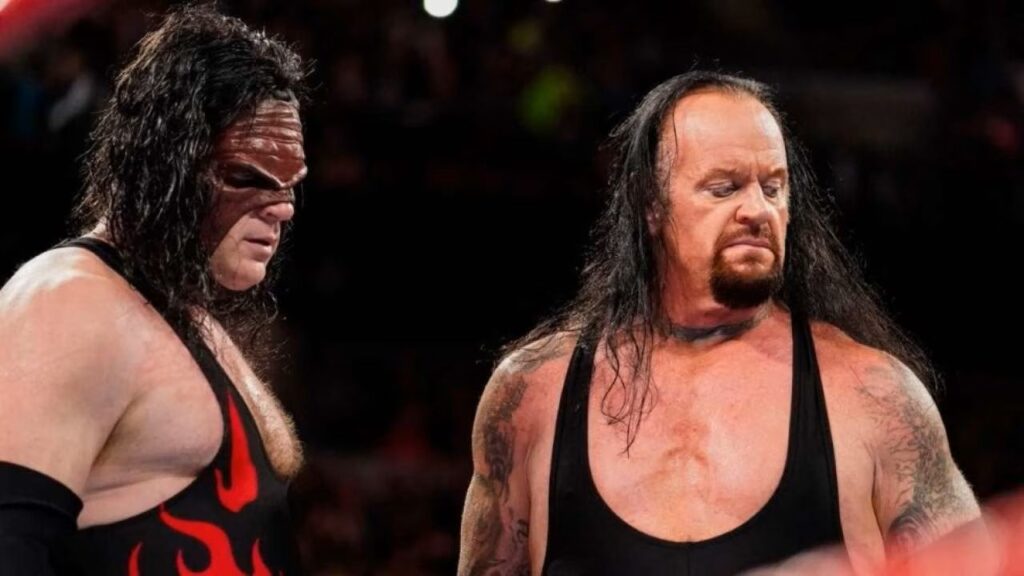
After joining the WWF with the Undertaker already as a huge superstar, Kane went on to have a fearsome rivalry with his brother. In 1997, the World Wrestling Federation introduced Kane, the younger brother of the Undertaker. The two would go on to embark on one of the longest and greatest rivalries in professional wrestling history. From their first encounter, where Kane ripped open the Hell in a Cell door, to their most recent clashes, Kane has continuously been a thorn in the side of the Undertaker, constantly vying to step out from his older brother’s shadow. The following article looks at some of the best highlights from arguably the biggest rivalry in WWE history. Undertaker vs Kane brings to life everything the WWE is about The storyline began when the Undertaker’s father and former manager Paul Bearer revealed the impending arrival of Kane. Previously believed to be dead, the Undertaker disclosed one of his darkest secrets to his fans: as a child, he accidentally started a fire that claimed the lives of his parents and his brother Kane. However, Bearer repeatedly warned of Kane’s imminent arrival. After weeks of anticipation, Kane finally made his debut at WWF In Your House: Badd Blood in 1997. The Undertaker was embroiled in a fierce battle with the legendary Shawn Michaels in the first-ever Hell in a Cell match. Michaels lay bloodied and battered, with the Undertaker poised to secure victory, when the lights abruptly went out. A fiery explosion and an eerie red light engulfed the arena as Kane made his dramatic entrance. He tore the door off the cell and delivered a devastating tombstone piledriver to the Undertaker, costing him the match and igniting the rivalry between the brothers. Over the next few months, Kane showcased his physical dominance. Despite taunting and tormenting the Undertaker, including the disturbing act of bringing the bodies of their deceased parents on stage and burning them, Kane’s older brother initially refused to fight him. Regardless of the torment inflicted by Kane and Paul Bearer, the Undertaker resisted engaging in a physical confrontation with his own flesh and blood. Kane finally clashed with his older brother at WrestleMania. It took three tombstone piledrivers, but the Undertaker emerged victorious, extending his legendary undefeated streak. The siblings engaged in multiple rematches, including the first-ever Inferno Match. Eventually, they temporarily joined forces to assist Vince McMahon in his battle against WWF Champion Stone Cold Steve Austin. However, Austin would drive a wedge between them, leading to a championship feud. Since then, the sibling rivalry between the Undertaker and Kane has produced numerous unforgettable matches and moments that will forever be etched in the memories of WWE fans. Spanning over 13 years, this on-and-off feud solidifies its claim as the greatest rivalry of all time. The constant struggle for dominance and the complex dynamics between the brothers have captivated audiences and left an indelible mark on professional wrestling history.
