
Top 10 Scandals That Shocked The Pro Wrestling Community
Throughout its history, professional wrestling has been wrought with an abundance of drama, both on and off stage. From contentious story arcs to actual real-life scandals, the realm of pro-wrestling has borne witness to a medley of controversial events over time—some that have sustained themselves as unforgettable moments in fans’s memories while others plunged into insignificance in public memory. This overview probes those forgotten instances that had previously shaken the foundations of this desired sporting genre. Norris, accused of three counts of false imprisonment in Smyrna, Georgia, was detained overnight before posting bail. However, after his release from jail the next day, he was still faced with an uphill battle with legal challenges. But a year passed after the first charges were made against him. The FBI agents raided his residence and arrested him with nine federal charges lodged against him in connection with rings that relayed women for prostitution purposes, as well as additional allegations of his misconduct by way of wrongful detention. Like Norris, who thought symbolic representation was better than live representations, he lacked the skill well suited to convincing the members of the jury to find him innocent. So in fact, he got for himself a life sentence—great disappointment—but after weightlifting, which he had already done. Steroid use had negative implications for the reputation of wrestling in the 1980s and ’90s, as it was said that athletes of this time period used them without prescriptions. Sports of that era were not free from the following problem, while the problem was more pronounced in wrestling since huge muscles and striking personalities occupied a significant place among these sports. The reputation of professional wrestling was marred when a few big names, such as In this example, the given sentence reflects the efforts made by the organisation to enhance their online visibility and reach out to a larger audience. The organisation aims to increase their visibility on search engines, improve website accessibility for mobile users, and implement various advertising strategies. It reminded the general public about the inequalities in the industry, as well as its failure to look after athlete welfare. The Ring’s Betrayal: The Montreal Screwjob At a card dubbed Survivor Series, which took place in the same year, one of the most (if not the most) infamous moments in wrestling history happened. In the era of professional wrestling, not everything was as it seemed, even though the sport is built on the art of deception. We may look back at this period with smiles and a sense of valour, but how many of us were involved in the plot? The event triggered the fans’ wrath, and most professional wrestlers felt deceived by McMahon and Michaels. They left the latter feeling disillusioned. The famous Montreal Screwjob led to controversial controversy, creating a particularly perpetual memory for professional wrestling, which therefore left its place in wrestling legend as one of the most contentious episodes in the history of the wrestling world. Every wrestling community took a blow in June 2007 when Chris Benoit, who is greatly respected, along with his wife Nancy and his son Daniel, died under horrifying circumstances. The case was later ruled posthumous suicide after the officer entered the house and found Benoit already dead. Mainly, wrestling’s results have been revealed to have adverse effects on competitors, naming physical and mental problems. The occurrence of medical problems related to the long-term effects of playing sports and to the prescribed drugs was also a big emphasis during this time. The Chris Benoit aftermath continues to be one of the roughest episodes in pro wrestling history. In the 1999 Over the Edge, a pay-per-view event for the WWE, the trajectory altered when the flying stunt by wrestler Owen Hart became fatal. The staged dramatic entrance included the idea that he would be descending from above on a harness; however, misfortune fell into the path, and he plummeted about 70 feet to his death. The institutional crisis was now evident to the whole wrestling community, and measures were developed to ensure the safety of control mechanisms throughout the industry. Besides, practices generate a climate of insecurity for the hazards that wrestlers train for every time they perform their craft. However, in the beginning of the 1990s, there was a lot of information that some popular wrestlers—for example, ring announcer Mel Phillips and crew member Terry Garvin—were accused of sexual abuse. Also quoted as the “Ring Boy scandal,” this episode revealed the dark corners of this world, which were populated by exploiters and abusers. A case of harassment and sex assault brought the women to the forefront after the case was brought to light both by the police and the investigation of the charges started by the wrestling commission. This revelation had a tremor effect as it snowballed into the largest scandalous allegation that eventually led to a sea of change in the way complaints about the participation of wrestlers were handled in the wrestling industry. While the company referred to this as the infamous Plane Ride from Hell that took place at 30,000 feet in May 2002, hell was really inside the plane instead, as the plane chartered for transporting WWE wrestlers and staff from Europe encountered problems at the onset of its journey. Snuka’s career events will remind us of the Nancy Argentino case, which is a big testimony to talents being abused by wrestling women. Despite decades since, this unfounded case remains the most enticing unsolved story, not only to engage the fans but also to symbolise a warning of why sports fame or wealth can be dangerous at times. The Fabulous Moolah was criticised as a person who used and abused women without any chance for them in the wrestling business. Yet her greatest achievement came under question, according to past wrestlers, who reported that she had taken away their income to put them in danger and that they had to have sexual relations with other wrestlers. Moolah’s behaviour towards women has sparked outrage and
Road Dogg Named THIS former D-Generation X Member As The Wrestling GOAT
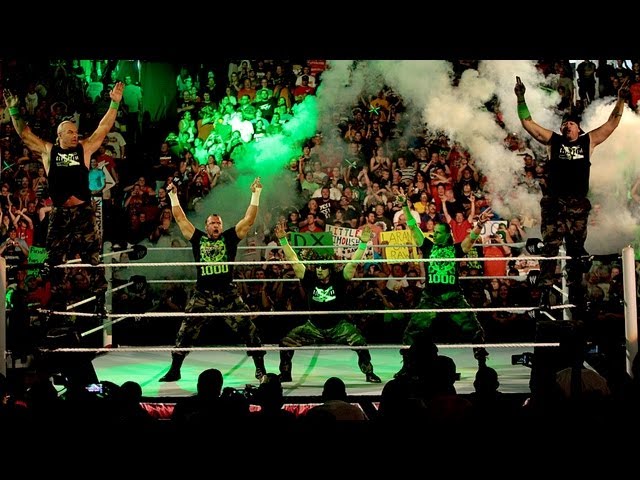
Brian Girard James, commonly known as WWE icon Road Dogg, had an illustrious career in professional wrestling. His path as a significant player in the wrestling business has been filled with both victories and hardships. Road Dogg recently disclosed his prior issues, including problems with addiction, and talked about his experiences in WWE and elsewhere. His stint with the renowned D-Generation X faction, a period of wrestling history replete with spectacular incidents and famous rivalries, is one notable facet of his life. In this piece, we examine Road Dogg’s life story, his position within D-Generation X, and his viewpoint on the greatest wrestler in history. In the 1980s, when he was still a Marine, Road Dogg started competing in professional wrestling. He earned a name for himself in the world of professional wrestling when he joined the World Wrestling Federation (now WWE) in 1994, going by the name “The Roadie.” It didn’t take him long to take on the alias “Road Dogg Jesse James” in 1996, a name that would come to represent his career as a wrestler. Road Dogg’s collaboration with fellow WWE superstar Billy Gunn to establish the storied tag team known as The New Age Outlaws was one of his professional high points. A legendary tag team in wrestling history would emerge from this alliance. The New Age Outlaws claimed the WWE Tag Team Championship as well as several WWF Tag Team Championships. A golden period in professional wrestling was defined by their alluring personalities and fun promos, which won them over fans. Their association with the D-Generation X group propelled the New Age Outlaws to popularity. The gang upended the wrestling industry, challenging conventions and violating rules alongside Shawn Michaels and Triple H. With legendary wrestlers like The Rock and Stone Cold Steve Austin, they got into historic feuds that helped make wrestling history. D-Generation X was known for defying convention and breaking rules in ways that had never been done before in the world of professional wrestling. Their mischief, crude humour, and catchphrases became ecognizable. They once demonstrated their bravery and brazen style of wrestling by driving a tank into a rival WCW event in one memorable instance. Even though the D-Generation X period was a professional high point for Road Dogg, he struggled with personal issues that caused him to leave WWE in 2001. Road Dogg has been open about his struggles with addiction to drugs and alcohol. He said that he was “on dope the whole time” throughout the 1990s, which brought up hazy recollections of that period. Road Dogg’s narrative, though, takes a turn for the better. His life wasn’t defined by his difficulties. He started a road of healing and atonement instead. Before joining TNA (Total Nonstop Action Wrestling), his journey took him to the indie wrestling scene. In 2014, he ultimately returned to WWE. In his time away from WWE, he once again collaborated with Billy Gunn under the moniker VKM—a play on the names of Shawn Michaels and Triple H—and they amusingly ridiculed them. A turning moment in Road Dogg’s life and career occurred when he rejoined WWE in 2014. He changed careers from wrestler to producer before taking the primary writing position on SmackDown. His passion for the wrestling industry and his contributions to WWE were both clear. Despite his prior troubles, he had no ill will against Vince McMahon. In truth, Road Dogg received free rehab treatment because of Vince McMahon’s sponsorship. This deed of goodwill had a significant influence on Road Dogg’s viewpoint on the wrestling business. Road Dogg’s view on the best wrestler of all time—often referred to as the GOAT (best of all time)—is a fascinating component of his recent disclosures. Road Dogg has changed both personally and professionally in his 13 years of sobriety. He emphasised Vince McMahon’s involvement in assisting him in overcoming addiction and expressed his sincere thanks for the WWE chairman’s assistance and generosity throughout his trying moments. In a moment of reflection, Road Dogg said that his earlier animosity towards WWE was unjustified. He acknowledged that he had been excessively self-centred and said that his previous buddies had failed to defend him. At the moment, he recognised his weakness and would have shot himself as well. The development that Road Dogg has undergone during his trip is highlighted by his self-awareness and newly discovered admiration for Vince McMahon’s compassion and leadership. In conclusion, despite its highs and lows, Road Dogg’s wrestling career is a monument to persistence and personal development. His time spent with D-Generation X left an imprint on professional wrestling, and his post-wrestling career demonstrated his dedication to the industry he adores. His inspirational recovery from addiction and thanks for Vince McMahon’s help are examples of the value of kindness and second chances in the wrestling business. The narrative of Road Dogg serves as a reminder that it’s never too late to make a return and a new beginning, whether in the world of wrestling or in real life.
