
Upset Kings: Which Fighters Beat the Odds Most Often
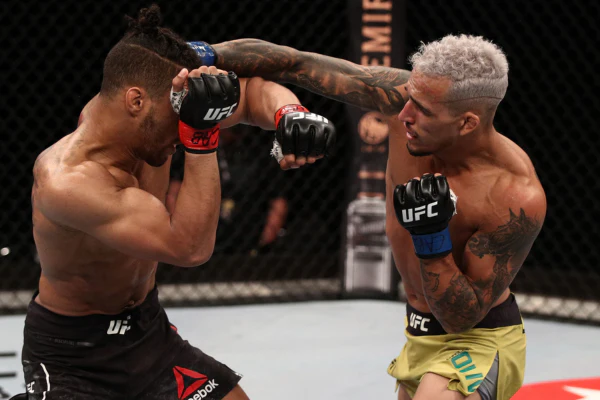
Everyone loves a good underdog story. From David vs. Goliath to the 1980 “Miracle on Ice,” we are captivated by the thrill of seeing the impossible happen. In combat sports, where two athletes face off completely alone, that raw human drama is magnified a hundred times over. It’s a pure test of will against overwhelming odds, creating moments that stay with us forever. One of the most famous examples took place on February 11, 1990. Mike Tyson was seen as an invincible force of nature, while his opponent, Buster Douglas, was a 42-to-1 longshot. In the world of betting, those odds meant a simple $10 bet on Douglas would have paid out $420. What happened that night in Tokyo wasn’t just a boxing match—it became the blueprint for the greatest upsets in sports history. So, what truly makes an upset? The easiest way to measure it is with those betting odds. A fighter with a plus sign (+), like Douglas at +4200, is the underdog. The bigger the number, the less chance they’re given to win. When they do, it’s a moment that defies expectation and logic, often changing the course of sports history. This is an exploration of those shocking moments, from the universal appeal of longshot victories and how to spot giant-slayer potential to the stories behind the most stunning turnarounds in boxing and MMA. Most importantly, it’s about uncovering the rare fighters who made a career of beating the odds: the Upset Kings. What Does “+900” Mean? A Simple Guide to Upset Math To truly grasp the scale of a legendary upset, you need to decode the language of the Las Vegas oddsmakers. When you see numbers with a plus (+) or minus (-) sign next to a fighter’s name, you’re looking at the official scorecard of expectations. This is how to read sports odds and instantly tell who is supposed to win and by how much. It’s simpler than it looks. The system is built around the number $100, making underdog betting easy to understand with just two rules: The Favorite (-): A minus sign (e.g., -500) shows who is expected to win. The number tells you how much money you’d have to bet to win $100. In this case, a huge $500 bet on the favorite only profits you $100. The Underdog (+): A plus sign (e.g., +400) shows who is expected to lose. The number tells you how much money a $100 bet would win. Here, a $100 bet on the underdog would profit you $400. In short, the bigger the number after the plus sign, the bigger the long shot—and the more historic the upset. A +200 underdog is a surprise, but a +800 underdog is a shocker. And when a fighter steps into the ring as a +4200 underdog, it’s not just an upset; it’s considered an absolute impossibility. The Upset That Shook the World: Buster Douglas (+4200) vs. Mike Tyson On February 11, 1990, in Tokyo, “Iron” Mike Tyson wasn’t just the heavyweight champion; he was a global phenomenon, a seemingly invincible force who ended fights with terrifying speed. His opponent, James “Buster” Douglas, was considered little more than a warm-up fight, another name on Tyson’s long list of victims. The fight was seen as a foregone conclusion. The betting odds told the whole story. As a +4200 underdog, Buster Douglas was a 42-to-1 longshot. To put that in perspective, a mere $10 bet on him would have paid out $420. The odds were so lopsided that only one casino in Las Vegas was even willing to post a betting line, making the Buster Douglas vs. Mike Tyson betting odds a historical footnote before the first bell even rang. This wasn’t just a fight; it was a coronation ceremony for Tyson. But Douglas, mourning the recent loss of his mother, fought with a focus no one expected. He used his size and reach to keep the champion at bay, surviving an early knockdown and continuing to fight back. Then, in the tenth round, the unthinkable happened. Douglas unleashed a blistering combination, ending with a perfect uppercut that sent Tyson crashing to the canvas for the first time in his career. The image of the invincible champion fumbling for his mouthpiece is one of the most shocking knockouts ever recorded. In that moment, more than just a title changed hands—an aura was shattered. Tyson’s invincibility was revealed to be a myth, proving that even the most feared champion can be beaten. It stands as one of the biggest betting upsets in boxing history and became the ultimate symbol of hope for longshots everywhere. But this kind of shockwave wasn’t limited to the boxing ring, as a certain “regular guy” would later prove in the world of Mixed Martial Arts. When a ‘Regular Guy’ Toppled an MMA God: Matt Serra (+850) vs. GSP While Buster Douglas’s victory happened in a boxing ring, the sport of Mixed Martial Arts (MMA)—a dynamic combat sport blending striking and wrestling—would produce its own legendary upset. The man at the center of it was Georges St-Pierre, or “GSP,” a French-Canadian athlete who was the MMA equivalent of a superhero. With a perfect mix of wrestling, kickboxing, and unmatched athleticism, many believed GSP was on his way to becoming the greatest fighter of all time. He seemed untouchable. His opponent, Matt Serra, was a tough, respected veteran from Long Island, but he wasn’t seen as being in the same league. In fact, Serra only earned his chance to fight for the title by winning a reality TV show, The Ultimate Fighter: The Comebacks. This context made him the ultimate underdog; he was the contest winner getting a shot at the king. As a massive +850 underdog, a $100 bet on Serra would have paid out $850, highlighting just how unlikely his victory was considered. For many, this was less a fight and more a formality. The fight, however, did not go according to plan. In the first round,