
Behind The Scenes Of WWE’s Creative Team: Crafting Storylines
Professional wrestling is very often referred to as a strange combination of athleticism and acting, and in no other place does that resonate more vigorously than in the WWE. The show that hits the fan in the ring comes from rigorous planning, creative thinking, and a deep understanding of the business and its audience. From storyline development to character building, through plot twists and turns, there is a team of writers, producers, and executives striving nonstop to present before the audience convincing storylines. This article looks at the behind-the-scenes work of the WWE creative team and how wrestling storylines are brought to life. WWE Creative Team StructureThe WWE creative team is an extensive organization that includes writers, producers, and executives. Helming the scene would be Vince McMahon, WWE Chairman and CEO, whose vision and decisions most dramatically impact the creative direction of the business entity. Below him were mainstay individuals such as Triple H, Stephanie McMahon, and Bruce Prichard, who filled the paramount roles in making up WWE’s storylines. Head Writers and Producers: These comprise the big bosses of the creative process. They run teams of writers that generate ideas, draft scripts, and develop characters. These people usually have a television or film background or some other form of entertainment experiences that bring varied skill sets. The Writers’ Room: A collaboration of people who develop ideas, write scripts, and decide on storylines. Of course, that is not all, as the writers also work on weekly television programs such as Raw and SmackDown, in addition to long-term story arcs leading up to significant events like WrestleMania. Producers: Many of whom were wrestlers themselves—are there to work hand in glove with the talent in bringing about the creative vision. It is called upon them to choreograph matches and bring in wrestlers for coaching regarding their promos, so whatever happens in the ring moves the story along as it unfolds. Talent: Even though the creative team will concoct storylines, it is the wrestlers (referred to internally as “talent”) who express these stories physically. A significant amount of input comes from the talent; often, writers and producers work hand in hand with many of them to help develop their character and angles. The Creative ProcessThe process of creating compelling storylines in WWE involves a multi-step creative, strategic, and very adaptable procedure. Idea Generation: This is where it all begins—the brainstorming sessions in which writers will pitch ideas for new storylines, character arcs, and rivalries. It can be very collaborative, too;, more than anything, it’s about writers playing ideas off of each other to try and refine ideas. Scriptwriting: After the green light of an idea, it is then forwarded to scripting. Writers flesh out complete scripts for segments, promos, and matches. These scripts detail everything from dialog sped through in-ring action to create a correct flow in the storyline. Character Development: It’s in the character development of any creative work that fans manage to create their superstars. Writers hobble to conceive multi-dimensional personae, each having various motivations from different backstories with as varied personalities as can be aimed for. This helps such development connect the wrestlers with fans at a deeper level. Long-Term Planning: Much of the storylines of WWE run for some time, often months, leading up to the significant pay-per-view events. This does, however, | require long-term planning to ensure that story arcs are Generally consistent and coherent. Writers shall keep in mind how current storylines are going to play out, as well as where they will cross over with other storylines. Rehearsals and Changes: Before the taping of a show gets underway, wrestlers and producers run their segments so that everything goes off without a hitch. This is also when to make any changes suggested by the talent or, more often, very last-minute changes ordered by the executives. Final Execution: Finally, the storyline executes live on air. Being live and hence a bit unpredictable, the creative team needs to be prepared for on-spot changes by making immediate decisions to overcome any snag during execution. Challenges that the WWE Creative Team FacesWriting storylines for WWE is not an easy task; there are lots of challenges that the creative team needs to deal with in order to come up with exciting content every week. Time Constraints: This is where the WWE produces several hours of television each week, and there is hardly any time for a creative team to develop a storyline and then polish it. The fast-paced nature of the business demands quick thinking and efficiency. Balancing Storylines: When you have an extensive roster of talent, there needs to be a balancing act between multiple storylines running concurrently. It can be challenging to ensure that each storyline has adequate attention and screen time yet remains coherent. Audience Expectations: WWE has an audience that is very dynamic and vocal, with a vast number of divergent tastes. Therefore, it is a delicate balancing act to fulfill the expectations of the different segments of the audience while pushing creative boundaries. Injuries and Availability: Injuries and availability of wrestlers disrupt the planned storylines. Due to these changes, the creative team has to be flexible and capable of changing storylines at the very last minute. Executive Influence: While ideas are pitched up by the creative team, final decisions are often rendered by the ultimate company executives, such as Vince McMahon. Many times, these executive preferences and mandates can be quite constrictive to creative freedom. Success stories and memorable plot lines.Of late, the WWE creative team has come up with some of wrestling’s most memorable storylines. It is through these storylines that the audience gets captivated further, increasing the ascendance of their careers and finally stamping a last mark within the industry. The Attitude Era:Perhaps one of the most remembered WWE eras was the late 1990s and early 2000s—the Attitude Era. It was edgy, controversial storytelling and larger-than-life characters like Stone Cold Steve Austin, The Rock, and D-Generation X. This proved that the creative team could keep
WWE Enters a New Era: The Evolution Beyond PG

WWE is changing its rules by bidding farewell to PG, a move that would take them into new grounds never conquered with WWE CCO Paul “Triple H” Levesque in control. This period, which got kids and family-fee TV habits and kept to PGR teaming, is branded WWE’s way since it happens. However, young winds, new scenarios, and new horizons rise in front of us right now, promising a new and intriguing chapter to unfold. The period when these great players like John Cena appeared and were the perfect embodiment of the essentials like hard work, loyalty, and respect that WWE wanted to see the fans adopt. The PG era can be evidenced by everything from the unspeakable superstars of WrestleMania to the dramatic moments of RAW and SD live TV shows; it certainly left its mark on the wrestling landscape. The PG era, which began in July 2008, was a strategic move by WWE to attract a younger audience and court lucrative sponsors. However, as the landscape of professional wrestling evolved, so too did the demands of fans and the industry at large. Now, with the recent resurgence of more mature language and themes, epitomised by the return of legends like The Rock and the eloquent promos of stars like Cody Rhodes and Paul Heyman, the writing on the wall suggests that WWE is ready to break free from the constraints of its PG shackles. We are able to pinpoint the main factor that initiated this change back in January, when The Rock started using a new style of language and expression, while positive energy elevated the mood. This sudden shift from the usual products to more adult-targeted content made others take their cue and artificially produced a crowd of adults in WWE programming. However, it did not only have the aftereffects of the social conditions in the ring but also beyond. For this reason, the WWE board was mentally puzzled, and they gave serious consideration to the possible consequences of the shift. This would influence the vision of their sponsors and television partners. Flagship shows like RAW were rumoured to be making permanent series’ on platforms like Netflix, plus NXT just recently moved to a newer home, the CW network, and the stakes have never been higher. Now, the same harmony between art and profit is being challenged as WWE finds themselves in a new age. Maybe the single most significant event in this transition process was Paul Heyman’s Hall of Fame speech, a truly awesome craft of storytelling that created a splendid emotional connection with the audience, in addition to signalling a clear statement marking the end of ECW’s legacy. As Heyman poured out the traits he respected in Dory Funk Jr., WWE would ensure that a bygone era of hardcore wrestling was a thing of the past and that into the future, hardcore is embedded to be WWE’s next chapter. For diehard fans whose preferred era had PG-rated shows, this transition from taking a step back might also feel teary-eyed. They will look back on the presentations of characters that the real world could not provide and make in their minds a monument to the success of a professional wrestling family, making it adapt and survive. But even so, the company implies its future direction oriented on a new horizon is beyond doubt, and its fans impatiently wait to find out what comes next. With WWE going out of PG mode, it is definitely going to be the way for the company to move on with its journey of challenges and opportunities. The good ol’ days of childish storylines and slapstick behaviour may seem like a distant blur, but on the other hand, brand new and true terrain awaits us. Whether WWE can strike the right balance between edginess and accessibility remains to be seen, but one thing is certain: I cannot help but feel optimistic and confident that these changes will prove to be a new-found success for the entertainment empire.
Road Dogg Named THIS former D-Generation X Member As The Wrestling GOAT
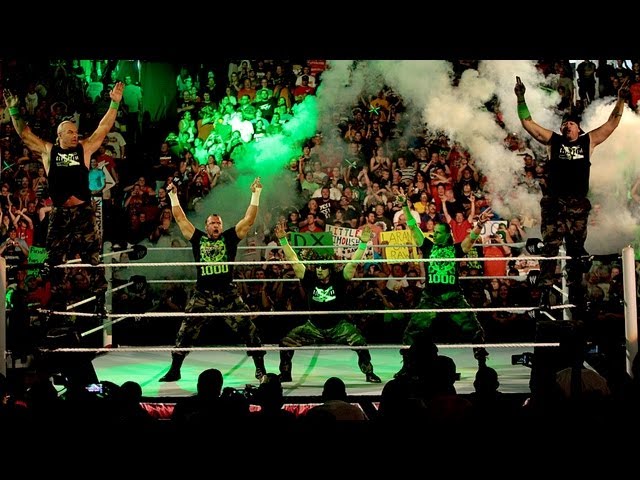
Brian Girard James, commonly known as WWE icon Road Dogg, had an illustrious career in professional wrestling. His path as a significant player in the wrestling business has been filled with both victories and hardships. Road Dogg recently disclosed his prior issues, including problems with addiction, and talked about his experiences in WWE and elsewhere. His stint with the renowned D-Generation X faction, a period of wrestling history replete with spectacular incidents and famous rivalries, is one notable facet of his life. In this piece, we examine Road Dogg’s life story, his position within D-Generation X, and his viewpoint on the greatest wrestler in history. In the 1980s, when he was still a Marine, Road Dogg started competing in professional wrestling. He earned a name for himself in the world of professional wrestling when he joined the World Wrestling Federation (now WWE) in 1994, going by the name “The Roadie.” It didn’t take him long to take on the alias “Road Dogg Jesse James” in 1996, a name that would come to represent his career as a wrestler. Road Dogg’s collaboration with fellow WWE superstar Billy Gunn to establish the storied tag team known as The New Age Outlaws was one of his professional high points. A legendary tag team in wrestling history would emerge from this alliance. The New Age Outlaws claimed the WWE Tag Team Championship as well as several WWF Tag Team Championships. A golden period in professional wrestling was defined by their alluring personalities and fun promos, which won them over fans. Their association with the D-Generation X group propelled the New Age Outlaws to popularity. The gang upended the wrestling industry, challenging conventions and violating rules alongside Shawn Michaels and Triple H. With legendary wrestlers like The Rock and Stone Cold Steve Austin, they got into historic feuds that helped make wrestling history. D-Generation X was known for defying convention and breaking rules in ways that had never been done before in the world of professional wrestling. Their mischief, crude humour, and catchphrases became ecognizable. They once demonstrated their bravery and brazen style of wrestling by driving a tank into a rival WCW event in one memorable instance. Even though the D-Generation X period was a professional high point for Road Dogg, he struggled with personal issues that caused him to leave WWE in 2001. Road Dogg has been open about his struggles with addiction to drugs and alcohol. He said that he was “on dope the whole time” throughout the 1990s, which brought up hazy recollections of that period. Road Dogg’s narrative, though, takes a turn for the better. His life wasn’t defined by his difficulties. He started a road of healing and atonement instead. Before joining TNA (Total Nonstop Action Wrestling), his journey took him to the indie wrestling scene. In 2014, he ultimately returned to WWE. In his time away from WWE, he once again collaborated with Billy Gunn under the moniker VKM—a play on the names of Shawn Michaels and Triple H—and they amusingly ridiculed them. A turning moment in Road Dogg’s life and career occurred when he rejoined WWE in 2014. He changed careers from wrestler to producer before taking the primary writing position on SmackDown. His passion for the wrestling industry and his contributions to WWE were both clear. Despite his prior troubles, he had no ill will against Vince McMahon. In truth, Road Dogg received free rehab treatment because of Vince McMahon’s sponsorship. This deed of goodwill had a significant influence on Road Dogg’s viewpoint on the wrestling business. Road Dogg’s view on the best wrestler of all time—often referred to as the GOAT (best of all time)—is a fascinating component of his recent disclosures. Road Dogg has changed both personally and professionally in his 13 years of sobriety. He emphasised Vince McMahon’s involvement in assisting him in overcoming addiction and expressed his sincere thanks for the WWE chairman’s assistance and generosity throughout his trying moments. In a moment of reflection, Road Dogg said that his earlier animosity towards WWE was unjustified. He acknowledged that he had been excessively self-centred and said that his previous buddies had failed to defend him. At the moment, he recognised his weakness and would have shot himself as well. The development that Road Dogg has undergone during his trip is highlighted by his self-awareness and newly discovered admiration for Vince McMahon’s compassion and leadership. In conclusion, despite its highs and lows, Road Dogg’s wrestling career is a monument to persistence and personal development. His time spent with D-Generation X left an imprint on professional wrestling, and his post-wrestling career demonstrated his dedication to the industry he adores. His inspirational recovery from addiction and thanks for Vince McMahon’s help are examples of the value of kindness and second chances in the wrestling business. The narrative of Road Dogg serves as a reminder that it’s never too late to make a return and a new beginning, whether in the world of wrestling or in real life.
