
Why did WWF change its name to WWE?
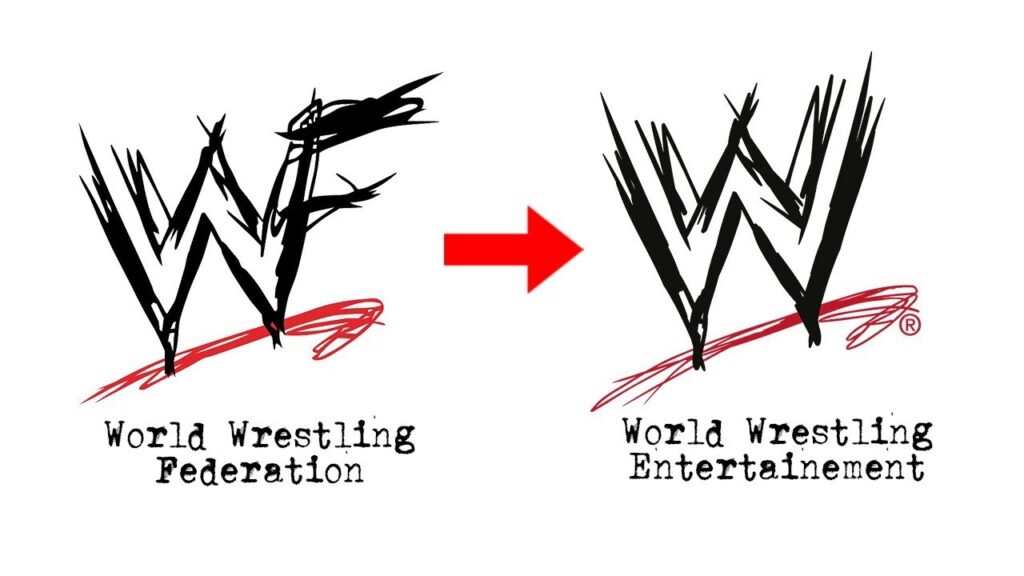
Back in 2002, the Worldwide Wrestling Federation (WWF) officially changed its name to WWE. The company, spurred by non-spot media coverage of the announcement, added a twist of its own to this change. Vince McMahon claimed in the media that changing the name would lead to an attitudinal change in how the entertainment sport was viewed around the world. However, there are some factual inaccuracies with that claim. In reality, the name change was a significant event and received substantial mainstream media coverage. It was a result of a longstanding battle between the World Wilfide Fund and WWF. In 1993, the company obtained an injunction in Switzerland, which led to subsequent negotiations between the two parties. Eventually, however, the WWF was forced to change its name to the WWE for good, in 2002. World Wildlife Federation’s lawsuit forced WWE’s birth Linda McMahon, the then-CEO of WWE, confirmed the legal challenges faced by the company in a statement to the New York Times in 2002. McMahon acknowledged that when WWE initially registered its name in the early 1980s, there were no challenges from the wildlife fund. However, they later encountered opposition, and the fund threatened to take legal action on an international scale. Settlement discussions took place between WWE and the WWF, but an agreement was reached in early 1994. The settlement required WWE to cease using the initials WWF internationally, with certain exceptions for older products and limited references. While this settlement may have seemed reasonable, WWE did not fully comply with the terms, most notably in 2000. On May 5, 2002, both the company and the wrestling promotion were rebranded as World Wrestling Entertainment (WWE). In subsequent years, the term “World Wrestling Entertainment” was gradually phased out, and the company became known simply as WWE. This shift in branding coincided with WWE’s expansion into various forms of entertainment, including movie production, podcasts, documentaries, TV shows, and other programs. The subsequent shift was also true with respect to the narrative shared by Vince McMahon on the eve of the name change. By broadening its focus beyond professional wrestling, WWE aimed to establish itself as a multi-faceted entertainment company. As a result, the use of the term “World Wrestling Entertainment” became less prominent, and the company streamlined its identity to WWE. Considering the vast success it has had in subsequent years, the McMahon family’s vision of the company has ultimately come true. Watch crazy WWE highlights below:
When was the WWE founded?
Today, the WWE stands as the largest professional wrestling company in the world. It has cultivated a rich legacy by promoting some of the most successful wrestlers, captivating storylines, and iconic moments in the history of sports entertainment. With its global reach, WWE broadcasts its programs to more than 150 countries, captivating audiences with high-profile shows and stars. The transformation of multiple stars such as John Cena, The Rock, and Batista into truly global celebrities has helped the organization stay relevant in modern times. Still, the WWE has existed since the early 1950s, in some form or another. When did WWE first come up? The roots of WWE can be traced back to its establishment in the early 1950s when it was founded as Capitol Wrestling Corporation (CWC) in 1953. Over the years, the company underwent several name changes, each marking a significant chapter in its evolution. In 1963, it became known as the World Wide Wrestling Federation (WWWF), and in 1979, it transitioned to the World Wrestling Federation (WWF). Finally, in 2002, the company adopted its current name, World Wrestling Entertainment (WWE). Since 2011, WWE has exclusively used the WWE brand for its promotion. The present-day entity of WWE traces its roots back to Titan Sports, Inc., which was established in 1979 in South Yarmouth, Massachusetts. In 1982, Titan Sports acquired Capitol Wrestling Corporation, the holding company for the World Wrestling Federation (WWF). Over the years, the company underwent several name changes, from World Wrestling Federation, Inc. in 1998 to World Wrestling Federation Entertainment, Inc. in 1999, and finally, World Wrestling Entertainment, Inc. in 2002. Since 2011, the company has officially branded itself solely as WWE, while its legal name remained unchanged. WWE was formed in its present form in April 2011 On April 7, 2011, WWE made a noteworthy announcement. The company declared that it would no longer use the full name “World Wrestling Entertainment” and would exclusively refer to itself as WWE, transforming the latter into an orphan initialism. The strategic move aimed to showcase WWE’s expanding global entertainment ventures beyond the wrestling ring. The company set its sights on acquiring entertainment companies and prioritizing television, live events, and film production. WWE’s new business model was exemplified by the relaunch of Tough Enough, a non-scripted program, and the highly anticipated launch of the WWE Network, initially scheduled for 2012 but ultimately delayed until 2014. Despite these changes, it is important to note that the legal name of the company remains World Wrestling Entertainment, Inc. This distinction allows WWE to retain its historical identity while embracing the WWE brand’s worldwide recognition. The transition from WWF to WWE marked a significant turning point in the company’s journey. It symbolized WWE’s commitment to entertainment and its determination to expand its reach far beyond the confines of professional wrestling. With a renewed focus on television, live events, and film production, WWE has continued to captivate audiences worldwide and solidify its status as a dominant force in the entertainment industry. Watch the greatest WWE matches ever below:
Who has the most championship reigns in WWE history?
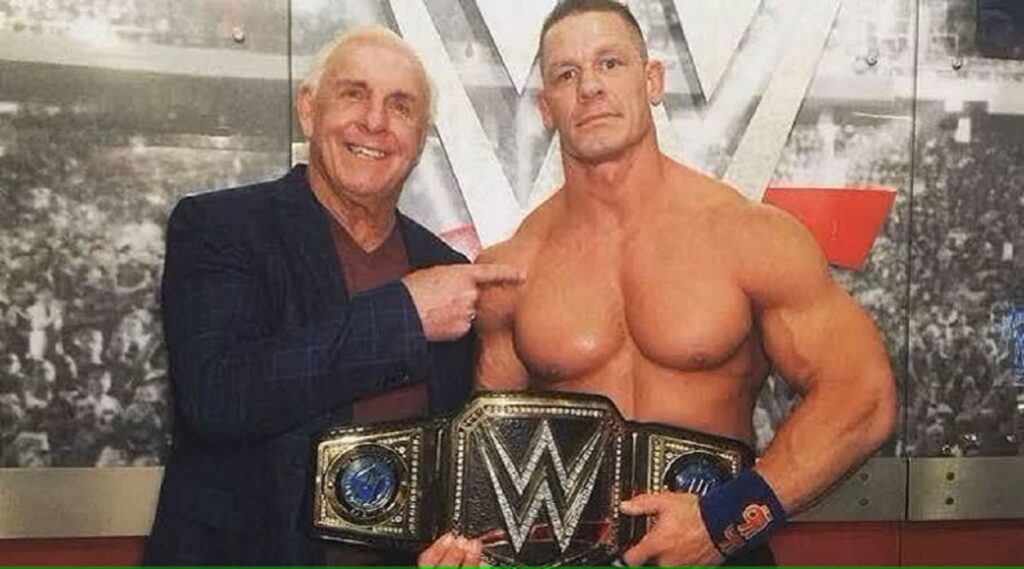
In almost 80 years of WWE’s existence in some form or other, fans have seen an assortment of superstars with some incredible achievements. The WWE itself came into existence in 2011. However, apart from some obvious modern greats, a range of old-time superstars have enjoyed long, successful reigns as World Champions. As far as most WWE championship reigns are concerned, the title belongs to none other than John Cena, who has had 16 reigns as the world champion. However, if the WWF championship reigns are also considered, Cena is only tied for the 1st pot with none other than “The Nature Boy”, Ric Flair. Ric Flair had 16 championship reigns in a 40-year career With an astonishing 40-year career, Ric Flair left an indelible mark on the industry and is widely regarded as one of the greatest talents to have ever stepped foot inside the squared circle. Not only does he hold the distinction of being the most decorated world champion in wrestling history, but his charisma, skill, and enduring legacy have solidified his status as “The Nature Boy.” Throughout his illustrious career, Flair officially claimed the world championship title an incredible 16 times, a feat matched only by John Cena. However, it’s worth noting that Flair himself considers his total number of world title wins to be 21, a testament to his unwavering confidence and exceptional accomplishments. Flair’s dominance in the 1980s is particularly noteworthy, as he captured the NWA World Heavyweight Championship a record 11 times between 1981 and 1993. Although some of these reigns are disputed and not officially recognized by the company, Flair’s reigns as the NWA World Champion spanned over 3,000 days, an astounding achievement. Five of these reigns lasted more than a year, with his longest reign lasting an impressive 793 days from May 1984 to July 1986. John Cena is expected to eventually surpass Ric Flair The trend of Cena’s World Title dominance began at WrestleMania 21, where he defeated JBL in an underwhelming match to claim his first WWE Title. The victory marked the start of a three-year period in which Cena played a prominent role in the WWE Title scene, capturing the championship for two more lengthy reigns. While mostly regarded as a WWE champion, Cena also had two ruins as the World Heavyweight Champion, back in 2008 and 09. Before securing his third and final World Heavyweight Title in October 2013, Cena added an additional eight WWE Title reigns to his already impressive record in just four years. His most recent triumph came in an all-time classic against AJ Styles at the Royal Rumble last year, where Cena tied Ric Flair’s record for the most World Title victories. Given WWE’s determination to surpass Flair’s record, it seems only a matter of time before Cena holds a World Title above his head once again. John Cena’s legacy as a World Champion is undeniable. His numerous title reigns and his close association with World Titles have solidified his place as one of the most iconic figures in professional wrestling. Watch a compilation of John Cena’s greatest wins below:
Conor McGregor vs. Floyd Mayweather: All the details
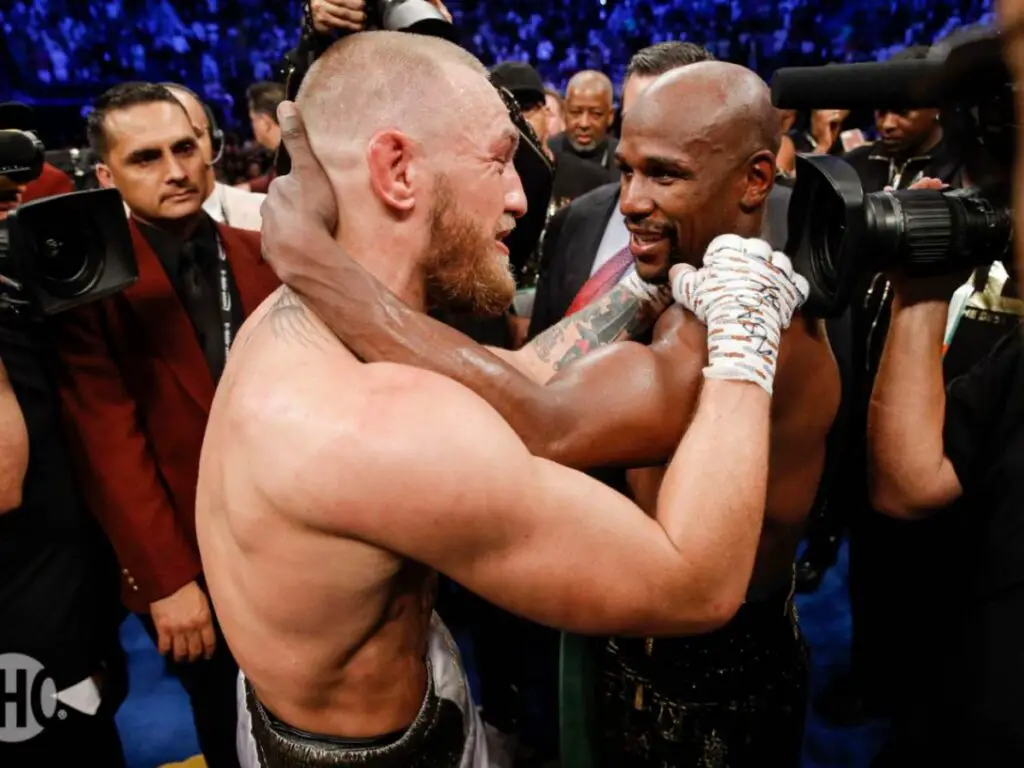
Conor McGregor and Floyd Mayweather are undeniably two of the biggest personalities in combat sports. Mayweather is widely hailed as one of the greatest boxers of our generation, while McGregor has left an indelible mark in the world of mixed martial arts. This article explores the momentous boxing match between these two icons and provides an in-depth look at the key details of the fight. The Historic Fight The highly anticipated showdown between former UFC two-division champion Conor McGregor and undefeated eleven-time boxing champion Floyd Mayweather Jr. took place on August 26, 2017, at the T-Mobile Arena in Nevada. Dubbed the “Money Fight,” this event has solidified its place in combat sports history. Leading up to the fight, both fighters showcased their larger-than-life personalities, engaging in intense verbal exchanges during the pre-fight press conferences. Mayweather and McGregor spared no effort in trading insults, each predicting a knockout victory for themselves. Once the bell rang, Conor McGregor displayed his best boxing skills, landing powerful and well-timed punches on his more experienced opponent. In fact, he won the first round on the judges’ scorecards. Mayweather, renowned for his defensive prowess, gradually adapted to McGregor’s style as the fight progressed. With impressive precision, Mayweather countered McGregor’s attacks with devastating body shots. However, McGregor’s stamina began to fade in the later rounds, and his movements became increasingly unsteady. In the tenth round, Floyd Mayweather secured a victory over Conor McGregor via a TKO, maintaining his unblemished 50-0 boxing record. The Aftermath The McGregor vs. Mayweather boxing match stands as one of the most high-profile events in combat sports history. The fight sold out the T-Mobile Arena, and with 4.3 million pay-per-view buys, it ranks as the second-highest-grossing pay-per-view event in combat sports history. Floyd Mayweather, who emerged from retirement for this fight, did not compete in any professional bouts afterward. Instead, he engaged in an exhibition match against Japanese professional boxer Tenshin Nasukawa in December 2018 before resuming his retirement. Conor McGregor, on the other hand, returned to the UFC octagon a year after his foray into boxing. He faced Khabib Nurmagomedov in an unsuccessful bid to capture the lightweight title. McGregor’s MMA record following the Mayweather fight stands at 1-3, but he is slated to make another comeback later this year. Conclusion The boxing match between Conor McGregor and Floyd Mayweather was an historic event that shattered records. With reported purses of $280 million for Mayweather and $130 million for McGregor, these two combat sports stars undoubtedly secured a colossal payday for themselves. Beyond the financial aspects, the fight showcased the convergence of two worlds and captivated fans worldwide. It will forever be remembered as a defining moment in the careers of both McGregor and Mayweather. Watch the fight below:
Conor McGregor vs. Floyd Mayweather: How did the mega-fight materialize?
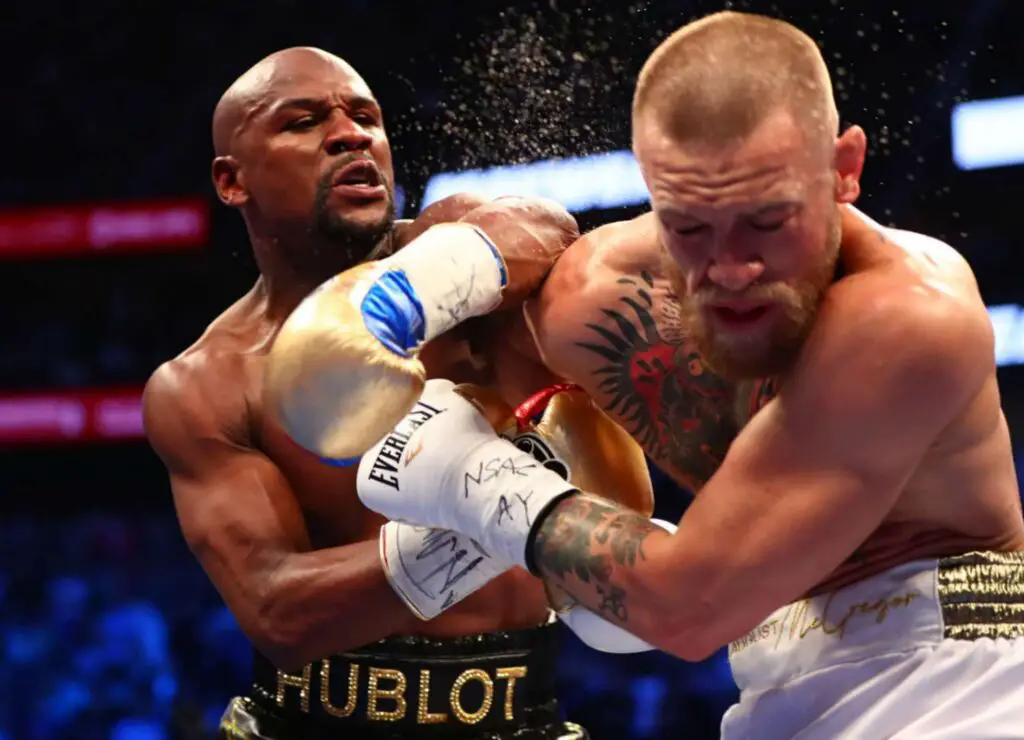
Conor McGregor and Floyd Mayweather are undeniably two of the biggest superstars in the world of combat sports. McGregor’s success in MMA and Mayweather’s undefeated boxing record make them formidable athletes in their respective disciplines. This article explores the historic boxing match between McGregor and Mayweather and delves into the story behind how this monumental event came to fruition. The Journey of Conor McGregor vs. Floyd Mayweather Dubbed “The Money Fight,” the Conor McGregor vs. Floyd Mayweather boxing match took place on August 26, 2017, at the T-Mobile Arena in Las Vegas. The event was scheduled for 12 rounds at the light middleweight limit. In mid-2015, McGregor and Mayweather captured each other’s attention, igniting a clash of egos. They engaged in verbal sparring during interviews and used social media to stoke the fire. Combat sports fans eagerly anticipated the possibility of a showdown between these two superstars, sparking rumors and speculation across social media. Both Floyd Mayweather and Conor McGregor recognized the immense attention surrounding the potential mega-fight. Despite Mayweather’s initial retirement announcement, the undefeated boxer expressed his willingness to come out of retirement to face McGregor. In January 2017, McGregor publicly expressed his desire to box Mayweather, despite the contractual complexities associated with his UFC commitments. However, in May 2017, UFC President Dana White announced that McGregor had resolved his end of the deal. Weeks later, both fighters signed a historic contract to box each other in Las Vegas. The Incredible Fight Despite many expecting a lopsided victory for Mayweather, the actual fight exceeded expectations in terms of entertainment value. Conor McGregor showcased his skills in the opening rounds and proved that he belonged in the boxing ring, even against a boxing great like Mayweather. However, as the fight progressed, McGregor’s stamina waned, allowing Mayweather to take control and seek a finish. In the tenth round, Floyd Mayweather secured a victory over Conor McGregor via a TKO, maintaining his perfect 50-0 boxing record. Aftermath and Legacy The McGregor vs. Mayweather mega-fight will forever hold a place in sports history. It is widely regarded as one of the most high-profile fights in combat sports, with 4.3 million pay-per-view buys. This makes it the second-highest selling combat sports event, just behind Mayweather vs. Pacquiao, which generated 4.6 million pay-per-view buys. Mayweather retired from professional boxing following the fight, while McGregor returned to MMA and faced a 1-3 record in subsequent bouts. Mayweather continued his career with exhibition matches. Conclusion The clash between Conor McGregor and Floyd Mayweather remains an iconic crossover event in sports history. The fight showcased the best and worst of both fighters, captivating fans as two larger-than-life personalities collided in an extravagant manner. While their paths diverged after this historic bout, the McGregor vs. Mayweather spectacle will forever be remembered as a unique moment in combat sports. Watch a recap of the fight below:
When did Conor McGregor become an undisputed UFC champion?
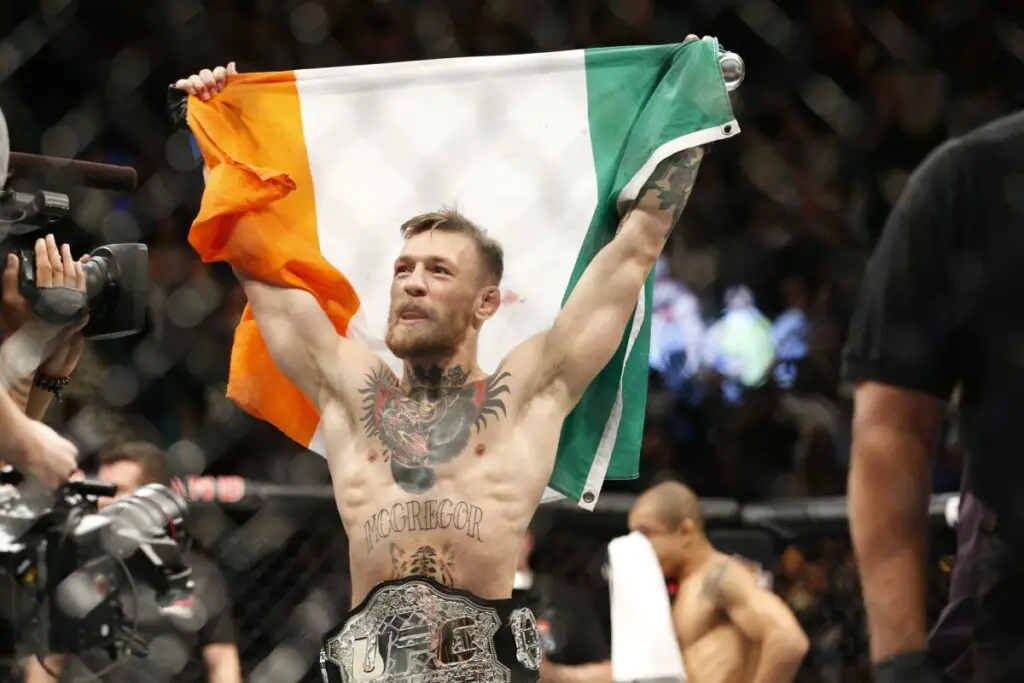
Conor McGregor, undoubtedly the world’s most famous combat sports athlete, has achieved remarkable success in his career. This article focuses on the pivotal moment when McGregor realized his dream of becoming a UFC champion. It delves into the opponent he faced, the event itself, and the significance of this milestone in his illustrious career. Conor McGregor captured the UFC featherweight title at UFC 194 on December 15, 2015, held at the MGM Grand Garden Arena in Las Vegas. The Irishman stepped into the octagon to face the legendary Brazilian featherweight, Jose Aldo, in a highly anticipated matchup. The Memorable Fight The title fight between Conor McGregor and then-champion Jose Aldo will forever be etched in the history books. McGregor’s extensive trash-talking and relentless belittlement of Aldo in the lead-up to the fight succeeded in getting under the Brazilian’s skin. This psychological warfare appeared to affect Aldo’s emotional state, causing him to fight with more heart than strategy. As the opening bell rang, Conor McGregor wasted no time making his mark. In a stunning 13-second knockout, McGregor shattered Jose Aldo’s 10-year unbeaten streak, claiming the undisputed UFC featherweight gold. This victory marked McGregor’s fifth consecutive knockout win and remains the fastest finish in the history of UFC title fights. Aftermath and Legacy Following his championship victory, Conor McGregor set his sights on conquering the lightweight division. He redeemed his earlier loss against Nate Diaz with a majority decision win in their highly anticipated rematch at UFC 202 in August 2016. McGregor then faced Eddie Alvarez for the lightweight title at UFC 205 in November 2016. In another impressive performance, McGregor secured a second-round TKO victory over Alvarez, becoming the UFC’s first simultaneous two-division champion. This achievement solidified his legacy as one of the UFC’s biggest draws, headlining five of the six highest-earning pay-per-view events in promotional history. Throughout his illustrious UFC career, Conor McGregor has faced off against some of the sport’s biggest superstars, including Max Holloway, Dustin Poirier, Jose Aldo, Nate Diaz, Eddie Alvarez, and Khabib Nurmagomedov. While he eventually lost both titles due to inactivity, McGregor’s accomplishments inside the cage remain undeniably impressive. Conclusion Conor McGregor’s historic knockout win over Jose Aldo to become the undisputed featherweight champion marked a significant milestone in his journey to stardom. Despite facing challenges outside the cage, McGregor’s magnetic persona and explosive fighting style have endeared him to fans worldwide. His impact on the sport of MMA is undeniable, and his legacy as one of the UFC’s most iconic figures will endure. Watch the full fight below:
Conor McGregor UFC debut: All the details
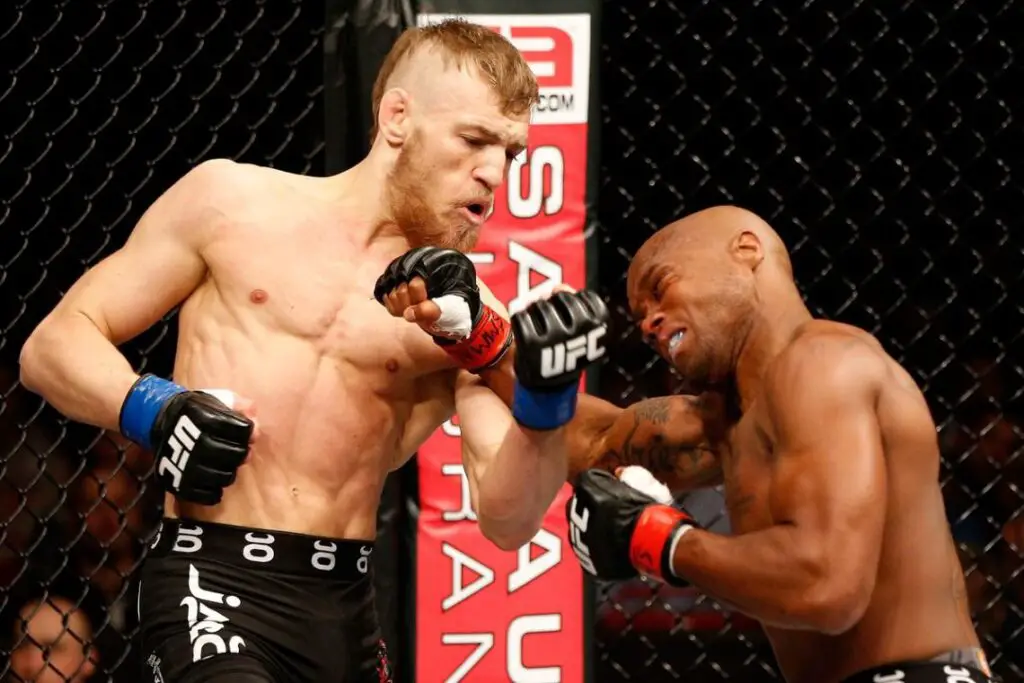
Conor McGregor, widely regarded as the biggest superstar in UFC history, made an unforgettable debut in the world’s premier mixed martial arts organization. This article delves into the details surrounding McGregor’s first appearance in the UFC octagon, highlighting the event, opponent, and outcome of this significant moment in his career. Conor McGregor UFC Debut In February 2013, during a visit to Dublin, UFC president Dana White had the opportunity to meet with MMA fans at a packed pub. It was there that he first became aware of Conor McGregor, as the Irishman’s passionate fans spoke highly of him. Two months later, on April 6, 2013, McGregor made his highly anticipated UFC debut at UFC on Fuel TV: Mousasi vs. Latifi. His opponent for the night was Marcus Brimage, a seasoned competitor from “The Ultimate Fighter 14.” The event took place at the Ericsson Globe Arena in Stockholm, Sweden. The Historic Fight Conor McGregor’s octagon debut was nothing short of spectacular. “The Notorious” McGregor displayed his incredible fighting abilities, showcasing his clinical striking, frightening accuracy, and the power of his trash-talking. McGregor’s charisma and fighting skills combined to make a memorable impression. In the first round of the bout, McGregor unleashed a flurry of left-handed uppercuts that quickly overwhelmed Brimage. Just 1 minute and 7 seconds into the fight, McGregor secured a TKO victory, leaving no doubt about his potential and putting the entire UFC roster on high alert. Aftermath and Legacy Conor McGregor’s career experienced a meteoric rise following his debut. He went on to defeat four more opponents, including future featherweight champion Max Holloway and future rival Dustin Poirier, earning himself a shot at the featherweight title. While McGregor’s awe-inspiring performances spoke for themselves, it was his brash personality that accelerated his path to stardom. At UFC 194, McGregor delivered a 13-second knockout against the legendary Jose Aldo, becoming the undisputed featherweight champion and solidifying his place in UFC history. The speed and precision of his victory over the highly respected Brazilian fighter are still remembered with reverence. Exactly one year later, McGregor achieved another historic milestone by becoming the UFC’s first simultaneous two-division champion. He defeated Eddie Alvarez at UFC 205 via second-round TKO to claim the lightweight title, further cementing his legacy as a dominant force in the sport. Conclusion Conor McGregor’s UFC debut in April 2013 marked the beginning of a remarkable journey. His consistent display of speed, power, accuracy, and larger-than-life attitude propelled him to unprecedented success both inside and outside the octagon. McGregor’s contribution to popularizing the sport of MMA, coupled with his extraordinary fighting skills, solidifies his position as the biggest superstar the UFC has ever seen. Watch Conor McGregor’s UFC debut below:
Tracing Vince MacMahon’s Impact on WWE’s “Golden Era”
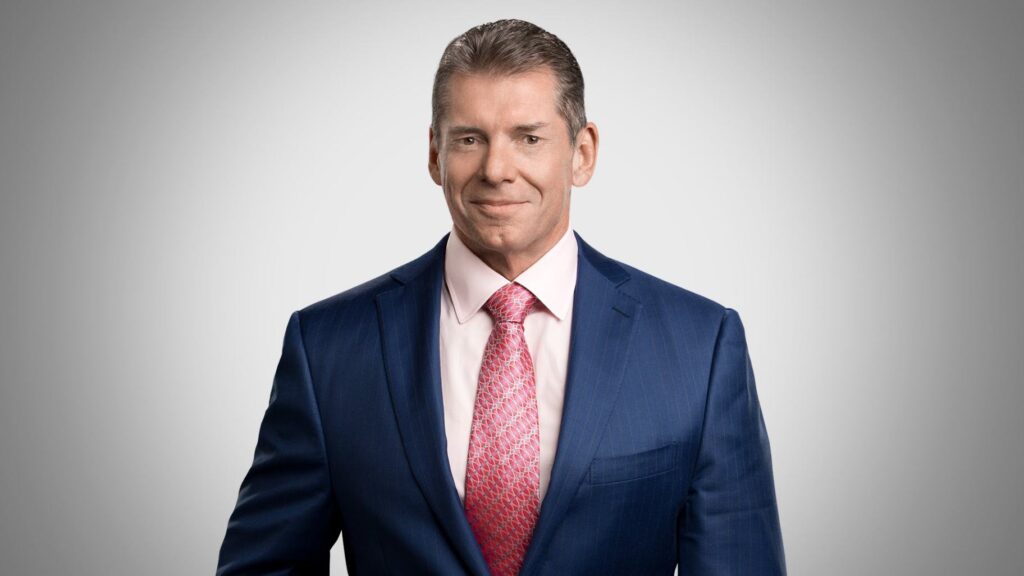
In the world of professional wrestling, there is one name that reigns supreme: Vince K. McMahon. As the successor to his father, Vince J. McMahon, he took control of the World Wrestling Federation (WWF) and transformed it into the global phenomenon known today as World Wrestling Entertainment (WWE). Through his visionary leadership and unwavering determination, McMahon revolutionized the industry, leaving an indelible mark on sports entertainment. Vince MacMahon’s Impact Building the Foundation In 1980, McMahon established Titan Sports, Inc. and set out to make the WWF the premier wrestling promotion worldwide. Recognizing the need for a centralized and unified approach, he made strategic moves to realize his ambitious vision. One pivotal step was the acquisition of Capitol Sports, the parent company of the WWF, which laid the groundwork for his groundbreaking expansion plans. Changing the Game Vince McMahon implemented various changes that forever altered the landscape of professional wrestling. One of his key strategies was to secure syndicated television coverage for WWF programming across the United States. Although this move upset other promoters and disrupted established territories, it proved to be a game-changer. By generating revenue through advertising, television deals, and tape sales, McMahon had the financial resources to attract top talent from rival promotions, solidifying WWF’s dominance. Bringing in Icons To achieve national prominence, McMahon pursued larger-than-life superstars who could transcend the wrestling world. The signing of Hulk Hogan, who was already a popular figure outside of wrestling due to his role in “Rocky III,” marked a turning point. Hogan’s charismatic persona, coupled with the acquisitions of notable talents like Roddy Piper, Jesse Ventura, and Andre the Giant, propelled WWF to unprecedented heights. Business Acumen and Expansion McMahon’s business acumen extended beyond talent acquisition. He secured lucrative television deals that allowed WWF to reach audiences nationwide, expanding its influence. Additionally, McMahon launched Coliseum Video, enabling the distribution of WWF event tapes beyond the Northeast, further broadening the promotion’s reach. These strategic moves forced other wrestling promotions to directly compete with WWF, sparking a new era in wrestling entertainment. The Birth of WrestleMania Recognizing the importance of national touring, McMahon took a bold gamble in 1985 with the introduction of WrestleMania. This groundbreaking concept proved to be a resounding success. WrestleMania became the ultimate pay-per-view extravaganza, marketed as the Super Bowl of professional wrestling. With the help of MTV’s joint-promotional campaign, McMahon attracted mainstream attention by incorporating celebrities such as Muhammad Ali, Mr. T, and Cyndi Lauper into the event. The Era of Entertainment Throughout the 1980s, McMahon’s focus on entertainment, rather than a strictly sports-oriented approach, paid off immensely. Hulk Hogan’s crossover appeal and portrayal as an all-American hero captivated mainstream audiences. This momentum propelled the WWF into a global phenomenon, ultimately giving rise to the WWE as it is known today. Watch Vince McMahon’s craziest WWE moments below: Conclusion When it comes to WWE’s rise as a global sport, one figure stands out above all others: Vince McMahon. His visionary leadership, strategic decisions, and relentless pursuit of entertainment transformed the industry. McMahon’s impact on professional wrestling is immeasurable, and his legacy continues to shape the WWE’s success as a global powerhouse in sports entertainment.
How much money did Floyd Mayweather make from the Manny Pacquiao fight?
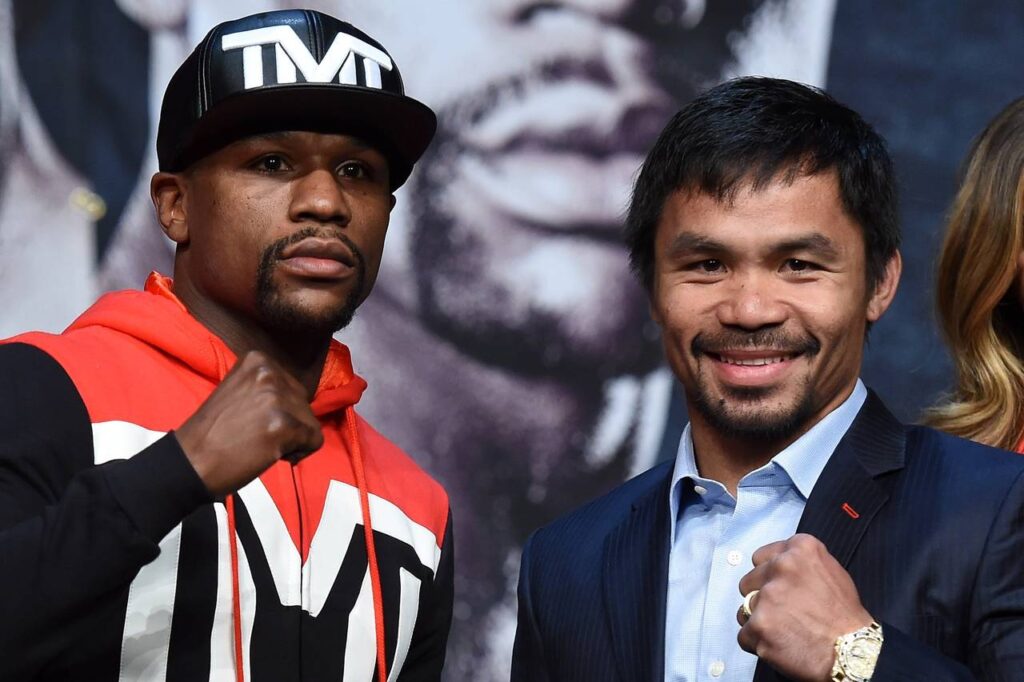
The showdown between Floyd Mayweather Jr. and Manny Pacquiao on May 2, 2015, was not only a highly anticipated clash of two boxing icons but also a massive financial spectacle. In this article, we explore the incredible financial earnings that Floyd Mayweather garnered from the fight, showcasing the immense financial rewards of this historic event. How much money did Floyd Mayweather make from the Manny Pacquiao fight? The Mega-Purse: Floyd Mayweather’s earnings from the Mayweather-Pacquiao fight were nothing short of astronomical. As the A-side of the event and the bigger draw, Mayweather negotiated a significant portion of the fight’s purse. The disclosed purse for the bout was a staggering $180 million, with Mayweather receiving the lion’s share. PPV Revenue Share: In addition to the guaranteed purse, Mayweather also earned a substantial portion of the pay-per-view (PPV) revenue. With the fight generating a record-breaking 4.6 million PPV buys, the PPV revenue alone amounted to an estimated $400 million. Mayweather’s agreement with the promoters entitled him to a percentage of this revenue, further bolstering his earnings from the event. Sponsorships and Endorsements: Mayweather’s financial windfall from the fight extended beyond the purse and PPV revenue. As one of the highest-profile athletes in the world, Mayweather attracted numerous sponsorship and endorsement deals for the event. Companies eagerly aligned their brands with the fight, capitalizing on its enormous reach and exposure. While specific details of these deals are not publicly disclosed, they undoubtedly added significant sums to Mayweather’s overall earnings. Additional Revenue Streams: The Mayweather-Pacquiao fight offered multiple revenue streams beyond the purse and PPV revenue. Ticket sales for the event at the MGM Grand Garden Arena in Las Vegas generated millions of dollars in revenue. The event’s live gate reportedly exceeded $70 million, with tickets priced at a premium to accommodate the high-profile nature of the fight. Merchandising also played a substantial role in generating revenue. From branded apparel to commemorative items, the fight generated significant sales, capitalizing on the fan excitement and desire to commemorate this historic event. Estimated Earnings: While the exact figures of Mayweather’s earnings from the fight are not publicly disclosed, experts and industry insiders have estimated his total earnings to be in the range of $300 million to $400 million. This staggering amount solidifies Mayweather’s status as one of the highest-earning athletes in the history of professional sports. Impact on Mayweather’s Legacy: Beyond the financial rewards, Mayweather’s earnings from the Mayweather-Pacquiao fight contributed to his overall legacy. The fight further cemented his reputation as a boxing superstar and underscored his ability to generate extraordinary revenue. Mayweather’s financial success became a part of his narrative as an undefeated champion and one of the sport’s most marketable figures. Conclusion Floyd Mayweather’s earnings from the Mayweather-Pacquiao fight reached unprecedented heights. With a disclosed purse of $180 million and a substantial share of the PPV revenue, Mayweather’s total earnings from the event are estimated to be in the hundreds of millions. This historic payday solidified Mayweather’s position as one of the highest-earning athletes in the world and showcased the immense financial rewards that can accompany a mega-fight of this magnitude. Watch the full fight below:
Floyd Mayweather vs. Manny Pacquiao: How many PPVs did the fight sell?
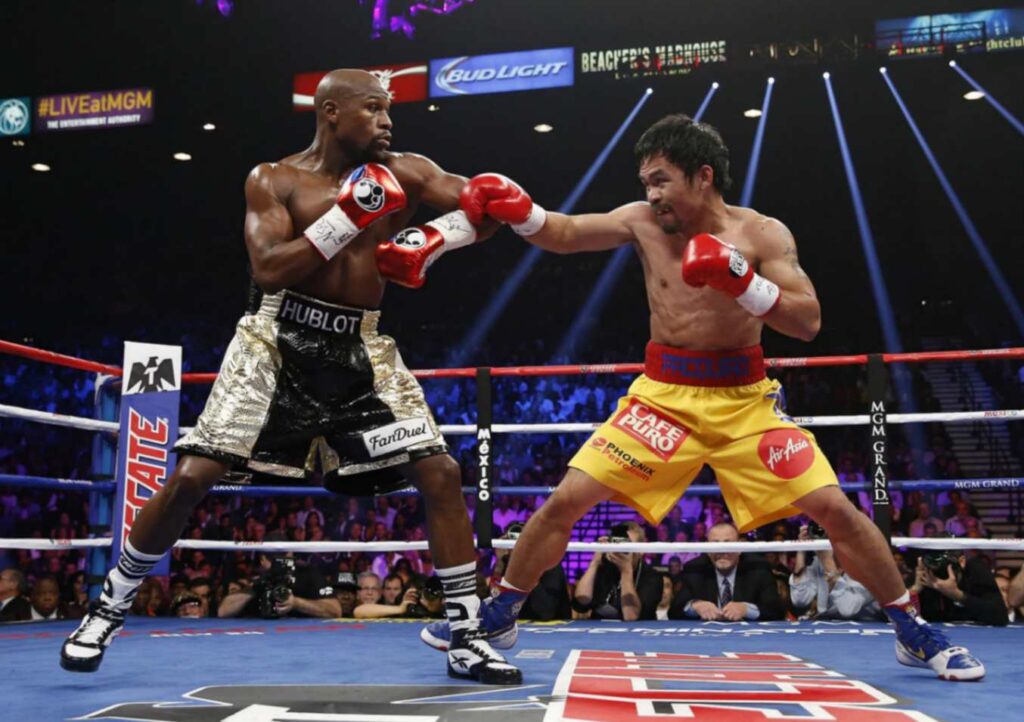
When Floyd Mayweather Jr. and Manny Pacquiao finally squared off in the highly anticipated bout on May 2, 2015, it wasn’t just the fight itself that drew attention—it was also the astronomical pay-per-view (PPV) numbers generated by the event. In this article, we delve into the details of the Mayweather-Pacquiao fight’s PPV sales, highlighting the unprecedented commercial success it achieved. Floyd Mayweather vs. Manny Pacquiao: How many PPVs did the fight sell? Record-Breaking PPV Numbers: The Mayweather-Pacquiao fight shattered all previous records for PPV sales, making it the highest-grossing boxing event in history. The fight generated an astonishing 4.6 million PPV buys in the United States alone, surpassing the previous record set by Mayweather’s bout against Oscar De La Hoya in 2007, which had 2.48 million buys. The Price Tag: The fight was offered to viewers at a premium price, with the HD broadcast costing $99 and the standard definition broadcast priced at $89. Despite the hefty price tag, fans eagerly purchased the PPV in massive numbers, eager to witness the clash between two of boxing’s biggest stars. Global Impact: The immense popularity of Mayweather and Pacquiao extended far beyond the United States, with the fight garnering significant attention and PPV sales worldwide. The event was broadcast in more than 150 countries, allowing fans from all corners of the globe to witness the historic encounter. Revenue and Financial Windfall: The colossal PPV sales translated into an unprecedented financial windfall for both fighters. Estimates suggest that the Mayweather-Pacquiao fight generated a staggering $400 million in PPV revenue alone. This astronomical figure doesn’t account for other revenue streams such as ticket sales, sponsorships, and merchandise, which further added to the overall financial success of the event. Commercial Impact: The commercial impact of the Mayweather-Pacquiao fight extended beyond the boxing realm. The event attracted attention from mainstream media, celebrities, and casual sports fans, solidifying its status as a cultural phenomenon. It showcased the marketability and star power of both fighters, elevating their profiles and establishing them as global icons. Criticism and Controversies: Despite the financial success, the exorbitant price tag of the PPV drew criticism from some fans and observers who felt it was too high, limiting access to a broader audience. The cost and the disappointment over the fight’s action not living up to expectations fueled debates and discussions about the value proposition of such a high-priced event. Legacy and Lasting Impact: The staggering PPV sales and financial success of the Mayweather-Pacquiao fight set a benchmark for future boxing events. It demonstrated the potential for mega-fights to generate unprecedented revenue and solidified the commercial viability of marquee matchups between elite fighters. The fight’s financial success also influenced the boxing landscape, with fighters and promoters seeking to replicate the financial rewards of the Mayweather-Pacquiao model. It heightened the demand for blockbuster fights and increased the emphasis on generating significant PPV sales as a measure of success in the sport. Conclusion The Mayweather-Pacquiao fight shattered all previous records for PPV sales, generating an astounding 4.6 million buys in the United States and establishing itself as the highest-grossing boxing event of all time. The financial success of the fight showcased the immense commercial potential of marquee matchups and set a new standard for the revenue-generating capabilities of the sport. The Mayweather-Pacquiao fight will forever be remembered not only for the in-ring action but also for its unprecedented financial impact on the world of boxing. Watch the full fight below: