
What are the Rock’s best-ever catchphrases?
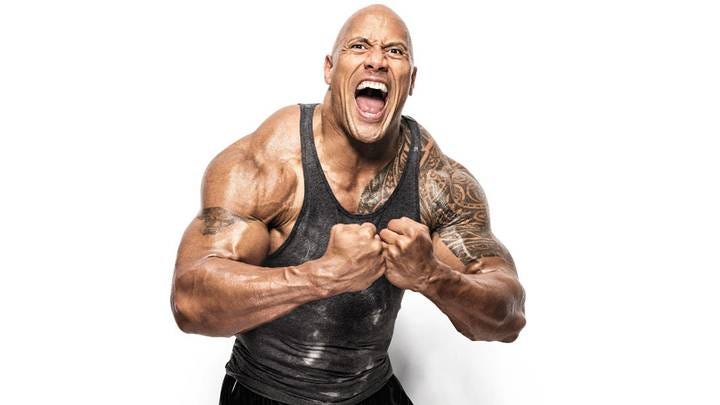
The Rock is undoubtedly one of the most charismatic and memorable figures in the history of professional wrestling. Throughout his career, he had a plethora of catchphrases that became iconic and endeared him to fans worldwide. Here, we look at some of the best ones he has uttered during his illustrious career: “One On One With The Great One”: The Rock used this catchphrase to announce and build up his matches. It showcased his confidence and reminded fans that he was “The Great One” in the wrestling business. “Roody Poo, Candy Ass”: Despite its silliness, The Rock managed to make this catchphrase immensely popular. He would get the audience to chant with him, turning it into a great insult to his rivals. It displayed The Rock’s ability to engage the audience and make them laugh while being taken seriously. “Laying The SmackDown”: This catchphrase became so iconic that it became the name of a WWE show. Whenever The Rock uttered this line, it increased the fans’ excitement. It signified that he meant business and left a lasting impact on the wrestling world. “The Most Electrifying Man”: Claiming to be the most electrifying man in sports entertainment could have come across as arrogant, but The Rock’s charisma and larger-than-life persona made fans buy into it. He could put different spins on this catchphrase, making it fun and captivating for the audience. “Millions And Millions”: This catchphrase invited a vast fan response and became a chant that fans worldwide could join. The Rock would say the first part, and the fans would eagerly complete it. It connected with the audience and created an incredible response. “Know Your Role, And Shut Your Mouth”: The Rock used this classic catchphrase to put his rivals in their place. It made people laugh while leading to a strong reaction from the other person. The Rock was known for delivering such comments and taking full advantage of their impact. “If You Smell, What The Rock Is Cooking”: Undoubtedly The Rock’s most famous catchphrase, this line has become synonymous with his persona. It perfectly captures the essence of professional wrestling with its nonsensical yet captivating delivery. Fans still chant this catchphrase, and it is an iconic way to conclude a promo. The Rock’s catchphrases played a significant role in solidifying his status as one of the all-time greats in professional wrestling. His charisma, wit, and ability to connect with the audience through these memorable lines have impacted the industry. The Rock’s catchphrases continue to be celebrated and cherished by fans worldwide.
Tracing WWE Legends’ careers: John Cena
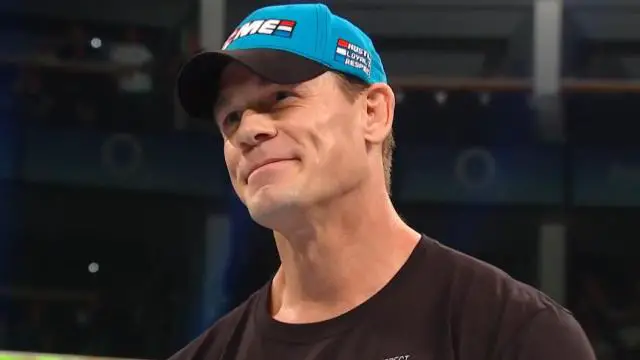
The legendary John Cena began his training at the “Ultimate University” operated by Ultimate Pro Wrestling (UPW) in 1999. He wrestled under the ring name The Prototype and held the UPW Heavyweight Championship for nearly a month in April 2000. The following year, Cena signed with the World Wrestling Federation (WWF, now WWE) and was assigned to their developmental territory, Ohio Valley Wrestling (OVW). During his time in OVW, he wrestled under the names The Prototype and Mr. P, winning the OVW Heavyweight Championship and the OVW Tag Team Championship with Rico Constantino. WWE Rise to Stardom Cena made his WWE debut in June 2002, answering an open challenge by Kurt Angle. He quickly gained popularity and became a fan favorite, engaging in feuds with wrestlers like Chris Jericho and participating in a tag team tournament to crown the first WWE Tag Team Champions. Cena also developed a new gimmick as a rapper and began cutting promos in rhyme, adopting the slogan “Word Life” and the “signature symbol” of the 80s WWF logo. In 2004, Cena won the WWE United States Championship from Big Show at WrestleMania XX. He feuded with SmackDown! General Manager Kurt Angle came into conflict with René Duprée and Torrie Wilson. Cena’s reign ended when he was stripped of the title by Angle. He later regained the championship in a “best of five” series against Booker T but lost it to Carlito Caribbean Cool. Cena then began a feud with Carlito, where he was stabbed (kayfabe) in the kidney. Cena took time off to film his debut feature film, “The Marine.” WWE Titles In 2005, Cena participated in the Royal Rumble and made it to the final two participants. He feuded with WWE Champion John “Bradshaw” Layfield (JBL) and won his first world title by defeating JBL at WrestleMania 21. Cena had a spinner WWE Championship belt made, while JBL still claimed to be the champion with the original belt. Cena eventually reclaimed the original belt in an “I Quit” match at Judgment Day. Cena was drafted to the Raw brand in 2005 and continued his success, feuding with Eric Bischoff and defeating Chris Jericho to retain his title. However, Cena faced backlash from a vocal portion of the audience, who began booing him, despite being portrayed as a face (good guy). He had feuds with Kurt Angle and retained his championship against him at Unforgiven and Survivor Series. Cena has won 21 championships, including 16 World Championships, making him one of the most decorated wrestlers in WWE history. Cena has had numerous feuds and accomplishments throughout his career, including winning the Royal Rumble in 2013, becoming a multiple-time WWE Champion and World Heavyweight Champion, and feuding with notable wrestlers like The Miz and The Rock. He has also pursued a career in music and film and has made guest appearances on various television shows.
Tracing WWE Legends’ careers: Shawn Michaels
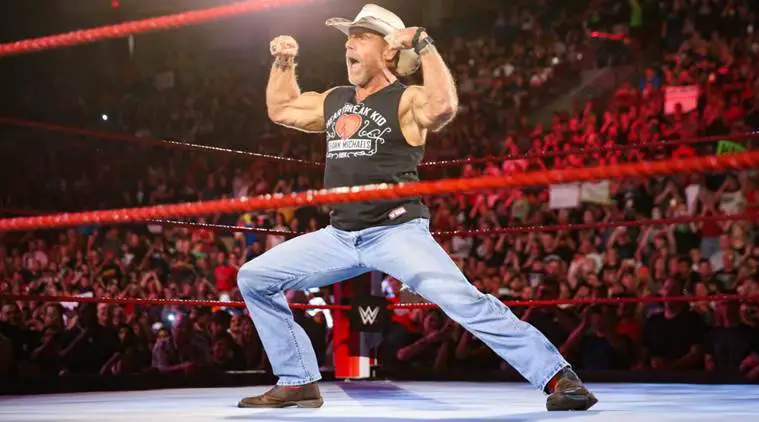
Shawn Michaels began training under Mexican professional wrestler Jose Lothario and adopted the ring name. He debuted in 1984 with Mid-South Wrestling and Texas All-Star Wrestling (TAW), where he won the TAW Tag Team Championship with Paul Diamond. He also wrestled for Central States Wrestling and appeared in World Class Championship Wrestling in 1985. In 1986, Michaels debuted nationally with the American Wrestling Association (AWA), teaming with Marty Jannetty as The Midnight Rockers. They won the AWA World Tag Team Championship and gained popularity. 1987 they signed with the WWF but were fired two weeks later due to a bar incident. They returned to the AWA before being re-signed by WWF in 1988. Return to the WWF/WWE In WWF, Michaels and Jannetty were known as The Rockers and became popular with fans. They were a mid-card tag team for the next two years, appearing on television and pay-per-view shows. They were scheduled to win the WWF Tag Team Championship from The Hart Foundation in 1990. Still, the decision was reversed, and the match was never acknowledged due to a storyline explanation of a collapsed turnbuckle. The Rockers split in December 1991 after Michaels super kicked Jannetty and threw him through a glass window on the set of Brutus’ “The Barber” Beefcake’s Barber Shop talk show segment. Following the split, Michaels adopted the nickname “The Heartbreak Kid” and became a cocky, vain heel. He aligned himself with Sensational Sherri and won the WWF Intercontinental Championship from The British Bulldog in 1992. Michaels had his first pay-per-view main event against Bret Hart for the WWF Championship at the 1992 Survivor Series but lost the match. He engaged in a feud with his former tag team partner, Marty Jannetty, and lost the Intercontinental Championship to him on Monday Night Raw in 1993. Michaels regained the title shortly after with the help of his new bodyguard, Diesel. Temporary Retirement In September 1993, Michaels temporarily quit the WWF after being suspended for testing positive steroids, although he denies the charge. He appeared in the United States Wrestling Association (USWA) during a WWF/USWA cross-promotion and returned to WWF television for Survivor Series in November. Michaels then entered a feud with Razor Ramon, claiming to be the rightful Intercontinental Champion since he had never been defeated for the title. They had a Ladder match at WrestleMania X, which Ramon won. Michaels battled various injuries but won the WWF World Tag Team Championship with Diesel in 1994. Michaels captured his third Intercontinental Championship in 1995 and had a successful title defense against Razor Ramon in a ladder match at SummerSlam. During this time, Michaels became associated with a backstage group called The Kliq, which influenced the WWF. Michaels won the Royal Rumble in 1995, setting up a championship match against Diesel at WrestleMania XI, but he lost the game and took time off to transition into a crowd favorite. In 1996, Michaels returned to WWF and won his second Royal Rumble, earning a WWF Championship match at WrestleMania XII. He defeated Bret Hart in an Iron Man match, which went into sudden death over time and solidified Michaels as a top star. All in all, rather than his on-paper achievements, Shawn Michaels’ overall personality and ability to command audiences make him a legendary and unforgettable name among top WWE stars.
Tracing WWE Legends’ careers: Stone Cold Steve Austin
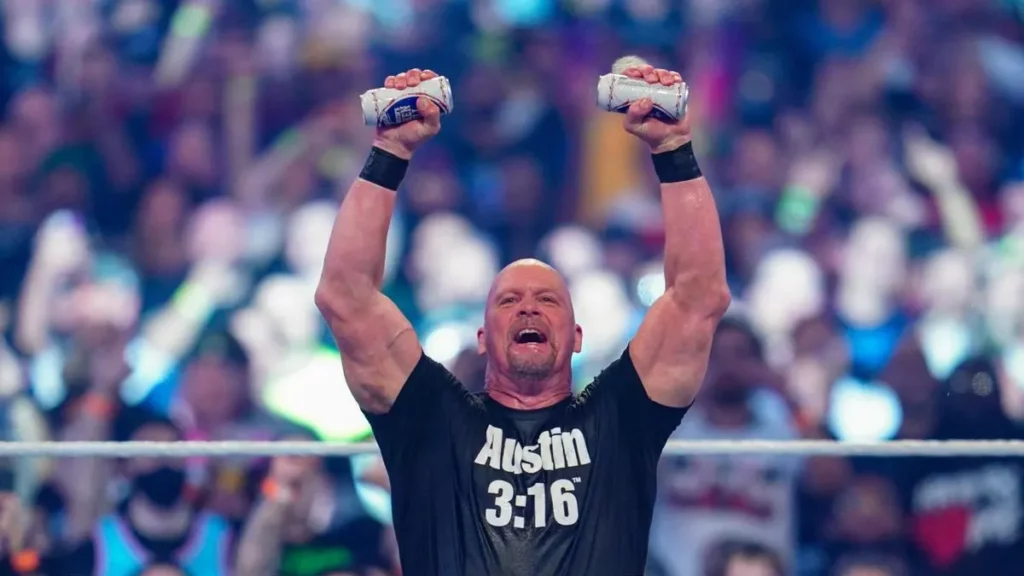
Various twists and turns mark Steve Austin’s journey in the wrestling industry. Starting in 1989 at “Gentleman” Chris Adams’ wrestling school in Dallas, Texas, Austin began his career as Steve Williams. However, in Memphis, Tennessee, Dutch Mantell (Zeb Colter) gave him the name Steve Austin, inspired by the “Six Million Dollar Man” character. Upon returning to Texas, Austin engaged in a teacher vs. student feud with Chris Adams, who had his ex-wife Jeannie Clark as his valet. The rivalry between Austin and Adams became a wild and entertaining storyline, filled with tabloid-like drama and memorable moments. Unfortunately, the feud didn’t have a proper ending due to the USWA pulling out of Dallas. Austin’s move to WCW Austin then moved on to WCW in 1991, where he quickly made an impact by winning the WCW World Television Title and later forming a successful tag team known as the Hollywood Blondes with Brian Pillman. He continued to excel in WCW, becoming one of the best young wrestlers in the business, working with talented individuals like Ricky Steamboat, and being part of Paul Heyman’s Dangerous Alliance stable. However, Austin’s run in WCW began to decline after a back injury forced Ricky Steamboat to retire, leading to a change of plans for their planned rematch. Austin’s position on the card slipped, and conflicts with WCW boss Eric Bischoff eventually resulted in his firing. He briefly wrestled in ECW, where he showcased his promo skills and began to develop the persona that would ultimately become Stone Cold Steve Austin. Signing with WWE (then WWF), Austin initially debuted as The Ringmaster, managed by Ted DiBiase. However, the generic gimmick and lack of character development hindered his progress. Wanting to reinvent himself, Austin drew inspiration from a documentary about Richard “The Iceman” Kuklinski, adopting a more emotionless and ruthless persona. During this time, the name “Stone Cold” Steve Austin emerged, thanks to a clever reference to his cold tea. Rise of Stone Cold, “The Rebel” As Austin’s character evolved, he shed The Ringmaster persona and embraced his true self, becoming one of the most popular and rebellious figures in professional wrestling history. Winning the 1996 King of the Ring tournament marked a significant turning point in his career, where he delivered the iconic “Austin 3:16” promo that catapulted him to superstardom. From that point on, Stone Cold Steve Austin became a cultural phenomenon. In the following years, Austin’s character underwent several changes, including a brief heel turn that didn’t connect with the audience as intended. He later turned babyface again and had memorable feuds with Triple H, The Rock, and others. Austin’s career was temporarily halted by a neck injury in 1999, and he returned in 2000 to capture the WWE Championship once more. However, tensions arose between Austin and WWE’s creative team when he criticized them publicly. Austin left WWE for eight months and returned for another WrestleMania feud with The Rock. After WrestleMania 19, Austin’s storyline character was “fired,” he officially retired due to worsening spinal issues and a heart scare.
What was the WWE’s Attitude Era?
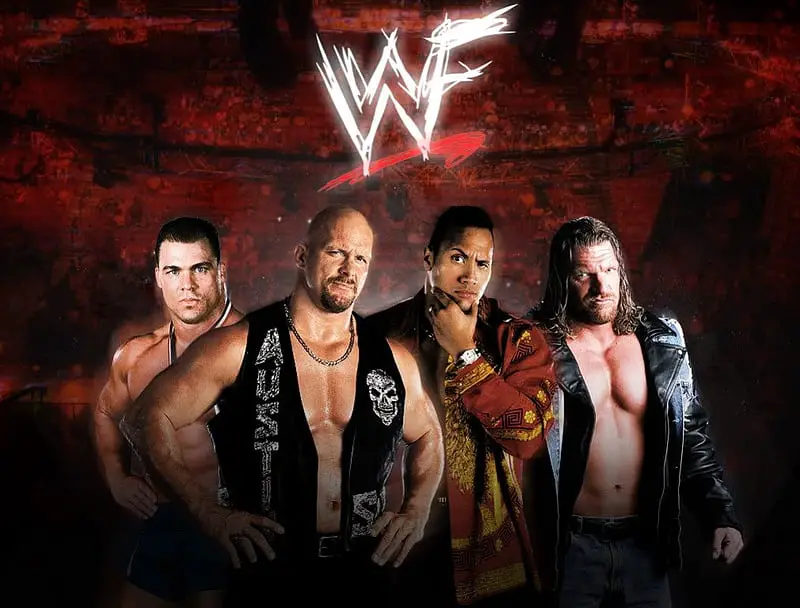
The Attitude Era, a pivotal period in the history of professional wrestling, emerged during the Monday Night Wars and marked a radical shift in the World Wrestling Federation’s (WWF) programming content. From the mid-to-late 1990s to the early 2000s, this Era sought to attract a young adult demographic by transforming the product into a more edgy and controversial form of entertainment. Traditional heroes were replaced with anti-heroes, and family-friendly storylines gave way to controversial narratives rooted in shock value. The Attitude Era represents one of the most memorable periods in WWE history. Rather than focusing on family values and wholesomeness, the WWE was suddenly home to controversial figures that spoke to the new generation of American Young Adults. The Attitude Era famously included the feud between Vince McMahon and Steve Austin. Spearheaded by Vince McMahon and head writer Vince Russo, the Era introduced a new booking style called “Crash TV,” characterized by shorter matches, backstage vignettes, and shocking television moments. McMahon’s character, “Mr. McMahon,” was crafted as a corrupt and manipulative owner, feuding with Stone Cold Steve Austin, who emerged as the central figure of the Attitude Era. The feud between Stone Cold Steve Austin and Mr. McMahon became the defining storyline of the Attitude Era. Austin’s rebellious persona, marked by profanity-laden tirades against McMahon, resonated with fans and propelled him to superstardom. Portraying a corrupt and authoritarian figure, McMahon retaliated against Austin through violent and increasingly immoral means. Their ongoing conflict captivated audiences and created a compelling narrative that epitomized the Era’s rebellious spirit. Notable Events and other controversies Several notable events during the Attitude Era contributed to its cultural impact and commercial success. The Montreal Screwjob at Survivor Series 1997, where Bret Hart was controversially stripped of the WWF Championship, added real-life drama to the on-screen product. The USA vs. Canada storyline featuring The Hart Foundation and the feud between Hart and Shawn Michaels further intensified the Era’s controversial and personal narratives. The introduction of D-Generation X, a faction known for its innuendos and mischief, provided additional entertainment. The Attitude Era also embraced female sexuality, with characters like Sable leading the way. Sable’s appearance in Playboy Magazine generated significant buzz, highlighting the Era’s ability to cross into mainstream entertainment. Marketing Success and Legacy The Attitude Era was a marketing triumph for the WWF, attracting a previously untapped young adult demographic and surpassing WCW in the ratings war. The Era’s success allowed WWF to acquire WCW in 2001, ending the Monday Night Wars. By this point, the WWF had become a financial powerhouse, enabling McMahon to purchase WCW at a reduced valuation. However, the Era’s conclusion came in May 2002, as a legal battle with the World Wildlife Fund led to the prohibition of using the WWF logo associated with the Attitude Era.
Tracing WWE Legends’ careers: The Undertaker
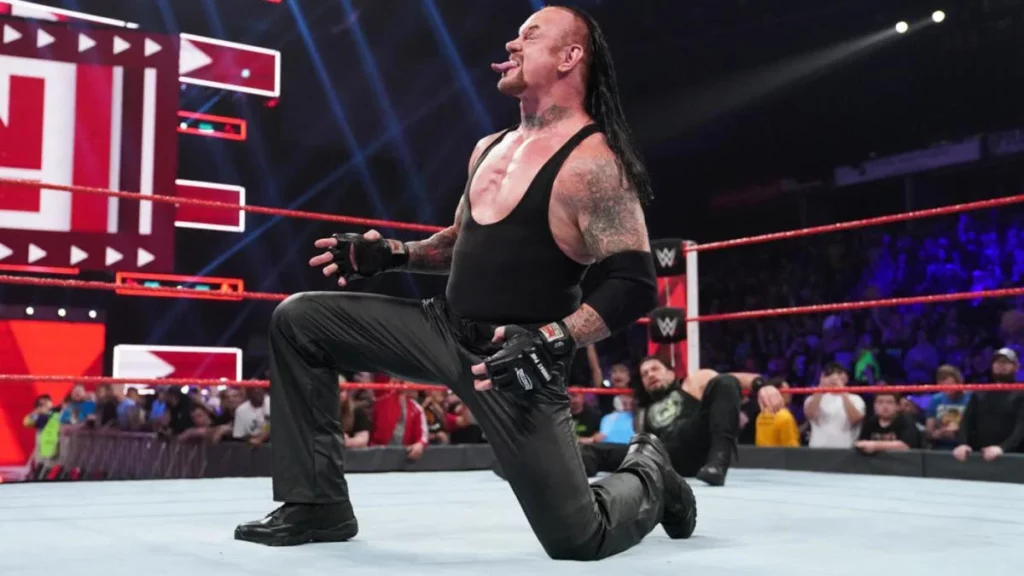
The Undertaker had two contrasting personas throughout his career. The first was “The Deadman,” an undead, occult-like figure that went through various iterations. It began with a Western mortician character in November 1990 and evolved into the Satanic Ministry of Darkness leader in September 1999. He returned as a hybrid of all his previous incarnations in March 2004. The second persona was “The American Bad Ass,” a biker character he portrayed from May 2000 to November 2003. The Undertaker’s gimmicks were associated with specialty matches such as the Casket, Buried Alive, Hell in a Cell and Last Ride matches. Another important aspect of his character was his half-brother Kane, with whom he had feuds and alliances as the Brothers of Destruction. The Rise Calaway’s early career began 1984 in World Class Championship Wrestling (WCCW) under the ring name “Texas Red.” He later wrestled in various promotions such as CWA, WCW, and New Japan Pro Wrestling before signing with the WWF in October 1990. He debuted as “Cain the Undertaker” but soon dropped the “Cain” from his name. Undertaker’s WrestleMania debut came at WrestleMania VII, where he defeated “Superfly” Jimmy Snuka. He had notable feuds with wrestlers such as Ultimate Warrior, Randy Savage, and Hulk Hogan. Undertaker won his first WWF Championship at Survivor Series but dropped it back to Hogan at This Tuesday in Texas six days later. The Undertaker feuded with Jake “The Snake” Roberts, Kamala, and Giant Gonzales in the following years. He took a hiatus after a casket match loss against Yokozuna at the Royal Rumble, during which his “spirit” appeared from inside the casket, hinting at his return. After his return, The Undertaker faced an “Underfaker” clone played by Brian Lee, leading to a showdown between the two at SummerSlam, which the real Undertaker won. He had another casket match against Yokozuna at Survivor Series, where he won with the help of Chuck Norris as a special guest enforcer. The Streak The Undertaker was best known for his undefeated streak at WrestleMania, which stood at 21-0 until he lost to Brock Lesnar at WrestleMania 30. Throughout his career, he held numerous championships, including the WWF/E Championship four times, the World Heavyweight Championship three times, and the USWA Unified World Heavyweight Championship once under the character “The Master of Pain.” He also won seven World Tag Team championships: six WWF Tag Team Championships and one WCW Tag Team Championship. Additionally, he won the 2007 Royal Rumble and became the first wrestler to enter the event last and best.
What was the Rock n Wrestling Connection in 1980s WWE?
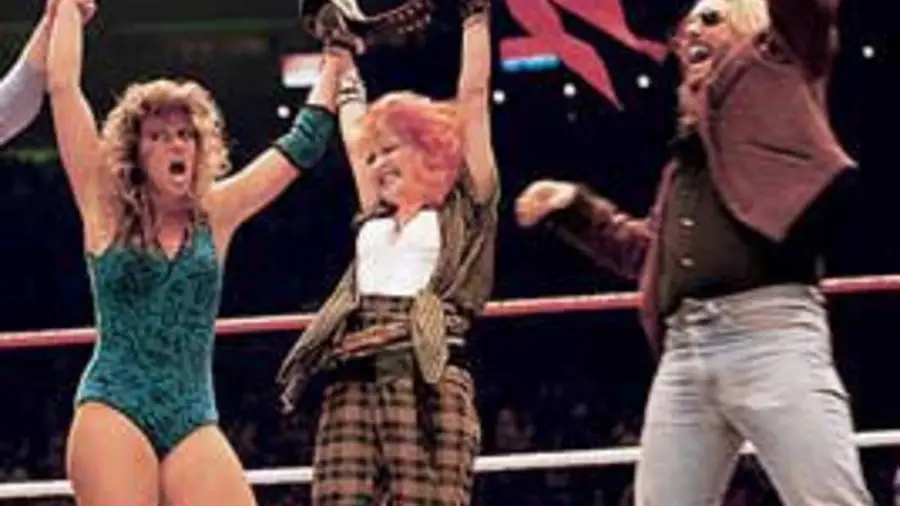
The Rock’ N’ Wrestling Connection was born from a collaboration between the WWF and pop culture. It all began when WWF manager Lou Albano met with music icon Cyndi Lauper. Their encounter led to Albano appearing as Lauper’s father in her music video for “Girls Just Want to Have Fun.” The subsequent booking of Lauper and Albano on a segment of Piper’s Pit became the catalyst for an era that would elevate wrestling to new heights. A pivotal moment in the Rock ‘N’ Wrestling era they occurred with The Brawl to End It All, which marked the first live wrestling match on cable television and the first live women’s professional wrestling match. Cyndi Lauper, managing Wendi Richter, faced off against Lou Albano’s chosen wrestler, The Fabulous Moolah. Although the event featured eleven games, only Richter and Moolah’s main event match was televised on MTV. Richter’s victory, aided by Lauper’s interference, made this program the most-watched MTV history. WWE’s partnership with MTV led to Rock ‘N’ Wrestling Connection era During the Rock ‘N’ Wrestling Connection era, WWE Superstars expanded their reach beyond the squared circle, appearing in MTV videos, releasing music albums, and even starring in their animated series, Hulk Hogan’s Rock ‘n’ Wrestling. This unexpected partnership between WWE and MTV propelled professional wrestling into mainstream popularity, leading to the monumental first WrestleMania. With the rich history of this era in mind, the idea of reviving the Rock ‘N’ Wrestling Connection in the present day sparks excitement and promises a unique blend of entertainment. The momentum continued with The War to Settle the Score, where Cyndi Lauper played a significant role again. She interfered in the main event match between Hulk Hogan and Roddy Piper, igniting a feud. The event also featured a Women’s Championship match between Wendi Richter, with Lauper in her corner, and Leilani Kai, accompanied by Moolah. Kai emerged victorious, taking the title from Richter. The subsequent WrestleMania marked a turning point for the Rock ‘N’ Wrestling Connection. While the event featured memorable moments, such as the feud between Piper and Jimmy “Superfly” Snuka, the ’80s wrestling boom began to wane. The departure of key figures like Andre the Giant and Bobby “The Brain” Heenan signaled the end of an era that had captivated audiences throughout the decade. Although the Rock ‘N’ Wrestling Connection faded away in the ’80s, its impact persisted through the memories of fans and the occasional appearances of its breakout stars. However, recent years have seen a significant decline in the presence of ’80s wrestling icons. The passing of legendary figures like Andre the Giant, Macho Man Randy Savage, and Roddy Piper, along with the controversies surrounding Hulk Hogan, have shattered hopes of reunions or revivals.
Who had the longest reign as WWE champion?
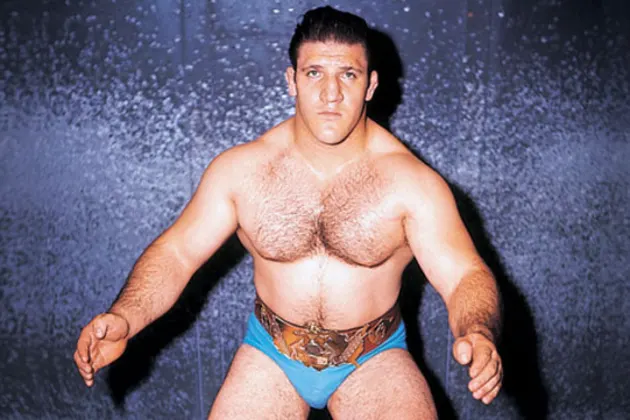
Bruno Sammartino is one of the true legends in WWE history, a foundational figure whose impact cannot be overstated. Before the emergence of Hulk Hogan, Stone Cold Steve Austin, John Cena, and Roman Reigns, Sammartino held the WWE Championship for over 11 years, solidifying his status as a wrestling icon. Despite his limited appearances in later years and a strained relationship with WWE, Sammartino’s time as champion remains a vital part of professional wrestling history. This article explores the significance of Sammartino’s championship reigns and his remarkable legacy. The Longest Championship Reign in WWE History Bruno Sammartino’s record-setting championship reigns are a testament to his unparalleled dominance. His shorter reign lasted from December 10, 1973, to April 30, 1977, making it one of the longest in WWE history. In this period, Sammartino held the title for over three years, establishing himself as one of the most formidable champions of his era. Notably, his first reign as champion, which stretched from May 17, 1963, to January 18, 1971, remains the longest world title reign in wrestling history, an incredible record unlikely to be surpassed. While Buddy Rogers was the original WWE Champion, Bruno Sammartino transformed the company and became its first true face. When Sammartino defeated Rogers to claim the championship, he played a pivotal role in establishing WWE’s credibility and legitimacy. He exuded a sense of honor and integrity, becoming the embodiment of a respected and revered champion. Sammartino’s presence helped solidify WWE’s reputation and set the stage for future superstars. Throughout his championship reigns, Bruno Sammartino faced a multitude of challenges. Notable names like Gorilla Monsoon, Killer Kowalski, Boris Malenko, Freddie Blassie, Gene Kiniski, George “The Animal” Steele, and The Sheik all sought to dethrone Sammartino during his illustrious reign. Sammartino’s ability to overcome these formidable adversaries further elevated his status as a fighting champion. It is estimated that Sammartino successfully defended the title approximately 400 times in his first reign, showcasing his resilience and unwavering determination. Beyond his in-ring achievements, Bruno Sammartino was also widely respected behind the scenes. He carried himself with integrity and professionalism, earning the admiration of his peers and wrestling insiders alike. Sammartino’s contributions to the sport extended beyond his championship reigns, making him a revered figure in the wrestling community.
What is the Lou Thesz Press and how did it become popular in WWE?
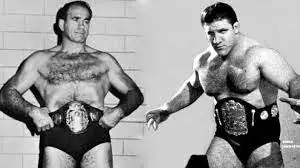
In professional wrestling, certain moves become iconic, forever associated with the wrestlers who popularized them. The Lou Thesz Press is one such move, named after the legendary Lou Thesz himself. The Lou Thesz Press is a high-impact manoeuvre that involves a wrestler launching themselves towards a standing opponent and forcefully knocking them to the ground. As a result, the opponent finds themselves lying on their back while the attacking wrestler sits on their chest, effectively pinning them with a body scissor. This move’s sheer force and suddenness make it a crowd-pleasing spectacle that has endured through generations of wrestling. Lou Thesz Press was one of the first iconic finisher moves in WWE. Lou Thesz, a prominent wrestling figure of his time, popularized and lent his name to this impressive move. Known for his technical prowess and innovative techniques, Thesz incorporated the Lou Thesz Press into his repertoire. Its effectiveness as a finisher made it a defining move for Thesz, contributing to his success and reputation as one of the all-time greats in professional wrestling. NumeThesz’shievements and innovations marked Lou Thesz’s illustrious career. He was the first wrestler to hold the NWA International Heavyweight Championship. This title became part of the prestigious Triple Crown Heavyweight Championship in All Japan Pro Wrestling. Stone Cold’s Cold’sion of the Lou Thesz Press lent a modern take to the move. Building upon Thesz’sThesz’stion, Stone Cold Steve Austin introduced a unique variation of the Lou Thesz Press that added an extra level of intensity. Austin’Austin’sn involved him jumping on a running opponent, mounting them, and then relentlessly striking the opponenopponent’sith repeated punches. This variation became synonymous with the Austin’Austin’sious persona, showcasing his relentless aggression and determination to dominate his adversaries. The Lou Thesz Press, with its original iteration and Austin’Austin’sion, left an indelible impact on the wrestling world—thesz’sThesz’snspired future generations of wrestlers who sought to incorporate its dynamism into their styles. Likewise, Stone Cold Steve Austin’Austin’stion became a defining move of his career and further solidified his status as a wrestling icon. The Lou Thesz Press, in all its forms, continues to be recognized as a symbol of dominance and a testament to the innovation within the sport.
“Man that was crazy!” – Jalin Turner on training with Khamzat Chimaev ahead of UFC 290
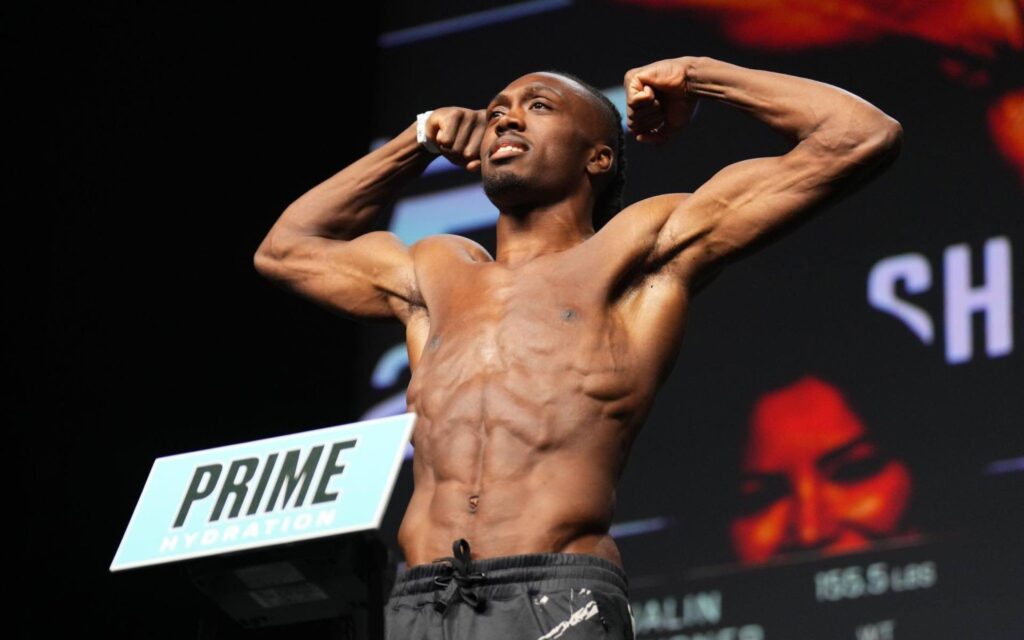
Jalin Turner recently opened up about his experience training with Khamzat Chimaev earlier this year and described what sparring with the grappling phenom was like. ‘The Tarantula’ is set to face Dan Hooker in an exciting lightweight contest at UFC 290 this weekend. The 28-year-old was initially booked to fight Hooker at UFC 285, but an injury forced ‘The Hangman’ out and their bout was rescheduled. Given that Turner came up short in his last outing against Mateusz Gamrot, ‘The Tarantula’ has left no stone unturned to sharpen his fangs against Dan Hooker. This includes training with ‘Borz’. At a recent UFC 290 media presser, Jalin Turner was asked about the time he spent training with the undefeated welterweight phenom Khamzat Chimaev in Dubai. While stories about the Chechen-born Swede’s cardio and intensity giving heavyweights trouble are quite widespread, Turner verified many of those tales and said: “Man, that was crazy… Khamzat is legit… He’s a strong fighter, great grappling, good striking too. Man, he’s dope… It was intense. I wish I was up a weight class so I could have endured a lot more… I haven’t been pushed or tested like that in the gym for years. I didn’t even think anybody could do that to me at the point I’m at. But he did.” Jalin Turner opens up about his recent altercation with internet prankster Jalin Turner recently made headlines after a video of him reacting violently to an internet prankster who tried to joke around with the UFC lightweight fighter. While their altercation turned physical, the attention-seeking influencer was ultimately spared a severe beat down at the hands of a professional MMA fighter. Popular MMA-based Twitter handle @BenTheBaneDavis posted a video of the scuffle, which clearly showed the prankster creeping up behind Turner on an escalator. He then tried to intimidate the 28-year-old pretending to speak into a phone and ended with Turner’s hand wrapped around his throat. After the UFC lightweight’s crew dealt with the matter, the prankster can be seen running away after one last rile-up attempt. In the same UFC 290 media day presser, Jalin Turner was asked to comment on the viral incident and explain what went down during the altercation. He stated: “It went exactly how it was supposed to go. He said something, and I grabbed him. He was lucky it was fight week, or I probably would have thrown some hands. But it’s okay.” Jalin Turner will make his next walk down to the octagon against Dan Hooker this weekend. ‘The Tarantula’ is coming off a split decision loss against Mateusz Gamrot at UFC 285, whereas Dan Hooker last beat Claudio Puelles via second-round TKO to break a two-fight losing skid.